Understanding the Two Most Beloved Goddesses in Tibetan Buddhism
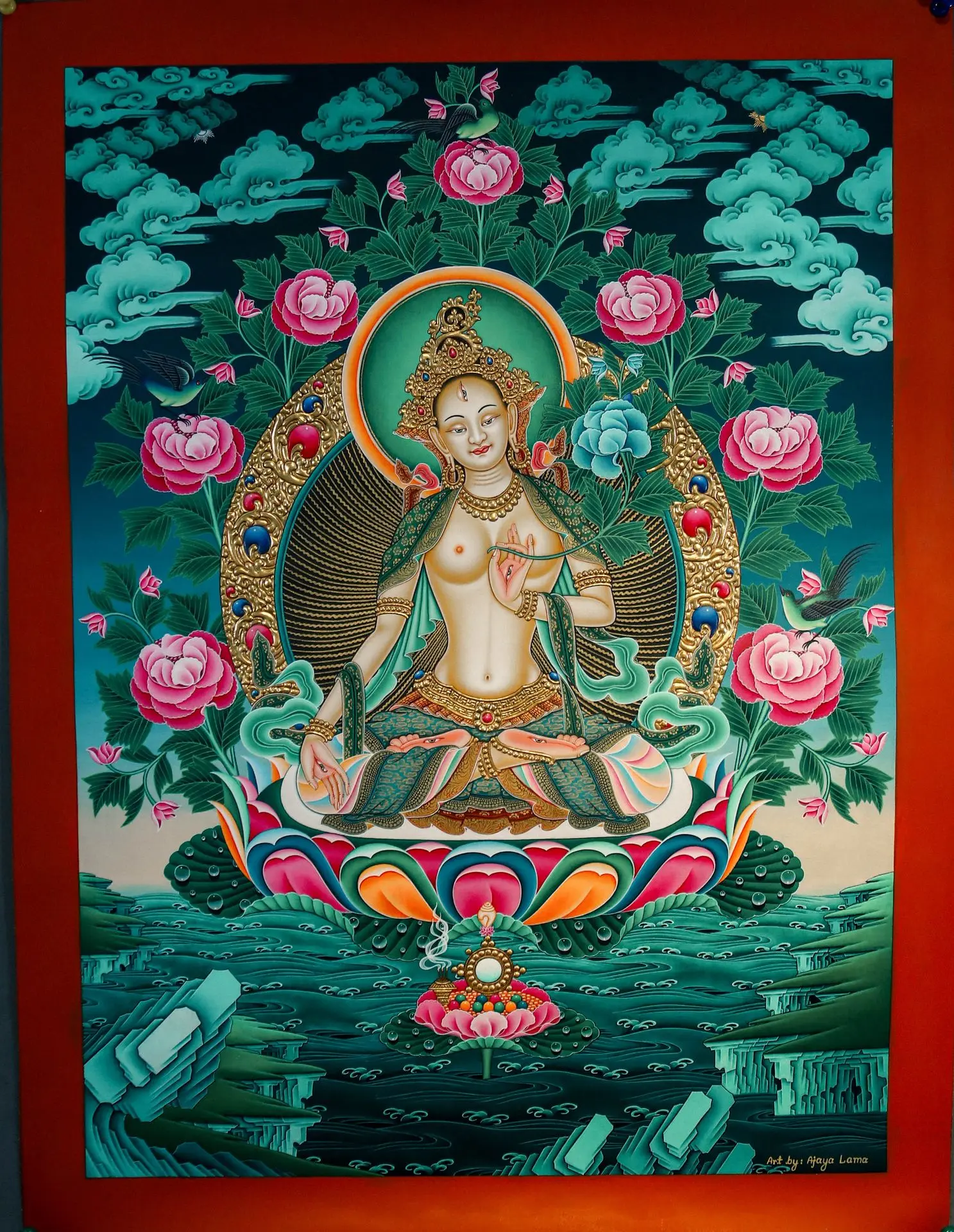
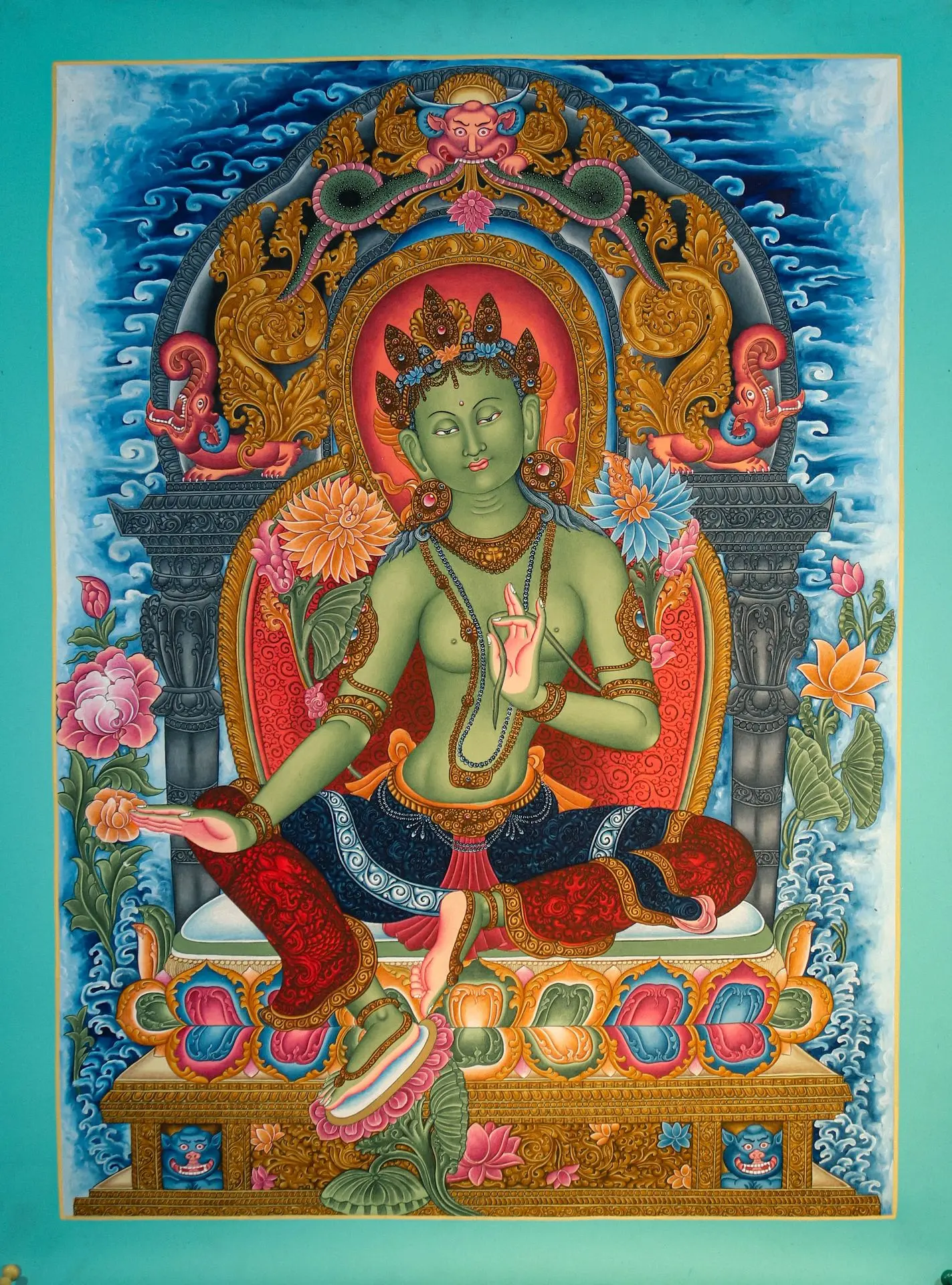
You have seen them both in Thangka paintings. One glows emerald green. The other shines pure white. Both are called Tara. Both radiate feminine compassion. But they serve very different purposes.
So which one do you need? This question matters. Choosing the right Tara transforms your practice. It changes the energy in your space.
Let me show you exactly how these two differ. By the end, you will know which Tara speaks to your situation.
Who Is Tara in Tibetan Buddhism?
Before we compare, let us understand who Tara actually is.
Tara is a female Bodhisattva. Her name means "She Who Saves."
In Tibetan, she is called Dolma. This translates to "She Who Liberates."
Both names reveal her essence. Tara rescues beings from suffering. She liberates them from fear.
The Legend of Tara's Birth
Legend says she was born from Avalokiteshvara's tears. He wept seeing the suffering of all beings. A lotus grew from his tear pool.
Tara emerged from that lotus.
She made a remarkable vow. She would always appear in female form. She would achieve enlightenment as a woman.
This was radical. Many believed only male rebirth allowed enlightenment. Tara rejected that idea completely.
The Twenty-One Forms of Tara
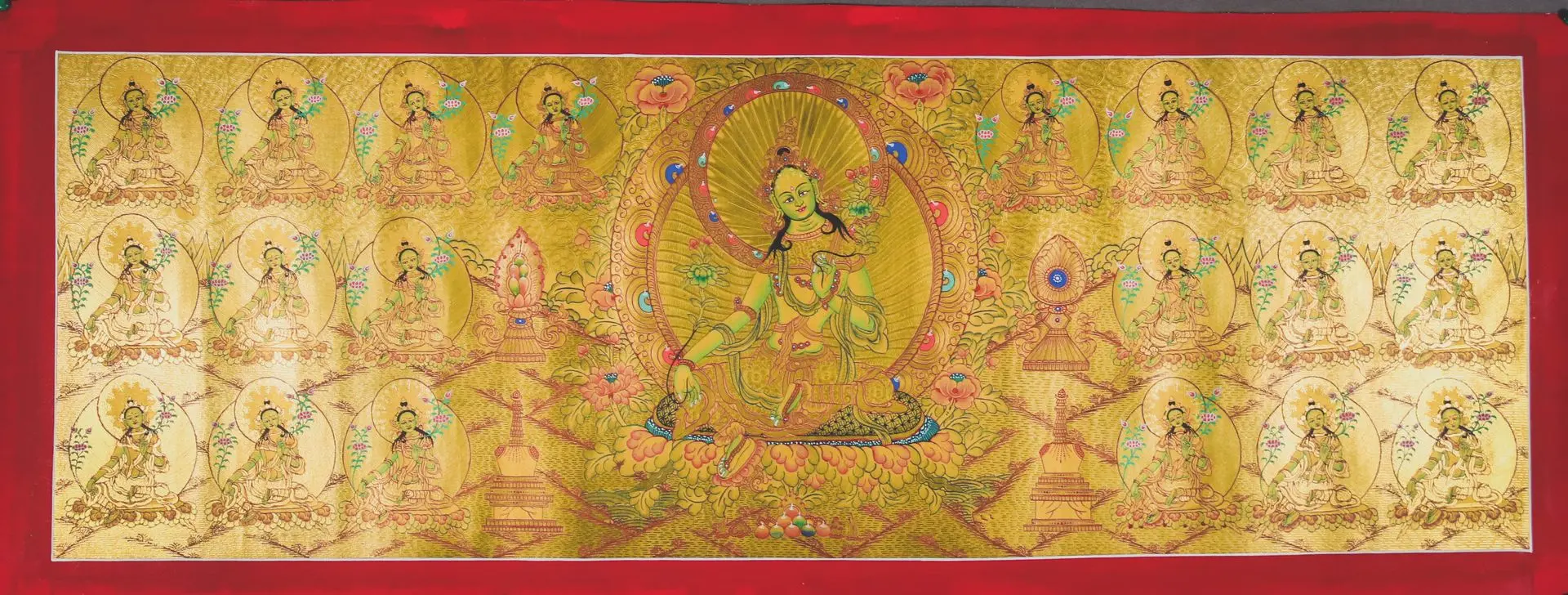
She appears in twenty-one forms. Each form serves different purposes.
But two forms dominate Tibetan Buddhist devotion. Green Tara and White Tara.
These two represent complementary aspects of compassion. Understanding their differences helps you connect with both.
The Fundamental Difference Between Green Tara and White Tara
Here is the core distinction.
- Green Tara embodies active compassion. She springs into immediate action. She removes obstacles right now.
- White Tara embodies nurturing compassion. She heals gently over time. She extends and protects life.
Think of it this way.
- Green Tara is the mother who rushes into danger. She pulls her child from traffic. She acts without hesitation.
- White Tara is the mother who nurses the ill. She sits through the night. She nourishes recovery patiently.
Both expressions are love. Both are desperately needed.
But they serve different moments in life.
Green Tara: The Swift Protectress
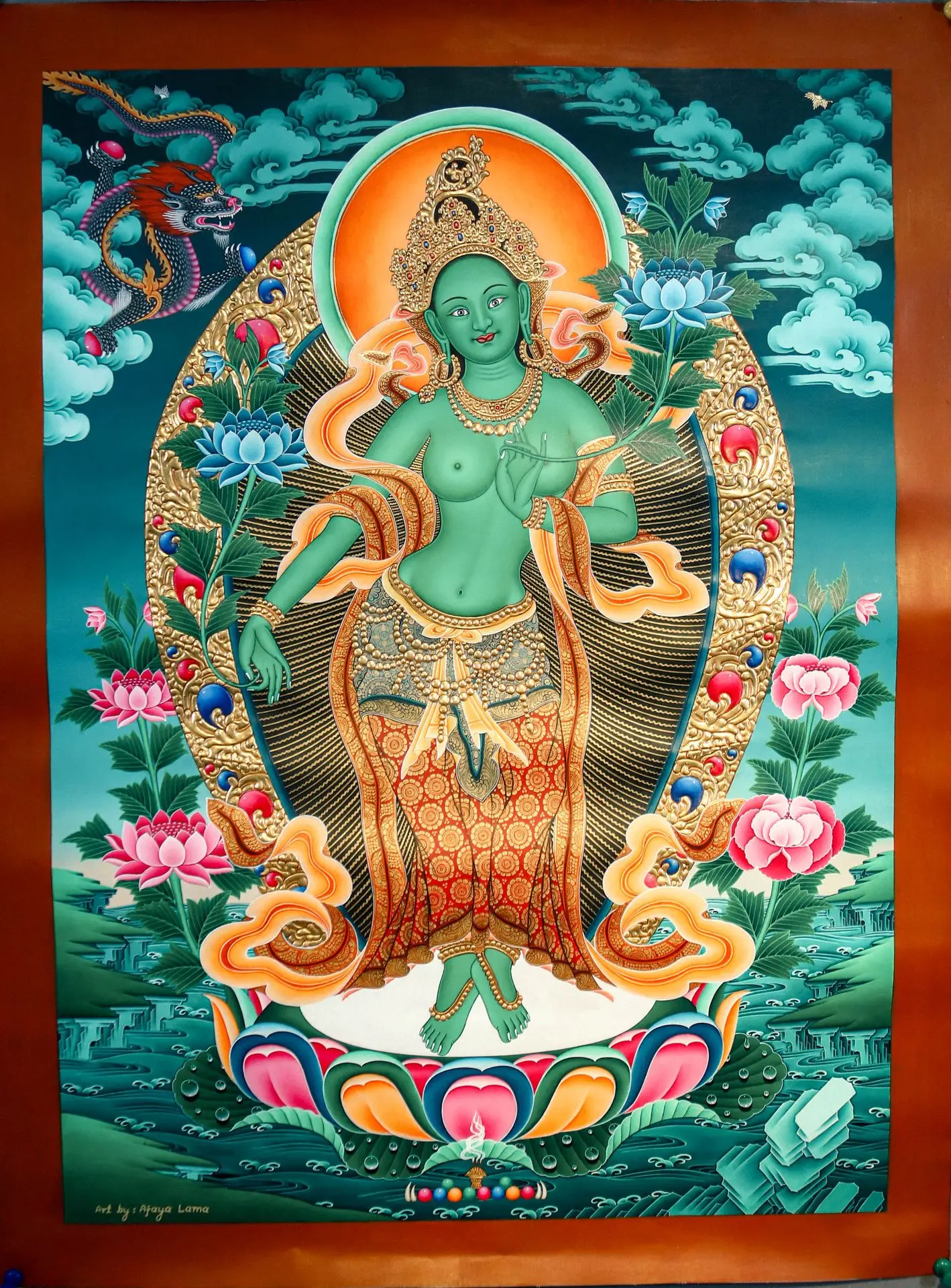
Find this thangka here.
Green Tara is called Drolma Jang. In Sanskrit, she is Shyama Tara.
Her energy is dynamic. Her response is immediate. She wastes no time.
Why Is Green Tara Green?
Her color is deeply symbolic. Green represents the wind element. Wind moves quickly. It reaches everywhere instantly.
Green also connects to the Buddha family of Amoghasiddhi. He represents "all-accomplishing wisdom." This wisdom transforms jealousy into effective action.
Green is the color of living plants. It represents growth, vitality, and renewal. When you see Green Tara, feel that alive energy. She is spring after winter. She is movement after stagnation.
The Meaning Behind Green Tara's Posture
Look closely at how Green Tara sits. She is in lalitasana. This is a "royal ease" posture. But notice something crucial. Her right leg extends downward. Her foot steps toward you.
This is not relaxation. This is readiness. She is about to stand up. She is prepared to spring into action. The moment you call, she moves.
Her left leg remains folded. This shows she maintains meditation stability. Action without wisdom becomes chaos.
Green Tara acts quickly. But she acts wisely.
Green Tara's Hand Gestures and Their Meaning
Green Tara's hands reveal her function.
Right Hand: Varada Mudra
Her right hand rests on her right knee. The palm faces outward and downward. Fingers point toward the earth.
This is the gesture of supreme generosity. She gives without hesitation. She grants whatever you need.
This mudra also represents wish fulfillment. Ask, and she responds.
Left Hand: Vitarka Mudra with Lotus
Her left hand is at heart level. Thumb and ring finger touch. The other fingers extend upward. This gesture represents teaching and reassurance. She offers spiritual guidance alongside worldly help.
She holds a blue lotus stem. The utpala flower blooms near her left shoulder. The blue lotus represents purity and power. It blooms at night. It thrives in darkness.
This symbolizes hope even in dark times. Green Tara finds you in your darkest moments.
What Does Green Tara Help With?
People turn to Green Tara for urgent needs.
- Immediate danger. Physical threats, accidents, crises demand swift response.
- Travel protection. Safe journeys and avoiding mishaps on roads bring peace of mind.
- Fear removal. Anxiety, terror, and overwhelming dread dissolve in her presence.
- Obstacle clearing. Blocked situations, stuck projects, and resistance need her dynamic energy.
- Quick decisions. Clarity comes when you must act fast.
- Legal troubles. Court cases, disputes, and conflicts with authority require her protection.
Green Tara's Mantra
Her mantra is famous. Om Tare Tuttare Ture Soha.
Tibetans recite it constantly. During earthquakes. During storms. During any sudden threat.
The response is immediate. Obstacles dissolve. Fear releases.
White Tara: The Mother of Long Life
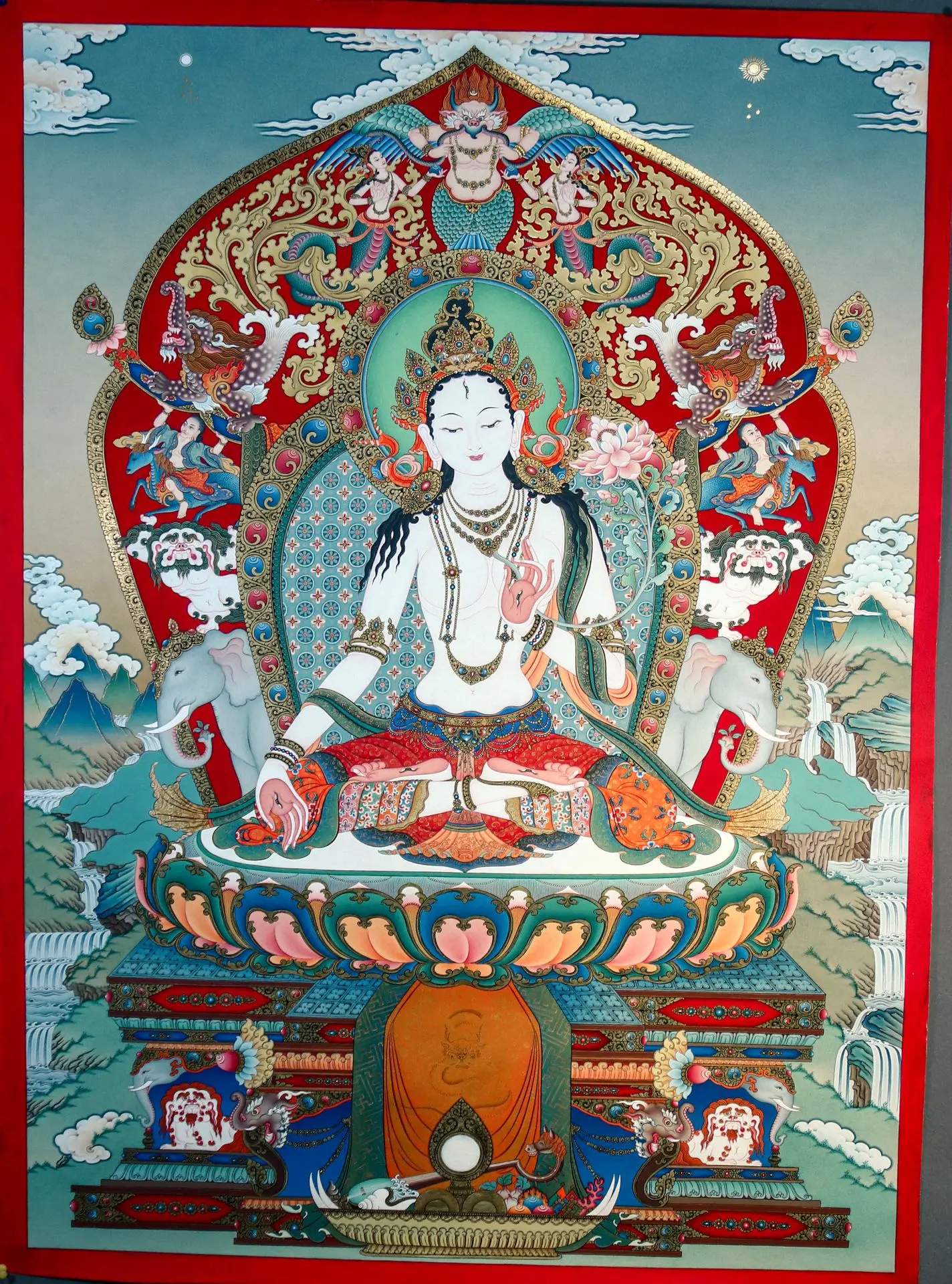
Find this exclusive Green Tara Thangka here.
White Tara is called Drolma Karmo. In Sanskrit, she is Sitatara.
Her energy is gentle. Her work is gradual. She sustains over time.
Why Is White Tara White?
White represents purity in Tibetan Buddhism. It also represents peace and healing.
White connects to the water element. Water nourishes. Water cleanses. Water sustains life.
White is also the color of moonlight. It is cool, soothing, and calming.
When you see White Tara, feel that serenity. She is the calm after storm. She is rest after labor.
The Meaning Behind White Tara's Posture
White Tara sits in full lotus position. Both legs are folded. She is completely stable.
This is padmasana. The meditation posture of Buddhas.
There is no extended leg here. No readiness to jump up.
White Tara is not rushing anywhere. She maintains steady presence. She offers continuous, unwavering support.
Her work happens over time. Healing takes patience. Longevity requires sustained care.
She sits with you through the long process.
White Tara's Seven Eyes: The Unique Feature
Here is White Tara's most distinctive feature.
She has seven eyes.
Two eyes occupy their normal position. A third eye sits on her forehead.
But then look at her hands. An eye appears in each palm.
Look at her feet. An eye appears in each sole.
Seven eyes total. What do they mean?
These eyes see suffering everywhere. All directions. All realms. All times.
Nothing escapes her compassionate gaze. No being is overlooked. No pain goes unnoticed.
The eyes also represent complete awareness. She watches your health continuously. She notices subtle imbalances early.
This is preventive compassion. She protects before crisis happens.
White Tara's Hand Gestures and Their Meaning
White Tara's hands differ from Green Tara's.
Right Hand: Varada Mudra
Like Green Tara, her right hand extends in giving gesture. Palm outward. Generosity flowing.
But her gift is specific. She grants long life. She bestows health and vitality.
Left Hand: Vitarka Mudra with Lotus
Her left hand also holds a lotus stem. But her lotus is often white or pale pink.
The white lotus represents mental purity. It connects to spiritual development alongside physical health.
Three flowers often appear on her lotus stem.
- Fully bloomed flower. This represents Buddhas of the present.
- Budding flower. This represents Buddhas of the future.
- Seed pod. This represents Buddhas of the past.
White Tara connects you to enlightened energy across all time.
What Does White Tara Help With?
People turn to White Tara for sustained needs.
- Long life. Extending lifespan and avoiding premature death is her specialty.
- Health recovery. Healing from illness and regaining strength take time and care.
- Chronic conditions. Ongoing health challenges require sustained support.
- Aging gracefully. Vitality in later years and avoiding decline matter deeply.
- Nurturing others. Caring for sick family and supporting elderly parents drains energy.
- Merit accumulation. Spiritual development over time builds gradually.
White Tara's Mantra
Her mantra supports longevity practice.
Om Tare Tuttare Ture Mama Ayuh Punya Jnana Pustim Kuru Soha.
This longer mantra specifically requests life, merit, and wisdom.
Practitioners recite it for themselves. They also recite it for ill loved ones.
Side-by-Side Comparison of Green Tara and White Tara
Let me make the differences crystal clear.
Color and Element Differences
Green Tara:
- Color is emerald green
- Connected to wind element
- Quality is movement and dynamism
- Energy feels active and swift
White Tara:
- Color is pure white
- Connected to water element
- Quality is stillness and peace
- Energy feels calm and nurturing
Posture and Appearance Differences
Green Tara:
- Sits with one leg extended downward
- Has two eyes in normal position
- Posture shows readiness to act
- Holds blue utpala lotus
White Tara:
- Sits in full lotus position
- Has seven eyes across body
- Posture shows steady presence
- Holds white or pink lotus
Function and Purpose Differences
Green Tara:
- Primary function is swift protection
- Response time is immediate
- Focus is removing obstacles
- Type of help is rescue and action
White Tara:
- Primary function is long life
- Response time is gradual
- Focus is sustaining health
- Type of help is nurturing and healing
When to Call Upon Each Tara
Choose Green Tara for These Situations
- Sudden danger. When physical threats demand immediate protection.
- Travel anxiety. When journeys create fear and worry.
- Urgent obstacles. When something blocks your path right now.
- Fear and terror. When anxiety grips you and will not release.
- Legal troubles. When conflicts require swift resolution.
- Stuck situations. When life feels paralyzed and needs movement.
Choose White Tara for These Situations
- Chronic illness. When healing requires sustained support over time.
- Aging parents. When elderly loved ones need longevity blessings.
- Surgery recovery. When the body needs patient nurturing.
- Life extension. When you want to cultivate long, healthy life.
- Ongoing health focus. When wellness requires daily attention.
- Peaceful energy. When your space needs calm, healing presence.
The Deep Symbolism of Their Colors
Colors in Tibetan art are never decorative. They carry profound meaning.
Green: The Color of Enlightened Activity
Green is associated with the northern direction. It connects to Amoghasiddhi Buddha.
Amoghasiddhi's wisdom is "all-accomplishing." This means effective action without hesitation.
The corresponding affliction is jealousy. Jealousy becomes paralysis. We see others succeeding. We feel stuck ourselves.
Green Tara transforms this. She moves you from jealousy to accomplishment. She unsticks your life.
Green also represents karma family in tantric Buddhism. Karma means action. Green Tara is pure enlightened action.
Her green color announces her function. She does things. She accomplishes results. She makes changes happen.
White: The Color of Purity and Peace
White represents the center in mandala symbolism. It is the starting point. All other colors emerge from white.
White connects to Vairochana Buddha. His wisdom is "all-encompassing." It sees the total picture clearly.
The corresponding affliction is ignorance. Ignorance about our health. Ignorance about impermanence. Ignorance about what sustains life.
White Tara transforms this. She awakens health awareness. She teaches us to value and protect life.
White also suggests purification. Illness is often seen as impurity accumulation. White Tara purifies these blockages.
Her white color announces her function. She cleanses. She clarifies. She creates conditions for healing.
Understanding Their Mantras
Both Taras have powerful mantras. The words differ significantly.
Green Tara's Mantra Explained
Om Tare Tuttare Ture Soha
This is the most popular Tara mantra. Millions recite it daily.
Here is what each syllable means:
- Om. Sacred syllable that opens the prayer.
- Tare. Liberates from samsara, the suffering cycle.
- Tuttare. Liberates from the eight fears.
- Ture. Liberates from disease and obstacles.
- Soha. May these blessings take root in me.
The Eight Fears Green Tara Removes
- Lion fear. Represents pride that destroys us.
- Elephant fear. Represents ignorance that crushes us.
- Fire fear. Represents anger that burns us.
- Snake fear. Represents jealousy that poisons us.
- Thief fear. Represents wrong views that rob us.
- Prison fear. Represents greed that traps us.
- Flood fear. Represents attachment that drowns us.
- Demon fear. Represents doubt that haunts us.
One short mantra. Eight liberations. Immediate results.
White Tara's Mantra Explained
Om Tare Tuttare Ture Mama Ayuh Punya Jnana Pustim Kuru Soha
This mantra is longer. It adds specific requests.
The additional words mean:
- Mama. Mine, making the request personal.
- Ayuh. Life and lifespan.
- Punya. Merit and positive karma.
- Jnana. Wisdom and understanding.
- Pustim Kuru. Please increase these for me.
So the full meaning becomes: "Please increase my life, merit, and wisdom."
This mantra works over time. Daily recitation builds results. The benefits accumulate gradually.
Which Tara Do You Need Right Now?
Let me help you decide.
Signs You Need Green Tara
You face immediate challenges. Something urgent demands attention.
- You are traveling soon and feel anxious about safety.
- A sudden obstacle has blocked your progress.
- Fear grips you and will not release.
- Legal or conflict situations need resolution.
- You need courage to take action now.
- Life feels stuck and you need movement.
Green Tara's energy is like a mother who fights for her child. She protects fiercely. She acts without hesitation.
Her Thangka brings dynamic energy into your space. It reminds you that help comes swiftly when needed.
Signs You Need White Tara
You face ongoing challenges. Something requires sustained attention.
- You or a loved one is healing from illness.
- Elderly parents need blessings for longevity.
- You want to cultivate better health habits.
- Someone is recovering from surgery or treatment.
- You seek peaceful, nurturing energy in your space.
- You are doing long-term spiritual practice.
White Tara's energy is like a mother who nurses through illness. She stays present. She nourishes patiently.
Her Thangka brings healing energy into your space. It reminds you that recovery takes time and care.
Why Many Practitioners Choose Both
Many practitioners connect with both Taras.
Life brings different challenges at different times. Having both images creates complete protection.
Green Tara handles emergencies. White Tara sustains health.
Together, they represent complete maternal compassion. Active rescue and patient nurturing. Swift protection and gradual healing.
Consider placing both in your meditation space. Call on each as needed.
Green Tara and White Tara Thangkas as Meaningful Gifts
Both Tara forms make deeply meaningful gifts.
When to Give a Green Tara Thangka
Green Tara Thangkas work beautifully for these recipients:
- Someone starting a new journey. New job, new home, or new country brings uncertainty.
- Someone facing obstacles. Difficult projects and blocked situations need her energy.
- Someone who travels frequently. Business travelers and adventurers need protection.
- Someone dealing with fear. Anxiety sufferers find courage through her.
- Anyone needing encouragement. Her energy says "You can do this."
When to Give a White Tara Thangka
White Tara Thangkas work beautifully for these recipients:
- Elderly parents or grandparents. Blessing their longevity shows deep respect.
- Someone recovering from illness. Supporting their healing journey matters.
- New mothers. Nurturing energy helps those nurturing others.
- Healthcare workers. Connecting them to healing power sustains them.
- Milestone birthday celebrations. Especially meaningful for 60th, 70th, or 80th birthdays.
The Message Each Gift Sends
When you give a Green Tara Thangka, you say:
"May you be protected from all dangers. May obstacles dissolve before you. May you move through life with courage."
When you give a White Tara Thangka, you say:
"May you live long and healthy. May your life be blessed with peace. May healing energy surround you always."
Both messages are profound expressions of love.
Where to Place Your Tara Thangka
Where should your Tara Thangka hang?
General Placement Guidelines
Thangkas deserve respectful placement. Keep these principles in mind:
- Height matters. Place the image at eye level or above for respect.
- Cleanliness matters. Keep the area tidy and dust-free always.
- Visibility matters. Position where you will see it regularly.
Best Locations for Green Tara
Green Tara's active energy suits certain locations.
- Near your front door. Protection flows as you come and go.
- In your travel preparation area. Blessings cover your journeys.
- In your workspace. Support for overcoming obstacles arrives daily.
- In your meditation room. Face her during practice for connection.
Best Locations for White Tara
White Tara's healing energy suits certain locations.
- In your bedroom. Nurturing energy supports restful sleep.
- In healing spaces. Treatment rooms and recovery areas benefit greatly.
- Near elderly family members. Longevity blessings surround them.
- In your meditation room. Face her during practice for connection.
The Beautiful Unity Behind Their Differences
We have explored many differences. But remember something important.
Green Tara and White Tara are ultimately one being.
They represent different aspects of the same enlightened compassion. Like two hands of one mother. Different functions, same love.
In advanced practice, this unity becomes clear. The active and nurturing merge. The swift and gradual join.
For now, appreciate both forms. Connect with the one you need.
But know that calling on one calls on both. Tara's compassion is complete. Whatever you need, she provides.
Conclusion: Choosing Your Tara
You now understand these two beloved goddesses.
Green Tara springs into action. She removes obstacles swiftly. She protects from danger.
White Tara nurtures over time. She heals illness gently. She extends precious life.
Which energy do you need in your space?
Consider your current challenges. Think about what support would help most.
Then choose your Tara.
She is waiting to help.
Explore our complete collection of Bodhisattva Thangkas. Find the Green Tara, White Tara, or both that speak to your heart. Each painting is created with traditional methods and blessed for your spiritual practice.