A monk once spent twenty years doing everything right.
He meditated every morning before sunrise. He kept his vows without exception. Villagers walked three days through mountain passes to sit near him.
But something was missing.
He could feel their suffering like it was his own. He wept with mothers who lost children. He stayed awake, worrying about farmers who had lost their harvests.
Yet he could not help a single one of them.
Not really.
He felt everything. He understood nothing. And even when he glimpsed what was needed, he lacked the courage to act.
His teacher watched this quietly for years.
Then one grey morning, the teacher climbed the monastery steps carrying three small objects wrapped in silk. He placed them on the monk's altar without explanation.
He simply said:
"You have been trying to clap with one hand. Now use all three."
He left before the monk could ask a single question.
Those three figures sitting on that altar were Chenrezig, Manjushri, and Vajrapani. The Rigs Gsum Gonpo. The Lords of the Three Families. The most essential grouping in all of Tibetan Buddhism.
This is their story. More importantly, this is why they belong on your altar too.
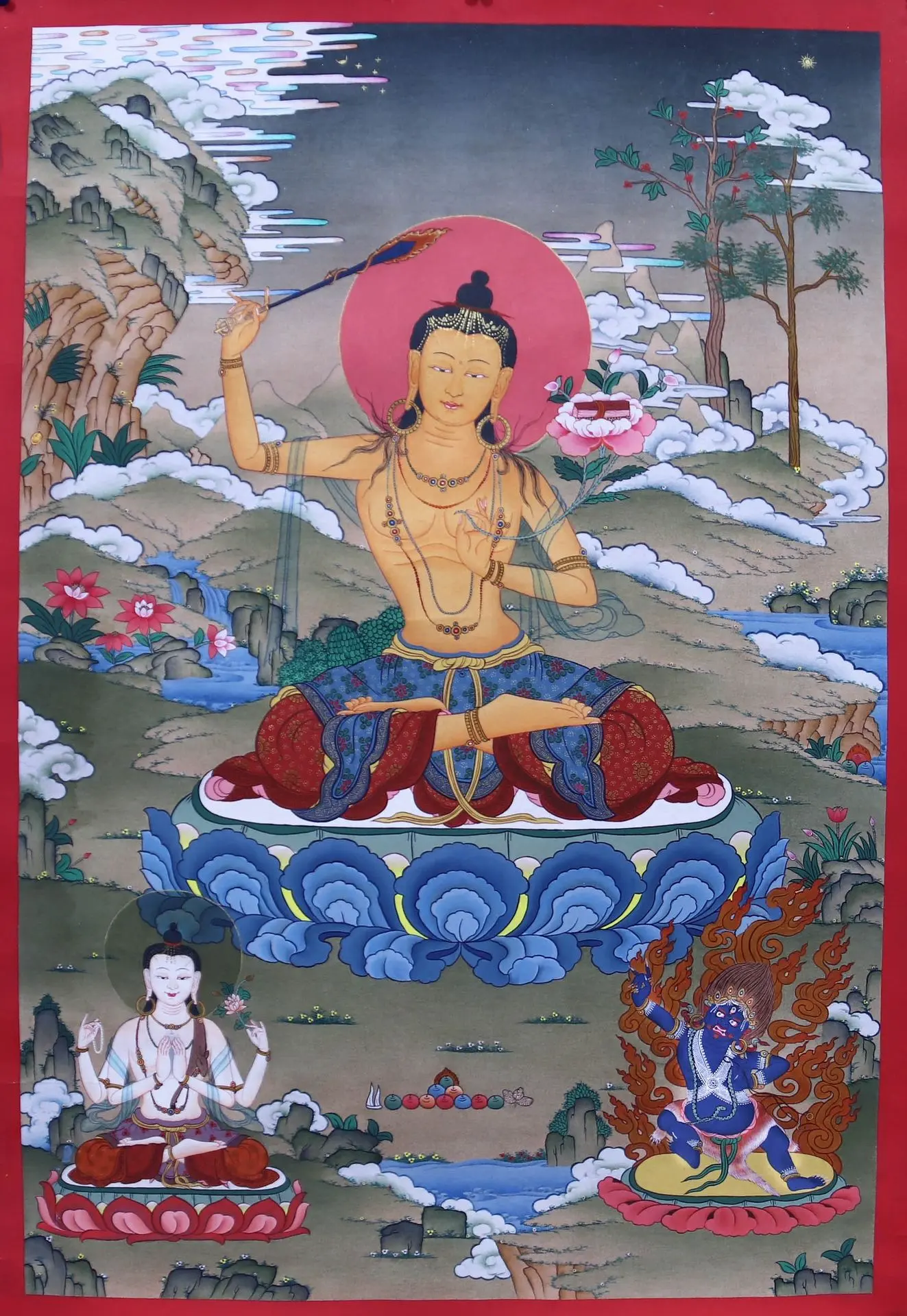
Find this thangka here.
The Teaching Hidden Inside the Story
The monk's problem was not laziness. It was not a lack of devotion.
He was missing two things that his compassion desperately needed.
Tibetan masters identified three qualities that every awakened person must carry. Not one. Not two. All three are working together at the same time.
- Compassion is the heart that genuinely cares for others.
- Wisdom is the mind that sees situations with total clarity.
- Power is the force that turns understanding into real action.
Each quality belongs to one of three Bodhisattvas:
- Chenrezig holds Compassion, pure white and endlessly open.
- Manjushri holds Wisdom, golden orange and sharp as flame.
- Vajrapani holds Power, deep blue and vast as the open ocean.
Together they form one complete picture. Separately, each one quietly creates a problem you will recognise immediately.
What Goes Wrong When One Quality Is Missing
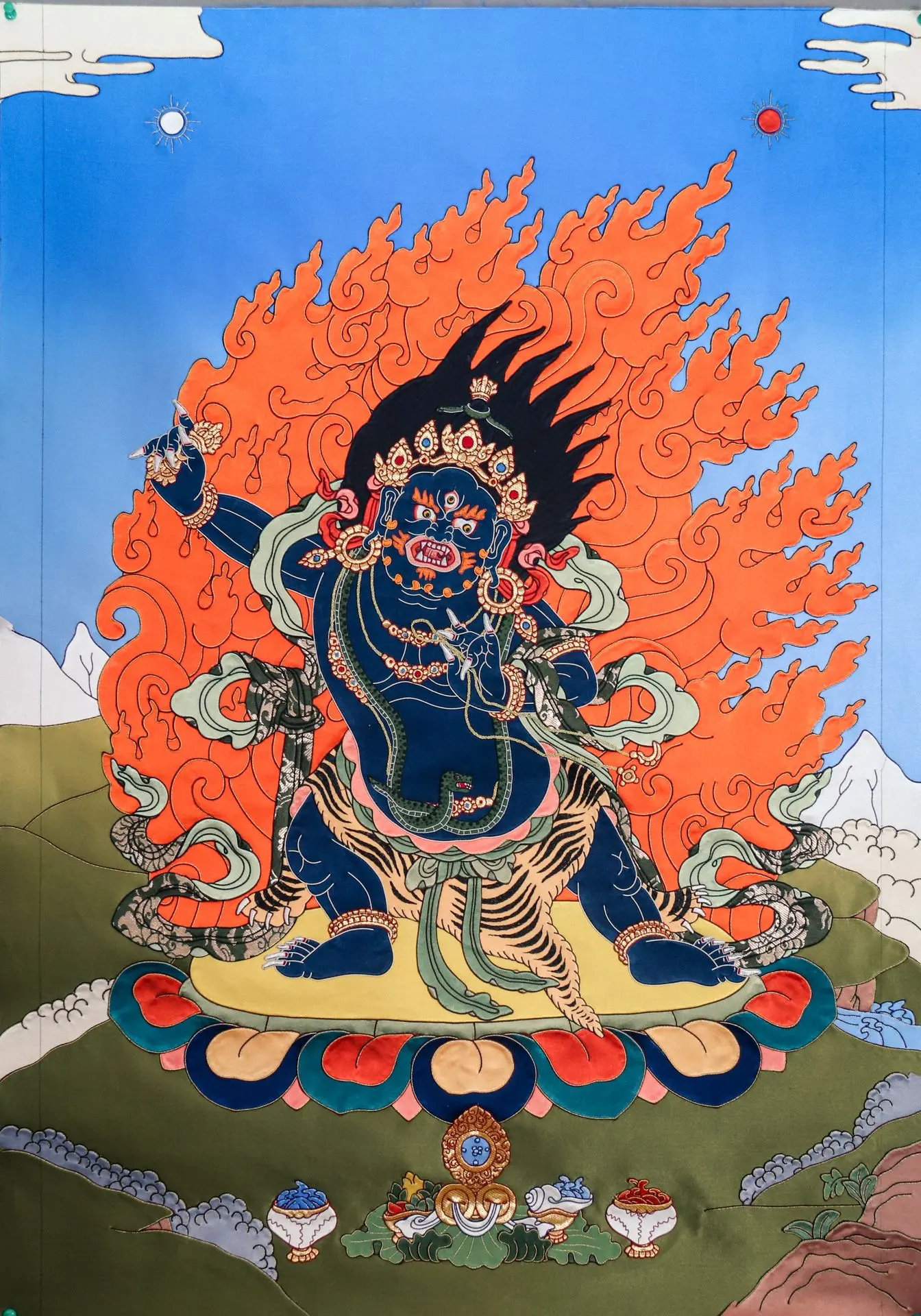
Find this thangka here.
When You Have Compassion but Not the Others
Picture someone who feels everything deeply.
They give without hesitation. Their hearts break for anyone who struggles.
- Their help often makes the problem worse over time.
- They exhaust themselves because boundaries feel cruel to them.
This is compassion without wisdom or power. It is a kind-hearted driver driving a car with no headlights on.
The monk lived here for twenty years. His love for the villagers was real. But love alone could not show him what they needed or give him the strength to provide it.
When You Have Wisdom but Not the Others
Now, picture the sharp thinker who sees everything clearly.
They diagnose problems in minutes. Their analysis is almost always correct.
- They observe suffering without feeling moved to help at all.
- Their cleverness creates distance instead of a real connection.
This is wisdom without compassion or power. It is a perfect map that no one actually wants to follow.
When You Have Power but Not the Others
This is the most dangerous combination of all.
They make things happen. They push through every obstacle with enormous energy.
- They act without understanding what they are actually solving.
- They cause serious harm and genuinely call it progress.
This is power without wisdom or compassion. It is a hammer that treats everything like a nail.
Tibetan masters watched all three failures happen across generations of sincere practitioners. Their answer was not a new text or a longer retreat.
It was three figures placed together on an altar.
The Three Lords Up Close
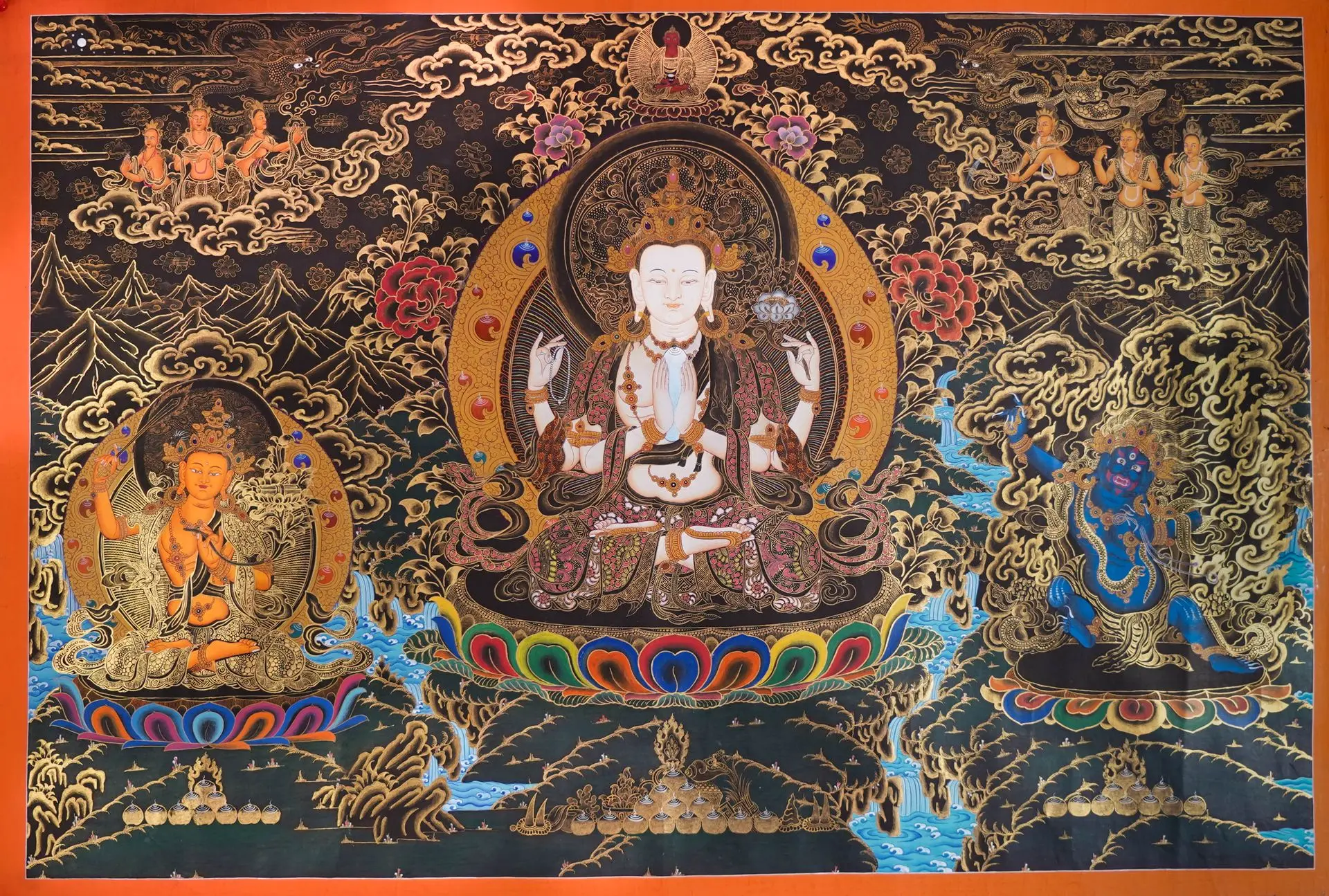
Find this thangka here.
Chenrezig: The White Heart
Chenrezig is Tibet's most beloved figure. That is not an overstatement.
His mantra, OM MANI PADME HUM, is carved into stones across the entire Himalayan plateau. It spins in prayer wheels from Lhasa to Ladakh every single day.
He sits at the center of the trinity because compassion is the reason everything else exists. Without a caring heart, wisdom becomes cold. Without love for others, power serves only the self.
Chenrezig is what keeps the other two honest.
What he looks like:
- His body is pure white, luminous, and completely peaceful.
- His four arms reach in every direction toward every being.
- Two hands join at his heart, holding the wish-fulfilling jewel.
- His upper hands hold a crystal mala and a white lotus.
White contains every color within it. His compassion contains every being within it. None ranked. None excluded. None ever abandoned.
His mantra is OM MANI PADME HUM.
He always stands in the center of your display. Everything else is arranged around him.
Explore Our Chenrezig Thangka Collection.
Manjushri: The Golden Mind
Manjushri appears as a sixteen-year-old prince.
That detail matters more than it seems. Wisdom, the tradition insists, has nothing to do with age. It is not slowly built through decades of experience. It arrives suddenly, like a light switching on in a dark room.
His flaming sword is the symbol you need to understand. It does not cut flesh. It cuts through delusion, the comfortable fog of wishful thinking and self-deception that causes most human suffering.
He was the first quality the monk's teacher gave him. Before anything else, the monk needed to see clearly.
What he looks like:
- His body glows golden orange, warm and mentally clarifying.
- His right hand holds a flaming sword raised high above him.
- His left hand holds the Prajnaparamita scripture on a lotus.
- His expression is alert and gentle, focused without strain.
Students chant his mantra before examinations. Writers call on him before difficult work. His energy cuts through the fog before it settles in.
His mantra is OM A RA PA TSA NA DHI.
He stands on the viewer's left side, to the right of Chenrezig.
Explore Our Manjushri Thangka Collection
Vajrapani: The Blue Force
Vajrapani is the one most people overlook. That oversight is itself a lesson worth reflecting on.
He is not serene. He is not soft. He appears fierce, muscles tensed, vajra raised high, surrounded by flames. He does not invite you to relax into his presence.
He invites you to move.
Go back to the monk one final time. After his teacher placed the statues, he had compassion. He also had wisdom now. He could finally see what the villagers needed. He understood exactly what would help and what would cause further harm.
And still he hesitated at the door every single morning.
The conversation felt too difficult. The action felt too demanding. The gap between knowing and doing felt impossibly wide.
Vajrapani lives inside that gap. His entire purpose is to close it.
Compassion says: I care enough to help someone today. Wisdom says: I can see exactly what is needed right now. Vajrapani says: Stop waiting. Walk through the door. Move.
What he looks like:
- His body is deep blue, vast and powerful like the open ocean.
- His right hand holds the vajra thunderbolt raised high.
- His body is dynamic and muscular, surrounded by transformation flames.
- His expression is fierce and focused, completely uncompromising.
He is not here to comfort you. He is here to move you forward.
His mantra is OM VAJRAPANI HUM.
He stands on the viewer's right side, to the left of Chenrezig.
Explore Our Vajrapani Thangka Collection
Bring All Three Home Together
The teaching makes sense as words on a page. It becomes real when the three figures are present in your space every morning.
You see them before you do anything else. Their colors ground your altar. Their presence reminds you of which quality you are neglecting today.
We offer matched trinity sets painted by the same artist in the same size. They are designed to hang together as one unified composition, not three separate pieces sharing a wall.
Shop the Complete Rigs Gsum Gonpo Trinity Set
How to Display the Trinity at Home
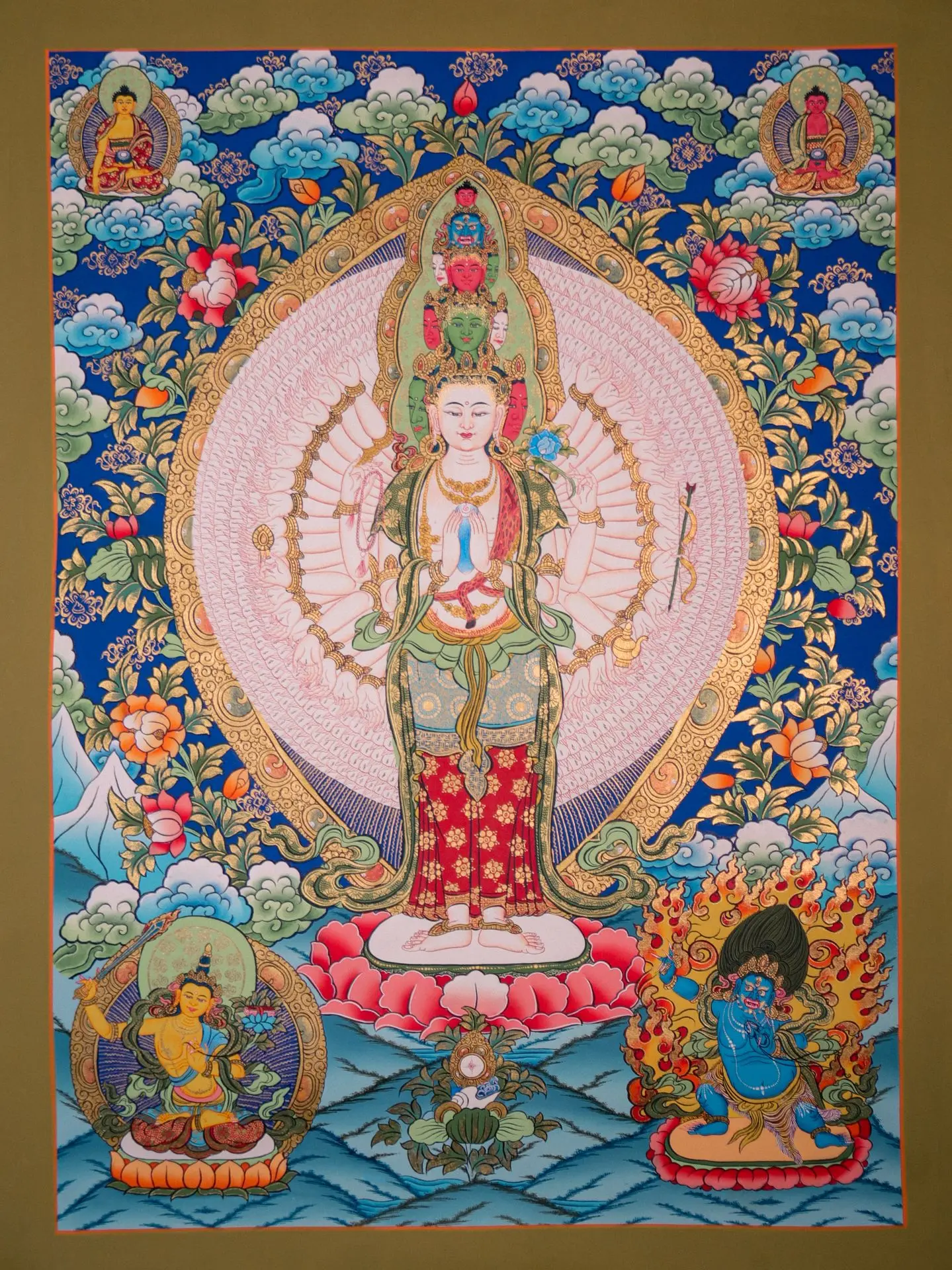
Find this thangka here.
Philosophy lives in your mind. The altar lives in your room. Here is exactly how to bring both together.
The Arrangement That Has Always Worked
The placement follows the same logic as the teaching itself.
Chenrezig sits in the center because compassion anchors everything around it. Manjushri stands to his right, wisdom flowing inward toward the heart. Vajrapani stands to his left, power flowing outward into the world.
As you face the altar:
- Manjushri goes on your left side.
- Chenrezig goes in the center position.
- Vajrapani goes on your right side.
Hang all three at the same height. Keep equal space between each piece. Let them read as one arrangement rather than three separate purchases.
The Size That Works for Most Homes
Start with three matching 10-inch thangkas. Here is why this size works so consistently:
- They fit naturally on most shelves and wall sections.
- Details remain clearly visible and genuinely appreciable.
- Matching sets are most available at this specific size.
- Buying all three together becomes financially realistic immediately.
For a dedicated meditation room, 18-inch thangkas create a more commanding and powerful presence. The principle stays constant regardless of size. Consistency across all three pieces matters more than the measurements themselves.
Building a Simple Altar Around the Trinity
The trinity is your centerpiece. Everything else supports it quietly.
Above the trinity:
- Place your teacher's photograph if you have one.
- Or place Shakyamuni Buddha as the source of all three teachings.
Directly in front:
- Seven small offering bowls filled with clean water are changed daily.
- One fresh flower is replaced whenever it begins to fade.
- Quality incense is lit only during your actual practice sessions.
On either side:
- A butter lamp or simple candle on each side of the arrangement.
- A bell if this is already part of your regular practice.
No special furniture is required. The trinity hung above a simple shelf with one candle and one flower is already a complete and meaningful practice space.
Building the Set One Piece at a Time
Sometimes you start with one. That is completely fine.
Buy the quality you most need to develop right now, today.
- Feeling emotionally drained or deeply disconnected? Start with Chenrezig.
- Feeling mentally foggy or chronically unable to decide? Start with Manjushri.
- Feeling stuck, passive, or unable to follow through? Start with Vajrapani.
One rule that will protect your investment over time:
- Write down the exact size of your first thangka the day you buy it.
- Match every piece you add later to that exact measurement.
- Source from the same artist wherever you possibly can.
A mismatched set loses the compositional harmony that makes the trinity so powerful as a display.
Questions People Ask About the Trinity
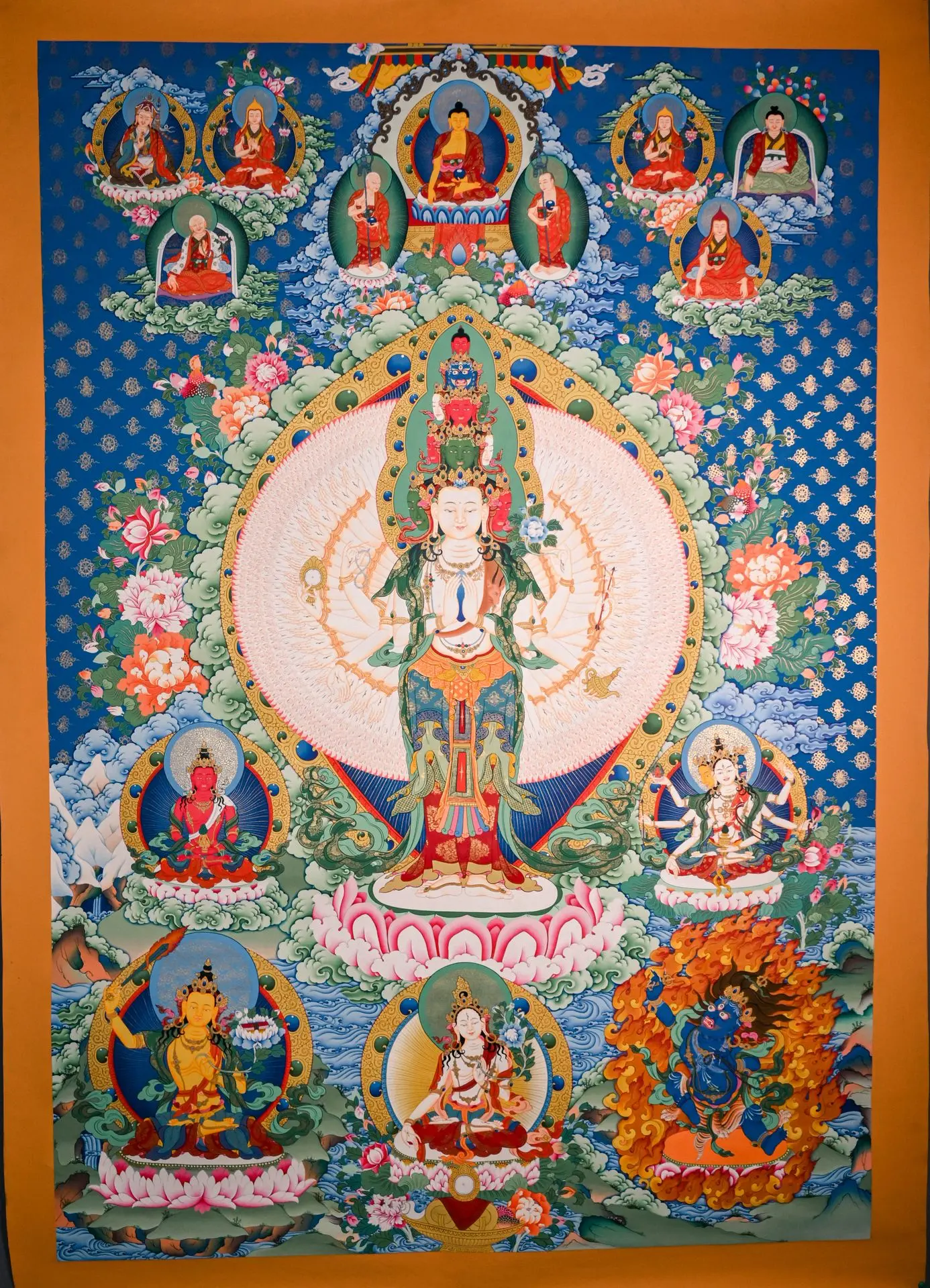
Find this thangka here.
What does Rigs Gsum Gonpo actually mean?
It translates as Lords of the Three Families. It refers to Chenrezig, Manjushri, and Vajrapani together, the three Bodhisattvas whose combined qualities represent complete awakened activity in Tibetan Buddhism.
Which thangkas naturally belong together as a set?
The most classic and historically significant set is the Rigs Gsum Gonpo. Chenrezig, Manjushri, and Vajrapani have been displayed together on Tibetan altars for over one thousand years.
They are the foundational set for any serious collector or practitioner beginning their journey.
How do I arrange the Buddhist trinity correctly?
Place Chenrezig in the center. Place Manjushri on the viewer's left. Place Vajrapani on the viewer's right.
Hang all three at identical heights with consistent spacing between them. Use matching sizes painted by the same artist wherever possible.
Which Bodhisattva should I purchase first?
Start with the quality you most honestly need to develop. Choose Chenrezig if you feel emotionally depleted.
Choose Manjushri if you feel genuinely confused or indecisive. Choose Vajrapani if you feel passive or unable to act on what you already understand well.
Do I truly need all three, or will one be enough?
One thangka is always better than none. But the Rigs Gsum Gonpo teaching is explicit and clear. Each quality alone creates a specific imbalance.
Compassion without wisdom enables harm. Wisdom without compassion enables indifference. Power without both enables destruction. The trinity is the complete picture.
The Morning Everything Changed
The morning after his teacher left those three figures, the monk sat with them for a very long time.
He did not add new practices. He did not read new texts. He did not try to become a different person overnight.
He simply began asking three quiet questions before walking out his door each morning.
Does this action come from genuine care for someone else? That was Chenrezig asking.
Do I actually see what is needed here without wishful thinking? That was Manjushri asking.
Am I truly willing to do what this requires today, not someday? That was Vajrapani asking.
Three questions. Three qualities. One complete way of moving through a world full of suffering.
The villagers noticed the change long before the monk did himself.
The Rigs Gsum Gonpo is not simply a beautiful set of thangkas for your wall. Though it is certainly true.
It is a map of everything a human being needs to act with genuine wisdom and lasting care.
The heart that refuses to stop caring. The mind that insists on seeing clearly. The will that finally walks through the door.
Together they are complete. Together, they are what none of them could ever be alone.
Are you ready to bring all three home?