You see a Thangka painting. Golden Buddhas sit in silence. Green goddesses hold lotus flowers. Then something changes. Fierce beings stare back at you. They have fangs—multiple arms. Flames surround them.
What is happening here? I understand the confusion. Thangka art can be overwhelming for most people at first. But here is good news. Once the basics click, everything makes sense.
This guide introduces every major deity. You will understand their purposes. You will find your perfect Thangka. Let us begin this journey together.
Why So Many Deities Exist
This question comes up constantly. Buddhism seems non-theistic. So why all these figures? Here is the insight that changes everything.
These deities are not Western gods. They do not judge you. They demand no worship. They represent qualities of awakened consciousness.
The Prism Teaches Us
Think about white light. Pass it through a prism. It splits into rainbow colors.
Each color existed within the light. The prism simply revealed them.
Tibetan Buddhist deities work identically.
Enlightenment contains all positive qualities:
- Compassion lives within awakening.
- Wisdom resides there, too.
- Healing and protection exist together.
Deities make these qualities accessible. They give us something to connect with.
Different Problems Need Different Solutions
You face various challenges throughout life.
Struggling with illness? You need healing energy. Facing obstacles? You need protective power. Seeking clarity? You need wisdom.
One abstract concept cannot address everything. Specific enlightened beings can.
This approach is called "skillful means."
The Six Categories of Thangka Figures
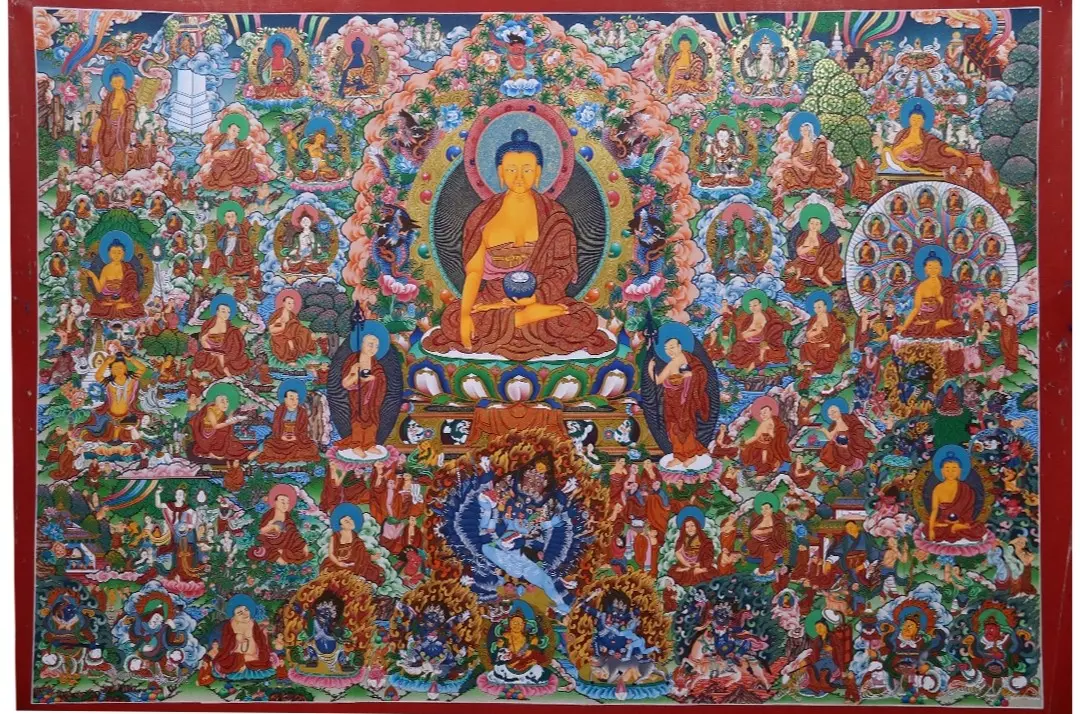
Every Thangka figure belongs to six groups. Understanding these transforms your viewing experience.
1. Buddhas: The Fully Awakened Ones
The word "Buddha" means "awakened one."
A Buddha has completely woken up. All mental afflictions have dissolved. Ultimate reality stands clear.
Think of Buddhas as graduates. They finished the spiritual journey. The rest of us keep walking.
How to Recognize a Buddha
Buddhas share distinctive visual features. Learn these, and identification becomes easy.
The Ushnisha. A raised bump crowns the head. This represents supreme wisdom attainment.
The Urna. A dot sits between the eyebrows. It shows a spiritual vision opening.
Long Earlobes. These signal royal origins. Buddha was born a prince.
Simple Robes. Buddhas dress as monks. No jewelry adorns them.
Golden Skin. This radiates enlightened consciousness. It shows inner transformation.
Shakyamuni Buddha
He is our historical Buddha. He lived 2,500 years ago. He was born Prince Siddhartha. He renounced royalty for truth. In Thangkas, he appears golden. Simple robes cover his form. His right hand often touches the earth.
This gesture recalls his enlightenment moment. He called earth to witness. Want one image representing Buddhism? Choose Shakyamuni.
The Five Dhyani Buddhas
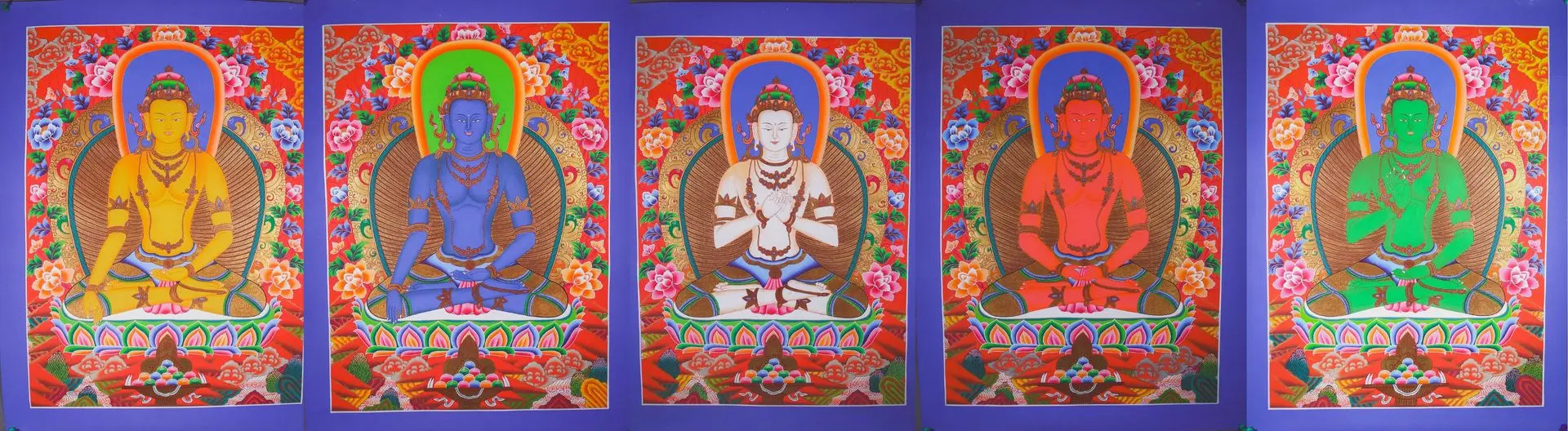
These five transform mental poisons into wisdom. They appear together in mandalas.
Vairocana - His color is brilliant white. He sits at the mandala center. He transforms ignorance into all-encompassing wisdom.
Akshobhya - His color is deep blue. He rules the eastern direction. He transforms anger into mirror-like wisdom. His right hand touches the earth.
Ratnasambhava - His color is golden yellow. He presides over the south. He transforms pride into equalizing wisdom. He gives generously with an open hand.
Amitabha - His color is ruby red. He rules the western realm. He transforms attachment into discriminating wisdom. His hands rest in meditation. Pure Land practitioners love him deeply.
Amoghasiddhi - His color is emerald green. He governs the north. He transforms jealousy into all-accomplishing wisdom. His hand shows fearlessness.
Medicine Buddha
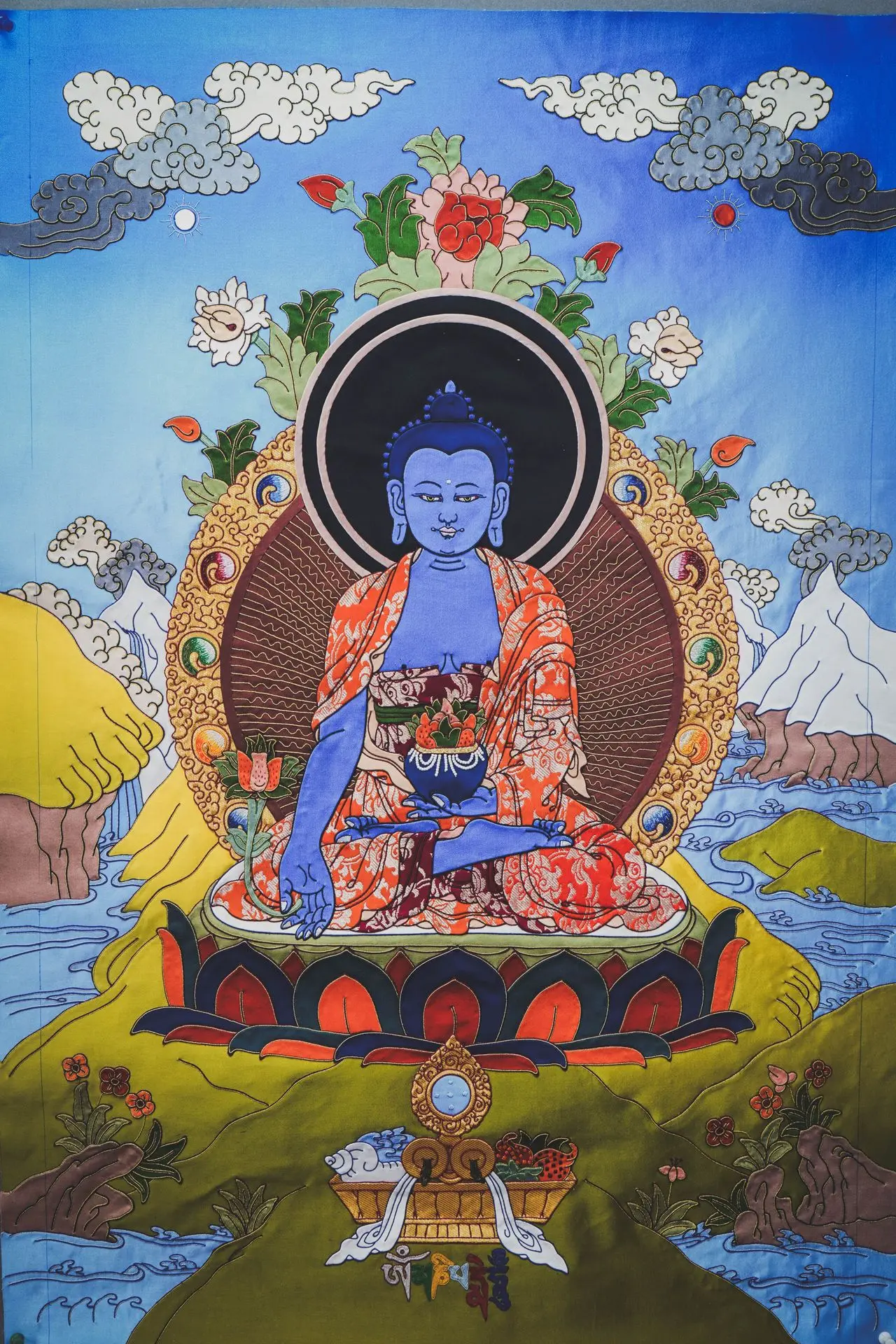
His Sanskrit name is Bhaisajyaguru. He radiates healing energy.
His skin glows lapis lazuli blue. This color represents healing power. His left hand holds healing nectar.
His right hand holds a myrobalan plant. Traditional medicine considers it supreme.
People facing illness connect with him. Healthcare workers find meaning in his practice.
His mantra brings healing vibrations. Simply chanting offers peace.
Amitayus
His name means "Infinite Life." He holds a vase of immortality.
His body shines ruby red. He wears elaborate royal ornaments.
Longevity practices center on him. The elderly find comfort here.
He differs from Amitabha subtly. Same essence, different function.
2. Bodhisattvas: Compassion Walking With Us
The word combines "bodhi" and "sattva." Awakening and being.
A Bodhisattva is dedicated to awakening. But not for themselves alone.
They want enlightenment for everyone. Every single being without exception.
Here is what moves me most. Many delay their final enlightenment. They choose to remain accessible.
Why? Suffering beings still need help.
This is the Bodhisattva vow. Stay while anyone suffers.
How Bodhisattvas Look Different
Visual differences from Buddhas are striking.
Crowns and Jewelry. They wear silk and jewels. Royal appearance shows their active engagement.
Flowing Hair. Unlike monk-like Buddhas, they show elaborate styles.
Active Poses. They stand and lean forward. They reach toward the world.
Symbolic Objects. Each holds items showing their function.
Chenrezig (Avalokiteshvara)
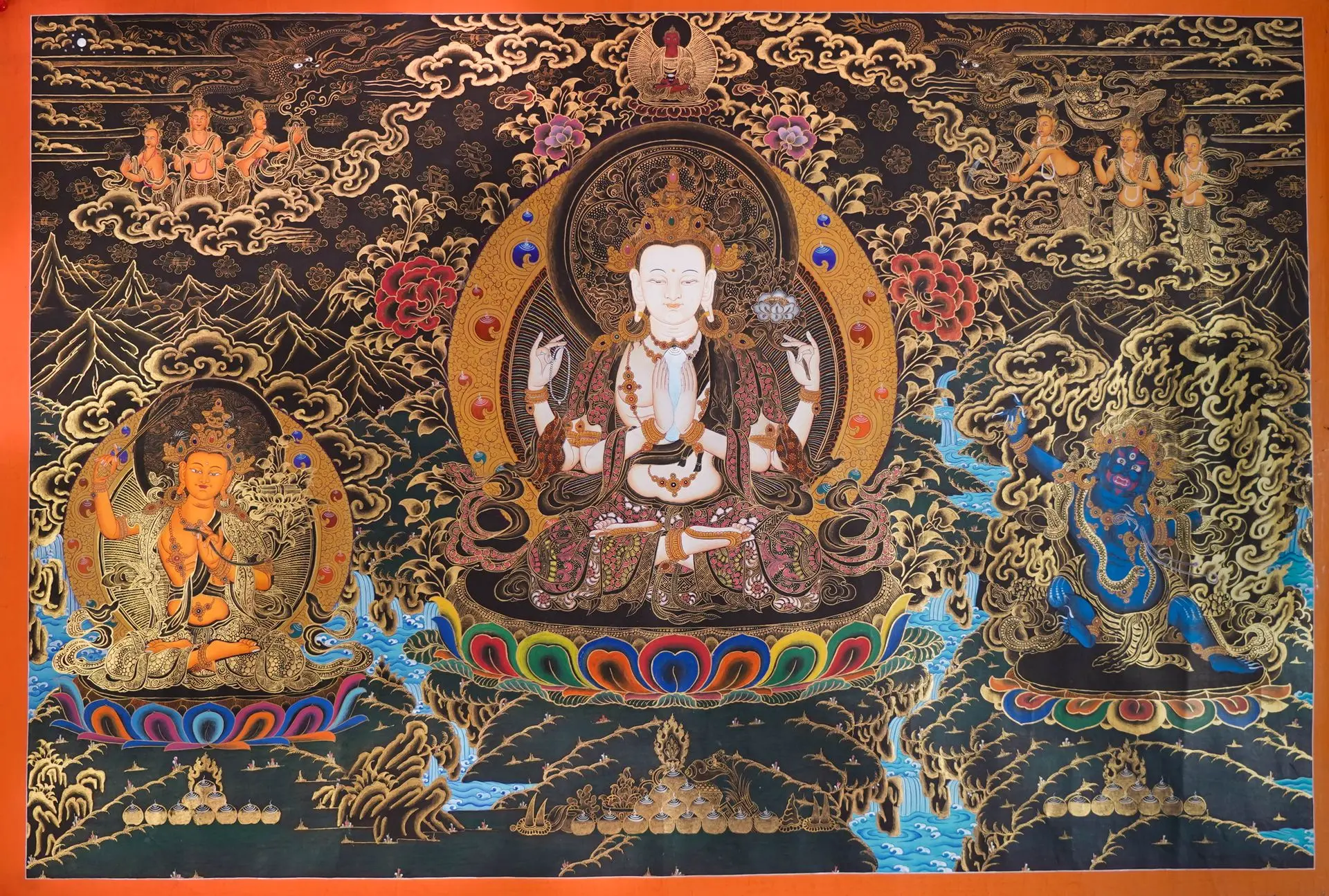
He embodies infinite compassion. He hears every suffering cry.
The Dalai Lama is his emanation. This makes him especially significant.
He appears in many forms:
- Two arms extend compassionately outward.
- Four arms embrace even more beings.
- A thousand arms reach everyone everywhere.
His mantra is famous worldwide: Om Mani Padme Hum.
You have probably heard it chanted. It is Buddhism's most popular mantra.
Manjushri
He wields the flaming wisdom sword. It cuts through ignorance completely.
His body glows golden orange. A lotus supports wisdom scriptures.
Students pray to him before studying. Scholars invoke his blessing.
His mantra sharpens the mind. Om Ah Ra Pa Tsa Na Dhi.
Tibetan students recite it traditionally. It prepares the mind for learning.
Green Tara
She represents active compassion. Her body shines emerald green.
Her right foot extends forward. She is ready to spring into action.
She helps swiftly during danger. No hesitation delays her.
Need obstacle removal? Call Green Tara. She responds immediately.
Her mantra is simple and powerful: Om Tare Tuttare Ture Soha.
People worldwide chant it daily. She is universally beloved.
White Tara
She represents nurturing compassion. Her body radiates pure white.
She has seven eyes. Two on her face. One on the forehead. One on each palm and sole.
These eyes see all suffering. Nothing escapes her awareness.
She offers healing and long life. Her energy is gentle.
She completes the longevity trio. Mothers and the ill connect with her.
3. Wealth and Fortune Deities
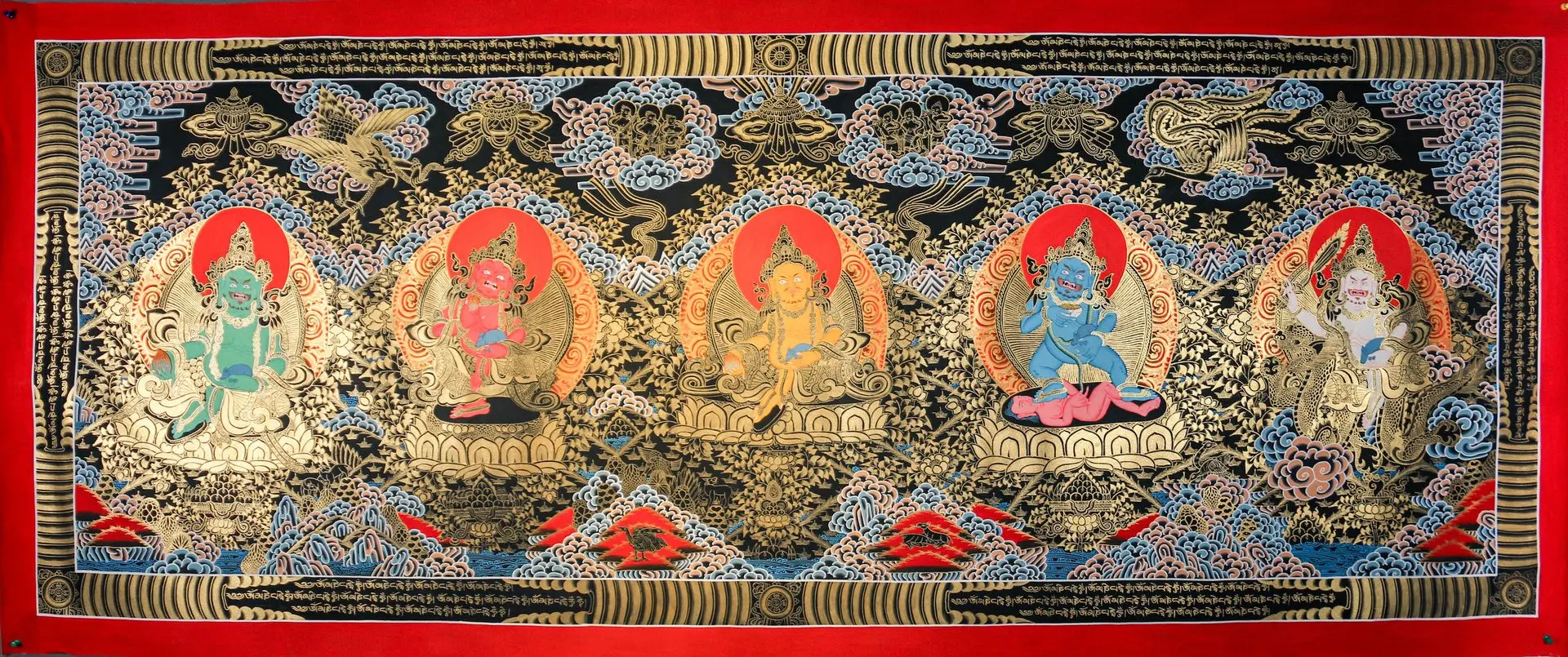
These support material and spiritual prosperity. Their purpose is always compassionate.
Wealth enables practice. It allows helping others generously.
But greed motivation corrupts these practices. Pure intention is essential.
Yellow Jambhala
He grants general wealth and abundance. His body glows golden yellow.
He holds a mongoose in his hand. It spits jewels generously.
He is the most popular Jambhala form. Prosperity flows through his blessing.
White Jambhala
He removes poverty karma specifically. His body shines brilliantly white.
He rides a turquoise dragon. He holds a mongoose and a jewel.
Deep karmic obstacles dissolve. Poverty patterns transform.
Black Jambhala
He overcomes obstacles to wealth. His body appears dark blue-black.
He stands on the corpse of poverty. Fierce energy removes blocks.
Stubborn financial problems respond here. His methods are powerful.
Vasudhara
She pours gems from her hands. Her name means "stream of gems."
She is the abundance Bodhisattva. Her body glows golden yellow.
Six arms extend outward gracefully. Each hand holds precious objects.
Her energy flows like water. Abundance comes naturally.
Ganapati
He removes obstacles to prosperity. His elephant head is distinctive.
He opens doors to success. Blocked paths clear.
Both Hindus and Buddhists honor him. His popularity spans traditions.
Business people invoke him often. New ventures need clear paths.
4. Dharmapalas: Fierce Protector Deities
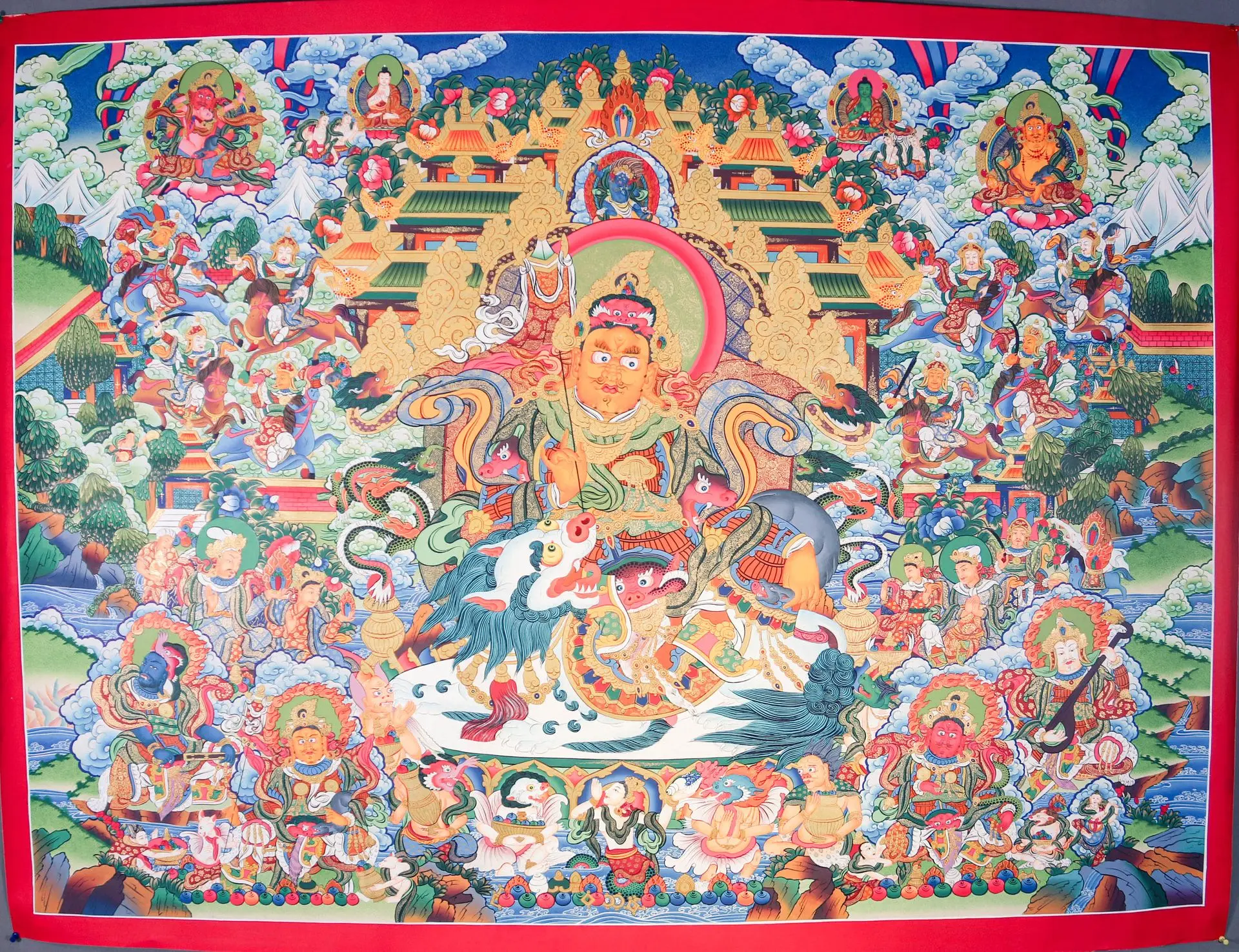
Now we reach the terrifying figures.
Multiple arms extend outward. Skull garlands adorn their necks. Fire surrounds their bodies. Fangs and bulging eyes appear.
Why include such beings? Let me explain.
Understanding Wrathful Appearances
Compassion is not always gentle. This insight changes everything.
Picture this scenario clearly. A child runs toward traffic. What does a loving parent do?
They do not speak softly. They shout. They grab the child forcefully.
That fierce action springs from love. Not from anger.
Dharmapalas embody this fierce compassion.
Why Protectors Look Terrifying
Their appearance serves specific purposes:
Subduing powerful obstacles. Some negativities resist gentle methods. An overwhelming force becomes necessary.
Representing transformation. Flames are wisdom fire. Skulls represent ego death.
Shocking the mind awake. Fierce appearance interrupts ordinary thinking. Insight openings appear.
Mahakala
He is the most important protector. His name means "Great Black One."
He appears in many forms:
- The two-armed form is most common.
- Four-armed form protects wisdom.
- The six-armed form serves all lineages.
His body is always dark blue-black. Flames surround his powerful form.
Here is something beautiful. He is Chenrezig's wrathful emanation.
Compassion itself appears fierce when needed. Love and fierceness partner.
All Tibetan traditions honor him. He protects the dharma.
Palden Lhamo
She is the chief female protector. Her wrath is legendary.
She rides a mule across a blood ocean. Flames engulf her form.
She personally protects the Dalai Lamas. She guards Lhasa city.
Her appearance is intensely fierce. Disease spirits follow her conquest.
They now serve the dharma. She transformed enemies into helpers.
Vajrapani
He holds the vajra of power. He represents all the Buddhas' energy.
His body often appears blue. Sometimes peaceful, often wrathful.
When gentle methods fail, he arrives. His power overwhelms all obstacles.
He protects practitioners from harm. His energy is unstoppable.
5. Yidam Meditation Deities
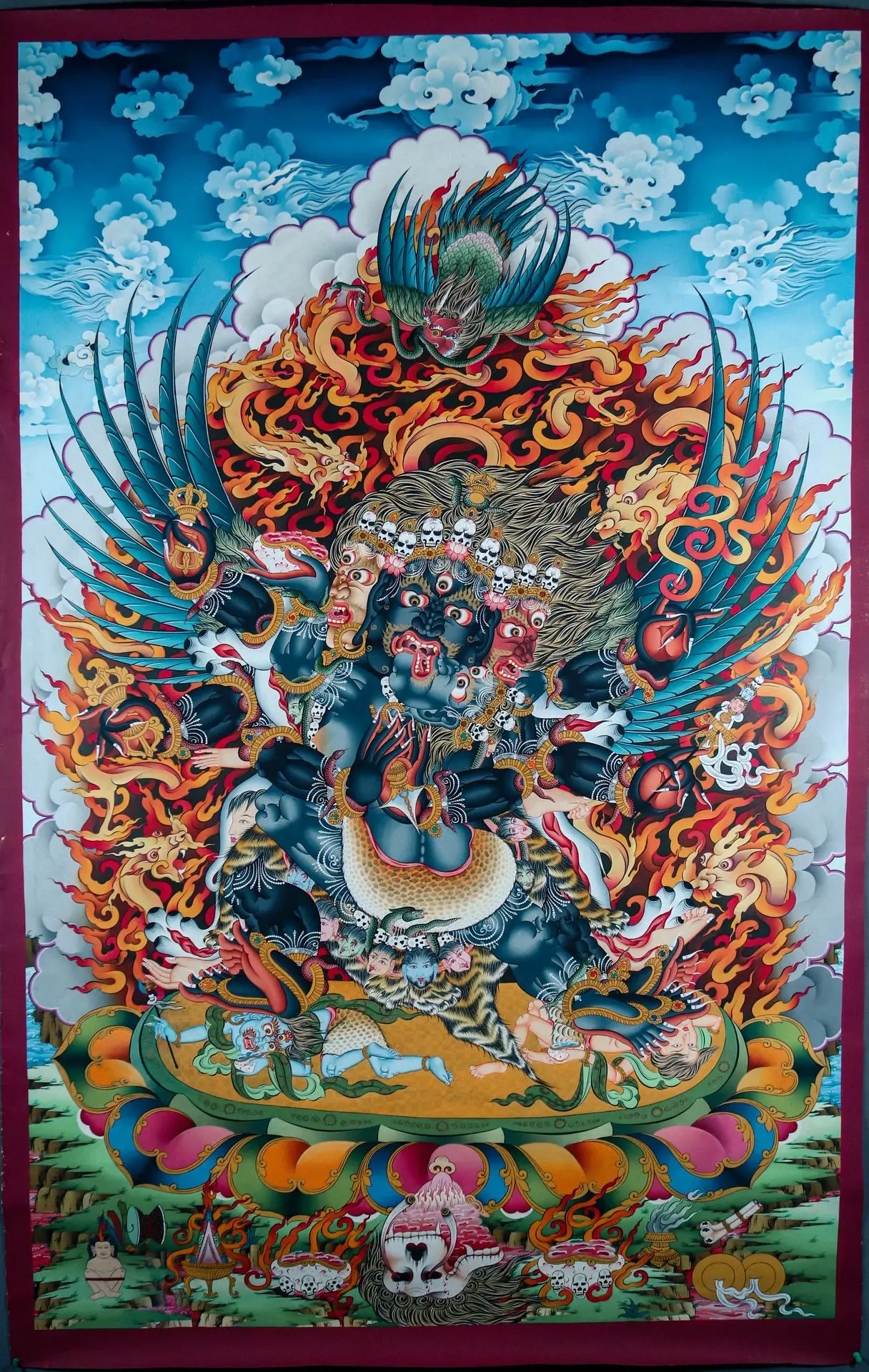
Yidams serve as personal meditation focuses. The word means "mind-bond."
Practitioners receive initiations from teachers. This creates a deep spiritual connection.
The yidam becomes your practice partner. You visualize becoming them.
Vajrayogini
She is the supreme female yidam. Her body blazes brilliant red.
She dances on the corpses of ego. A curved knife cuts attachment.
She holds a skull cup high. It contains great bliss nectar.
All lineages practice her form. She leads to enlightenment swiftly.
Her energy is direct and powerful. No elaborate complexity here.
Chakrasamvara
He embodies the union of bliss and emptiness. Blue body, four faces, twelve arms.
He embraces his consort Vajravarahi. Their union shows wisdom-compassion unity.
Kagyu lineage emphasizes his practice. He is central to their path.
His crown bears the Akshobhya Buddha. This shows his enlightened nature.
Yamantaka
His name means "Terminator of Death." He conquers death itself.
He has a buffalo head. Thirty-four arms extend outward. Nine faces look in all directions.
He is Manjushri's wrathful form. Wisdom appears fierce when needed.
Gelug tradition emphasizes him strongly. Je Tsongkhapa practiced him extensively.
Not just physical death ends. Spiritual ignorance dies too.
6. Human Lineage Masters
These are historical figures. They achieved realization as humans.
Their images inspire practitioners. What they achieved, we can too.
Padmasambhava (Guru Rinpoche)
He brought Vajrayana to Tibet. His name means "Lotus Born."
He subdued local spirits powerfully. They became dharma protectors.
He hid treasure teachings throughout Tibet. Tertons would discover them later.
He is considered the second Buddha. Nyingma practitioners revere him utterly.
His image appears everywhere. Eight manifestations show different aspects.
Je Tsongkhapa
He founded the Gelug tradition. His impact was enormous.
He emphasized study and monasticism. Discipline became central.
He wrote extensively on all topics. His collected works fill volumes.
He revived Buddhism in Tibet. Declining practice strengthened.
He appears with a yellow hat. This distinguishes Gelug visually.
Milarepa
He achieved enlightenment in one lifetime. His story is beloved.
He began as a murderer. Black magic killed his relatives.
He met Marpa and transformed completely. Years of hardship purified karma.
He meditated in caves for years. He ate only nettles. His skin turned green.
His songs are treasured everywhere. They convey realization beautifully.
Anyone can transform. His story proves this.
Which Deity Addresses Your Need?
This is the practical question. Which Thangka should you choose?
Let me match problems to solutions.
For Healing and Health
- Medicine Buddha. He radiates healing blue light.
- White Tara. She offers nurturing, healing energy.
- Amitayus. He supports recovery and vitality.
For Long Life
Three deities form a longevity trio:
- Amitayus. He holds immortality nectar.
- White Tara. She preserves life force.
- Ushnishavijaya. She specializes in longevity.
Perfect gift for elderly parents.
For Wisdom and Learning
- Manjushri. He cuts through confusion swiftly.
- Sarasvati. She supports arts and eloquence.
- Prajnaparamita. She embodies perfect wisdom itself.
For Protection
- Mahakala. He guards against all obstacles.
- Palden Lhamo. She offers fierce female protection.
- Green Tara. She removes dangers swiftly.
- Four Heavenly Kings. They guard all directions.
For Compassion Development
- Chenrezig. He is the embodiment of supreme compassion.
- Green Tara. She offers active compassion.
- White Tara. She nurtures with gentle compassion.
For Removing Obstacles
- Green Tara. She excels at swift removal.
- Vajrakilaya. He pins down negativity completely.
- Ganapati. He opens blocked pathways.
For Prosperity
- Vasudhara. She pours abundance freely.
- Jambhala. Five forms grant wealth.
- Vaisravana. He protects existing prosperity.
- White Mahakala. He increases resources.
For Purification
- Vajrasattva. He cleanses negative karma completely.
For Peace and Calm
- Shakyamuni Buddha. He offers ultimate peace.
- Amitabha. He brings warmth and comfort.
Understanding the Visual Language
Thangka art uses consistent symbolism. Learning it deepens appreciation.
What Colors Mean
- Gold/Yellow. Earth, humility, and renunciation.
- Blue. Wisdom, healing, and infinite awareness.
- Red. Compassion, love, and warmth.
- White. Purity, peace, and obstacle removal.
- Green. Action, accomplishment, and growth.
- Black. Power, protection, and subjugating negativity.
What Hand Gestures Mean
- Earth-Touching. The right hand reaches down, recalling enlightenment.
- Meditation. Hands rest in the lap with palms upward.
- Fearlessness. Right hand raised, offering protection.
- Giving. Hand extended, bestowing blessings.
- Teaching. Thumb and finger touch, indicating discourse.
What Objects Mean
- Lotus. Purity arising from mud.
- Vajra. Indestructible enlightenment nature.
- Bell. Wisdom and feminine principle.
- Sword. Cutting through ignorance.
- Book. Sacred wisdom teachings.
- Phurba dagger. Pinning down negativity.
- Skull cup. Transformation of poisons.
- Wheel. The dharma teachings.
How to Choose the Right Thangka
Let me give you a framework.
Start with Your Intention
What do you need right now?
- Healing? Consider Medicine Buddha or White Tara.
- Longevity? Consider the Three Long-Life Deities.
- Wisdom? Consider Manjushri or Sarasvati.
- Compassion? Consider Chenrezig or Green Tara.
- Obstacles? Consider Green Tara or Vajrakilaya.
- Prosperity? Consider Jambhala or Vasudhara.
- Protection? Consider Mahakala or Palden Lhamo.
- General practice? Shakyamuni Buddha always works.
Consider Your Space
Where will this Thangka hang?
- Meditation room. Match the image to your practice.
- Living areas. Peaceful forms work best.
- Bedroom. White Tara creates calm.
- Office. Manjushri supports intellectual work.
Consider the Recipient
Choosing a gift? Match deity to situation.
- Health challenges. Medicine Buddha offers healing.
- Elderly parents. Three Long-Life Deities bless them.
- Students. Manjushri sharpens the mind.
- New ventures. Green Tara removes obstacles.
- Artists. Sarasvati inspires creativity.
- Grieving. Amitabha brings comfort.
Trust Your Intuition
Sometimes logic fails. You simply feel drawn.
This matters deeply. Tibetan Buddhism considers attractions meaningful.
Maybe past-life connections exist. Maybe your soul recognizes what it needs.
Honor that pull.
Bringing It All Together
Thangka art is more than decoration. Each painting opens a spiritual window.
The system makes sense now.
- Buddhas show the destination. Complete awakening awaits.
- Yidams transform your practice. They become meditation partners.
- Bodhisattvas walk with us. They guide with endless compassion.
- Wealth Deities support practice conditions. They enable generosity.
- Protectors guard the journey. They fight what the gentle cannot.
- Lineage Masters prove the path works. They achieved what we seek.
Different deities exist because we differ. The tradition offers specific remedies.
That is compassionate wisdom in action.
Your Next Step
You see Thangka art differently now. The figures are no longer mysterious.
The question becomes personal.
Which deity speaks to you? Which qualities need developing? Which obstacles do you face?
Let those questions guide you.
Remember something beautiful. Simply looking plants awakening seeds.
By reading with interest and respect, you have begun the journey.
Welcome to Thangka art.