Have you ever looked at a Mandala and felt something shift inside you?
Maybe it was peace. Maybe it was wonder. Maybe it was a strange sense of recognition. Like you'd seen this pattern before. In a dream. In a memory you couldn't quite place.
You're not alone.
Millions of people across the world feel this pull toward Mandalas. They hang them on walls. They color them in books. They meditate with them. They create them with sand, paint, and light.
But what is a Mandala, really?
It's more than a pretty pattern. It's more than a coloring book page. It's a map of the entire universe. It's a mirror of the human mind. It's a sacred circle that has guided seekers for thousands of years.
In this guide, we'll explore everything. The meaning. The history. The symbolism. The science. The art.
By the end, you'll understand why Mandalas appear in every culture on Earth. You'll see why they matter. And you'll know how to use them in your own life.
Let's begin.
Table of Contents
- What is a Mandala?
- The True Meaning of Mandala
- Mandala History: A Journey Through Time
- Mandalas Across Cultures
- Mandalas in Buddhism
- Mandalas in Hinduism
- Mandalas in Native American Traditions
- Mandalas in European Art
- The Science Behind Mandalas
- Carl Jung and the Psychology of Mandalas
- Mandala Colors and Their Meanings
- Types of Mandalas
- How to Use Mandalas in Your Life
- How to Create Your Own Mandala
- Common Myths About Mandalas
- FAQ
- Conclusion
What is a Mandala?
Let's start with the basics.
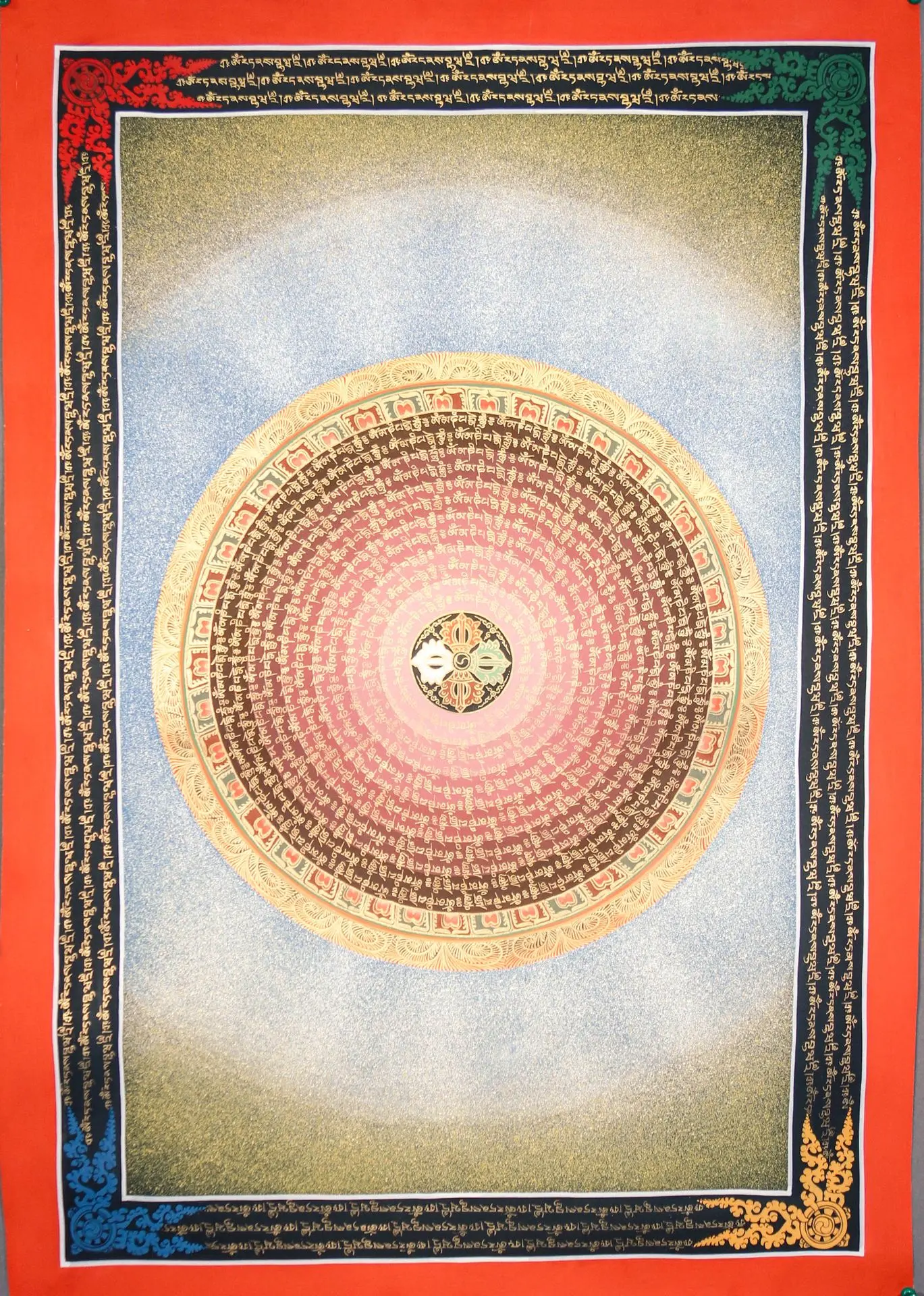
The word "Mandala" comes from Sanskrit. It's an ancient language from India. The word breaks down into two parts. "Manda" means "essence." "La" means "container."
Put them together. You get "container of essence."
But most people translate it simply as "circle." Or "completion." Or "wholeness."
All of these translations are correct. Because a Mandala is all of these things at once.
At its core, a Mandala is a geometric design. It's usually circular. It radiates from a center point. It has symmetrical patterns that repeat outward.
But here's what makes it special.
A Mandala is not just a shape. It's a representation of the universe. It shows how everything connects. From the smallest atom to the largest galaxy. From your deepest fear to your highest joy.
Think of it like a cosmic blueprint.
Every line. Every curve. Every color. Every symbol. It all means something.
That's what makes sacred circle art so powerful. It's not decoration. It's a language. And once you learn to read it, you see it everywhere.
The True Meaning of Mandala
The meaning of a Mandala goes deeper than most people realize.
On the surface, it's a circle. But circles have always been special to humans. They have no beginning. They have no end. They represent eternity. They represent wholeness.
A Mandala takes this idea further.
It shows that wholeness is not empty. It's full. It's layered. It's complex. It's beautiful.
The center of a Mandala represents the self. Your core. Your true nature. Everything radiates outward from this point. Like ripples in a pond. Like light from a star.
The outer edges represent the universe. The world around you. The infinite expanse of existence.
And the patterns in between? They show the journey. The path from your inner self to the outer world. They show how you connect to everything.
This is why Mandalas are called "maps of the cosmos."
They show the structure of reality. They show how the microcosm (you) reflects the macrocosm (the universe).
This idea appears in every major spiritual tradition. It's not a coincidence. It's a universal truth.
Mandala History: A Journey Through Time
The history of Mandalas stretches back thousands of years.
Let's walk through it together.
Ancient Beginnings (1500 BCE and Earlier)
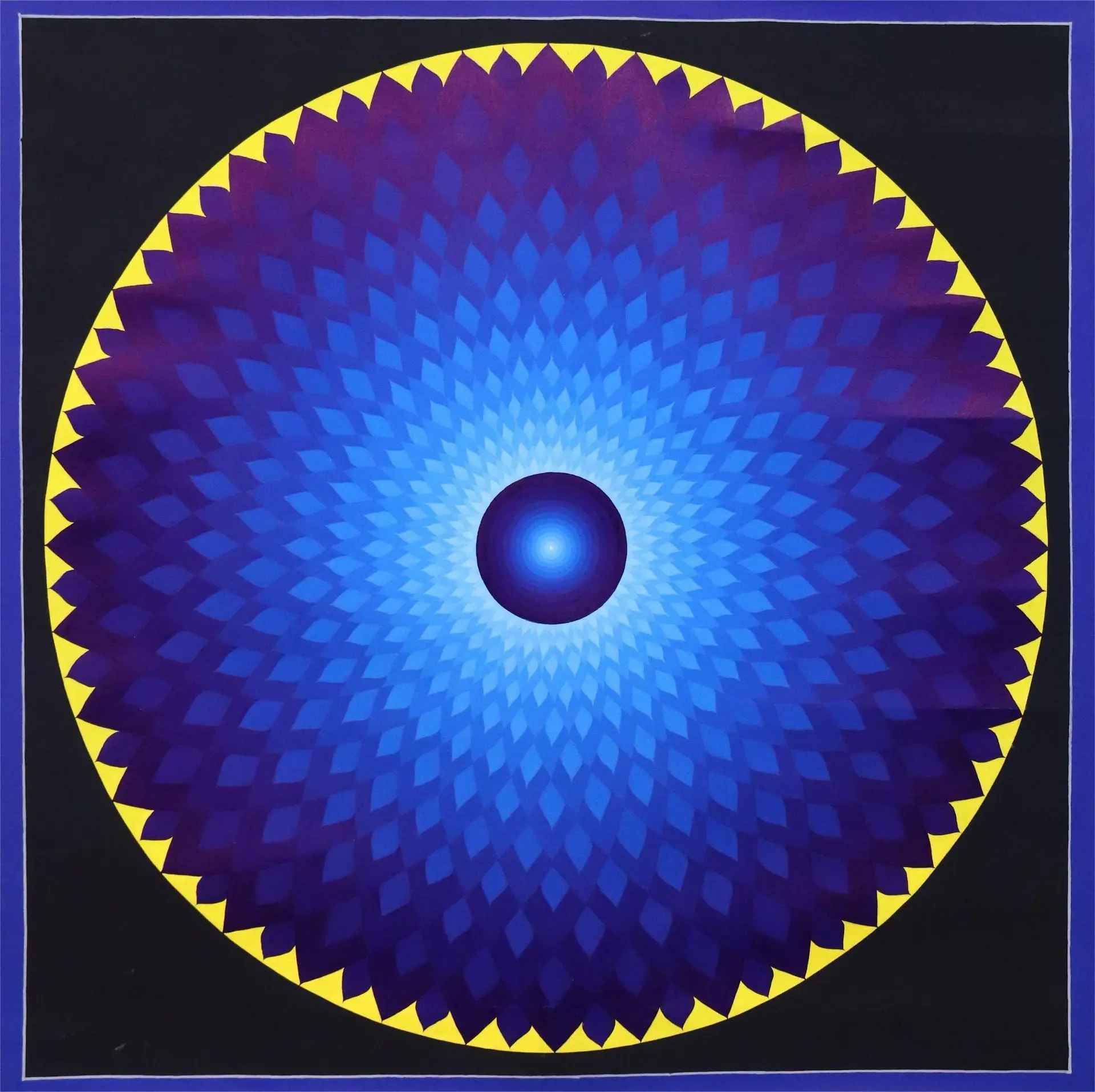
The earliest known Mandalas appeared in Hindu scriptures. The Rig Veda, one of the oldest texts in human history, mentions circular sacred designs. These were used in rituals and meditation.
But Mandalas didn't start with the Hindus.
Evidence suggests that circular sacred art existed even earlier. Cave paintings from 30,000 years ago show circular patterns. Ancient Sumerian and Egyptian art features circular cosmic diagrams.
The circle is humanity's first sacred shape.
The Buddhist Era (500 BCE - 1000 CE)
Buddhism adopted Mandalas around the 4th century. Buddhist monks saw the circle as a representation of enlightenment. The center was the Buddha. The rings were the path to awakening.
Tibetan Buddhism took this further. They created incredibly detailed sand Mandalas. These took weeks to make. And then they destroyed them.
Why destroy something so beautiful?
Because impermanence is a core teaching. Nothing lasts. Letting go is part of the practice. The destruction was itself a meditation.
The Medieval Period (1000 - 1500 CE)
In Europe, Mandalas appeared in a different form. Gothic cathedrals featured rose windows. These circular stained-glass designs told biblical stories. They were Mandalas in Christian clothing.
The rose window at Chartres Cathedral is a perfect example. It's a massive circular design. It radiates outward from a center point. It uses light and color to create a spiritual experience.
The Modern Era (1900s - Today)
In the 20th century, Carl Jung brought Mandalas to Western psychology. He saw them as representations of the self. He used them in therapy. He encouraged his patients to draw them.
This sparked a global interest in Mandala art. Adult coloring books exploded in popularity. Mandalas entered mainstream culture. They became tools for stress relief, creativity, and mindfulness.
Today, Mandalas are everywhere. In art galleries. In yoga studios. In hospitals. In homes. In meditation apps.
Their history is long. Their relevance is timeless.
Mandalas Across Cultures
Here's something fascinating.
Mandalas appear in almost every culture on Earth. Independent of each other. Without any contact between them.
That's not a coincidence. It's proof that the Mandala is a universal human experience.
Let's look at some examples.
Tibetan Buddhism
Tibetan Mandalas are perhaps the most famous. They're created with colored sand. Monks spend weeks making them. Each grain of sand is placed with intention.
The Kalachakra Mandala is the most complex. It represents time itself. It took years of study to create one.
Hinduism
Hindu Mandalas are called Yantras. They're geometric diagrams used in meditation. Each Yantra corresponds to a specific deity. The Sri Yantra is the most sacred. It represents the union of Shiva and Shakti.
Native American Traditions
Native American sand paintings are Mandalas. They're created for healing ceremonies. The Navajo call them "iikah." They're made with colored sands, pollen, and charcoal.
Like Tibetan sand Mandalas, they're destroyed after the ceremony. This releases the healing energy.
Celtic Traditions
Celtic art features circular knotwork patterns. These are Mandalas in a different style. They appear in the Book of Kells. They appear on ancient stone crosses. They represent the interconnectedness of all life.
Islamic Art
Islamic geometric patterns are Mandalas. They appear in mosques, palaces, and textiles. The intricate tile work in the Alhambra is a stunning example. These patterns represent the infinite nature of God.
Aboriginal Australia
Aboriginal dot paintings are Mandalas. They tell creation stories. They map sacred landscapes. They're among the oldest art forms in human history. Some date back 40,000 years.
Japanese Traditions
Japanese Mandalas appear in Shingon Buddhism. They're called "Mandara." They're painted on silk or paper. They're used in elaborate meditation rituals.
African Traditions
African art features circular patterns in textiles, masks, and body art. The Baoulé people of the Ivory Coast create circular masks. The Dogon people of Mali have circular cosmologies.
This list could go on.
The point is clear. Mandalas are universal. They're a human instinct. We're drawn to circles. We're drawn to wholeness. We're drawn to patterns that reflect the cosmos.
Mandalas in Buddhism
Buddhism has the richest Mandala tradition of any religion.
Let's explore why.
The Mandala as a Teaching Tool
In Buddhism, a Mandala is a visual teaching. It shows the structure of the enlightened mind. It shows the path from ignorance to awakening.
Every element has meaning. The center is enlightenment. The gates represent stages of practice. The deities represent qualities to develop.
When a monk studies a Mandala, they're not just looking at art. They're studying a map of consciousness.
Sand Mandalas
Tibetan sand Mandalas are the most dramatic example. Monks create them over several weeks. They use special tools. They pour sand from metal funnels.
The colors are symbolic. Blue represents the sky. Red represents fire. Green represents water. Yellow represents earth. White represents air.
When the Mandala is complete, it's consecrated. Then it's destroyed. The sand is swept up. It's carried to a river. The sand is released into the water.
This teaches impermanence. Nothing is permanent. Not even something beautiful. Letting go is part of the path.
The Kalachakra Mandala
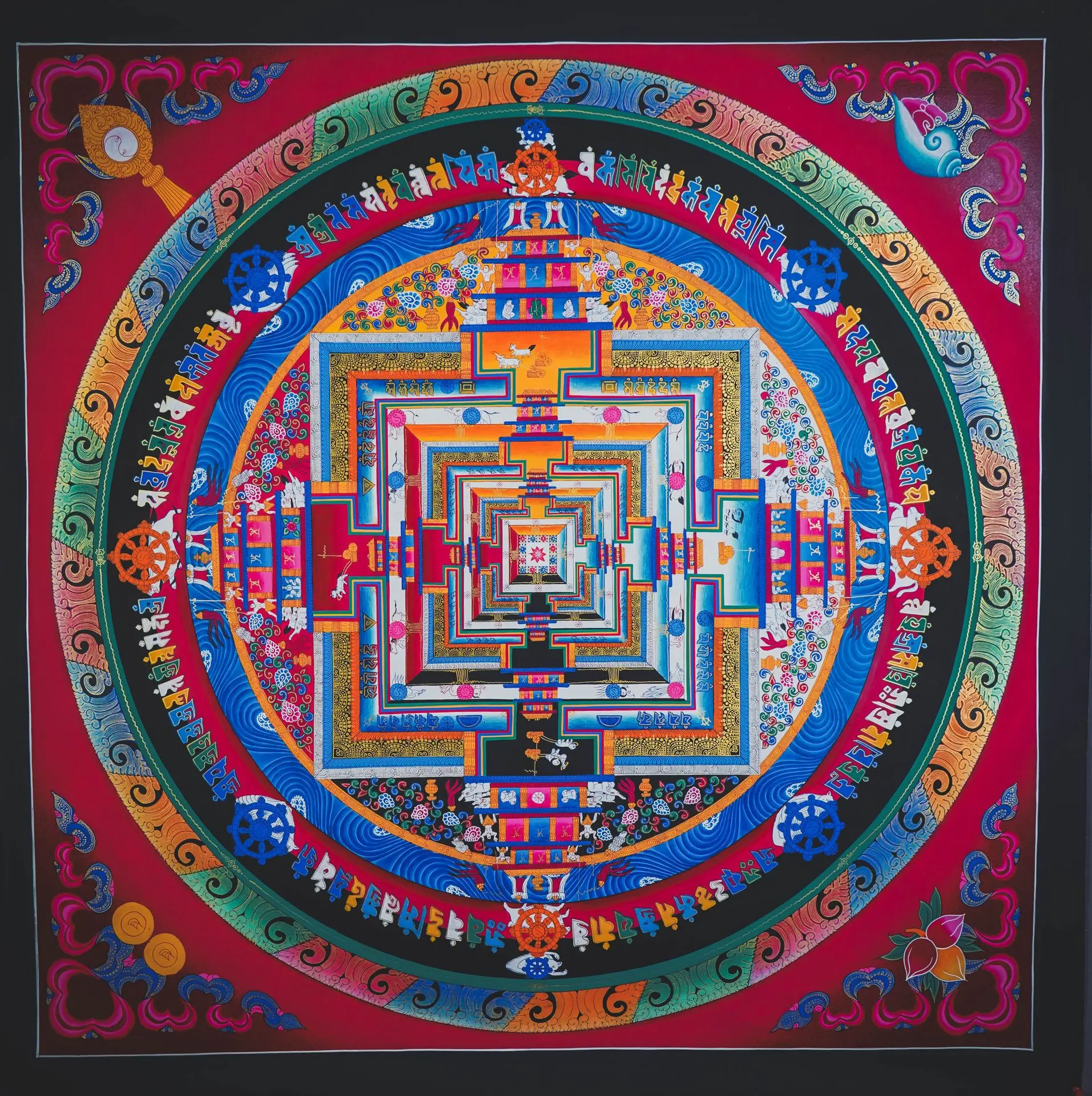
The Kalachakra Mandala is the most complex Buddhist Mandala. It represents the wheel of time. It has 722 deities. It took generations of monks to develop.
Studying this Mandala is said to take years. It's considered one of the highest spiritual practices in Tibetan Buddhism.
Mandalas in Zen Buddhism
Zen Buddhism uses a simpler approach. The Enso circle is a Zen Mandala. It's a single brushstroke. It represents enlightenment. It represents the void. It represents the universe.
The beauty of the Enso is its simplicity. One stroke. Infinite meaning.
Mandalas in Hinduism
Hinduism gave the world the word "Mandala." And the tradition is deep.
Yantras
In Hinduism, Mandalas are called Yantras. They're geometric diagrams. Each Yantra corresponds to a deity. Meditating on a Yantra connects you to that deity's energy.
The Sri Yantra is the most powerful. It's made of nine interlocking triangles. It represents the cosmos. It represents the union of masculine and feminine. It's used in advanced meditation practices.
Mandalas in Temple Architecture
Hindu temples are Mandalas. The floor plan is a Mandala. The towers represent Mount Meru, the cosmic mountain. The walls are covered with Mandala carvings.
When you enter a Hindu temple, you're entering a Mandala. You're entering a representation of the universe.
Rangoli
Rangoli is a folk art tradition. Women create colorful patterns on the ground. They use rice flour, flower petals, and colored powders.
Rangoli designs are Mandalas. They welcome guests. They invite blessings. They beautify the home. They're created during festivals and celebrations.
Mandalas in Native American Traditions
Native American Mandalas are powerful healing tools.
Sand Paintings
Navajo sand paintings are created for healing ceremonies. They're called "iikah." The healer creates the painting while chanting. The patient sits inside the Mandala.
The painting is not just art. It's a living thing. It holds healing energy. It connects the patient to the spirit world.
The Medicine Wheel
The Medicine Wheel is a Native American Mandala. It's a circle divided into four sections. Each section represents a direction, a season, an element, and a stage of life.
It's used in ceremonies. It's used for healing. It's used for teaching. It's a map of the natural world.
Symbolic Meaning
In Native American traditions, the circle represents the cycle of life. Birth, growth, death, rebirth. The center represents the Great Spirit. The outer ring represents the physical world.
These Mandalas teach that everything is connected. That humans are part of nature. That the spirit world and the physical world are one.
Mandalas in European Art
Europe has its own rich Mandala tradition.
Gothic Rose Windows
The rose windows of Gothic cathedrals are Mandalas. They're circular stained-glass designs. They tell biblical stories. They fill the space with colored light.
The rose window at Chartres Cathedral is 13 meters wide. It contains over 200 figures. It's a masterpiece of sacred circle art.
Celtic Knotwork
Celtic art features intricate knotwork patterns. These are circular. They're interwoven. They have no beginning and no end.
They appear in the Book of Kells. They appear on ancient crosses. They represent eternity. They represent the interconnectedness of all things.
Alchemical Mandalas
Medieval alchemists created circular diagrams. These showed the process of transformation. Lead into gold. Base into noble. Ignorance into wisdom.
These are Mandalas of transformation. They map the inner journey of the alchemist.
The Science Behind Mandalas
Mandalas aren't just spiritual. They're scientific too.
Fractals
Mandalas are fractals. A fractal is a pattern that repeats at every scale. Zoom in on a Mandala. You see the same patterns. Zoom out. Same patterns.
This is how nature works. Trees are fractals. Rivers are fractals. Lightning is fractal. Galaxies are fractals.
Mandalas show us the fractal nature of reality.
Cymatics
Cymatics is the study of visible sound. When you vibrate a plate covered with sand, the sand forms patterns. Circular patterns. Mandala-like patterns.
This proves that the universe creates circular patterns naturally. Sound creates them. Vibration creates them. Energy creates them.
Neuroscience
Studies show that looking at Mandalas calms the brain. The symmetrical patterns activate the parasympathetic nervous system. This reduces stress. It lowers heart rate. It decreases anxiety.
A 2016 study found that coloring Mandalas reduced anxiety by 37%. That's not a small number. That's significant.
Quantum Physics
Some physicists see parallels between Mandalas and quantum field theory. The universe, at its most fundamental level, is patterns of energy. Circular patterns. Radiating patterns.
Mandalas may be ancient representations of quantum reality.
Carl Jung and the Psychology of Mandalas
No discussion of Mandalas is complete without Carl Jung.
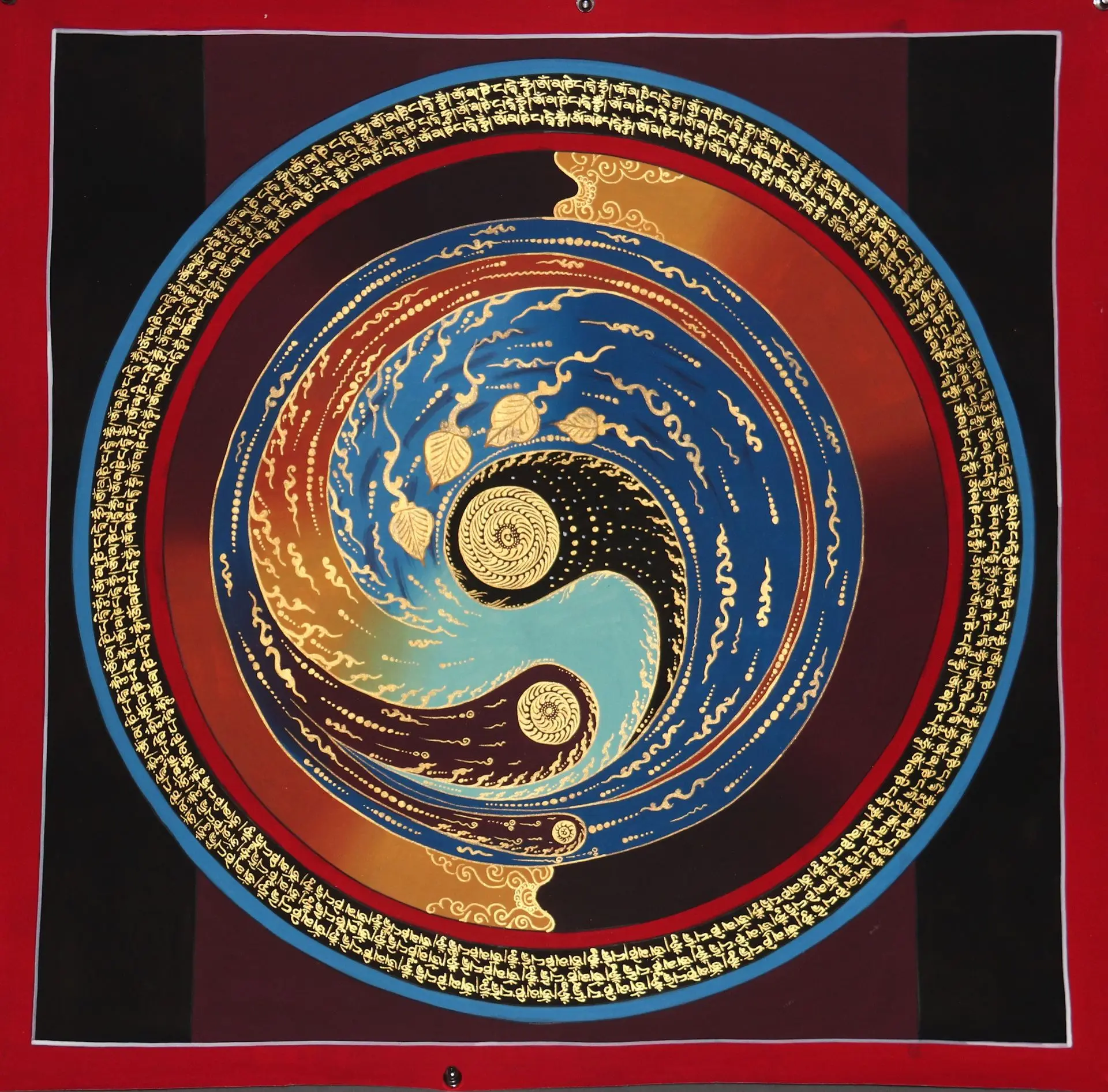
Jung's Discovery
In the 1920s, Carl Jung noticed something. His patients kept drawing circles. In their dreams. In their art. In their meditations.
He started studying these patterns. He realized they were Mandalas. And they were deeply meaningful.
The Mandala as Self-Representation
Jung believed that Mandalas represent the self. Not the ego. The self. The whole person. The conscious and unconscious mind are combined.
The center is the core self. The rings are layers of personality. The outer edge is the connection to the world.
When someone draws a Mandala, they're drawing a map of their own psyche.
Mandala Therapy
Jung used Mandalas in therapy. He asked patients to draw them. He analyzed the patterns. He used them to understand inner conflicts.
He found that creating Mandalas helped people integrate their shadow. It helped them find wholeness. It helped them heal.
Jung's Red Book
Jung's personal Red Book is filled with Mandalas. He created them during a period of deep inner crisis. They helped him navigate his darkest days.
The Red Book is now published. It's a stunning collection of Mandala art. It shows how powerful these sacred circles can be.
Mandala Colors and Their Meanings
Colors in Mandalas are never random.
Each color carries deep meaning. Let's explore the most common ones.
Red
Red represents energy. It represents passion. It represents life force. In Buddhism, red is the color of compassion.
Blue
Blue represents peace. It represents calm. It represents the sky and the infinite. In Buddhism, blue is the color of wisdom.
Yellow
Yellow represents wisdom. It represents enlightenment. It represents the sun. In Buddhism, yellow is the color of the Buddha.
Green
Green represents healing. It represents nature. It represents growth. In Buddhism, green is the color of activity and compassion.
White
White represents purity. It represents clarity. It represents the void. In Buddhism, white is the color of space and awareness.
Orange
Orange represents transformation. It represents creativity. It represents the sacral chakra. It's the color of change and renewal.
Purple
Purple represents spirituality. It represents the crown chakra. It represents a connection to the divine. It's the color of mysticism.
Gold
Gold represents enlightenment. It represents the divine. It represents the ultimate truth. In Tibetan Mandalas, gold is used for the most sacred elements.
Black
Black represents the unknown. It represents the void. It represents the unconscious. It's not negative. It's the womb of creation.
When you see a Mandala, pay attention to the colors. They're telling you a story. They're showing you the energy of the design.
Types of Mandalas
There are many types of Mandalas. Each serves a different purpose.
Sand Mandalas
Created with colored sand. Used in Tibetan Buddhist rituals. Destroyed after completion. They teach impermanence.
Yantra Mandalas
Geometric diagrams used in Hindu meditation. Each Yantra corresponds to a deity. They're tools for focusing the mind.
Healing Mandalas
Used in art therapy. They help process emotions. They reduce stress. They promote self-expression.
Teaching Mandalas
Used in Buddhist education. They show the structure of enlightenment. They map the path to awakening.
Rangoli Mandalas
Created on the ground with colored powders. Used in Indian celebrations. They welcome guests and invite blessings.
Celtic Mandalas
Feature knotwork patterns. Used in meditation and decoration. They represent eternity and interconnectedness.
Nature Mandalas
Created with natural materials. Leaves, flowers, stones, shells. They connect you to the earth. They're used in mindfulness practices.
Digital Mandalas
Created with software. Used in design and meditation apps. They make Mandalas accessible to everyone.
Personal Mandalas
Created by you. For you. They reflect your inner world. They're tools for self-discovery.
How to Use Mandalas in Your Life
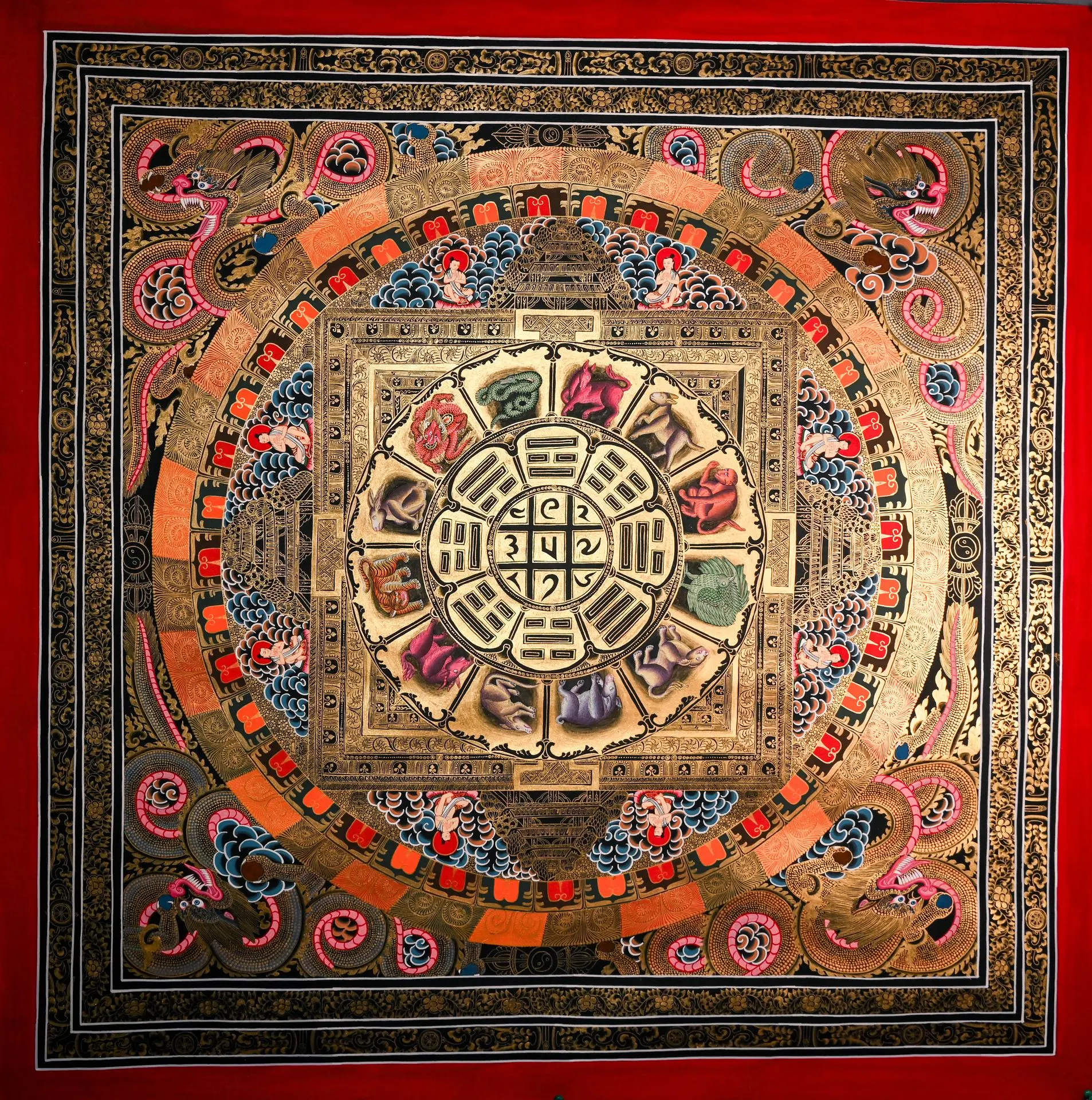
Mandalas are not just for monks and artists.
Anyone can use them. Here's how.
For Meditation
Sit quietly. Place a Mandala in front of you. Focus on the center. Let your eyes follow the patterns outward. Let your mind settle.
This is called "Mandala meditation." It's used in Buddhist practice. It's used in Jungian therapy. It works.
For Stress Relief
Color a Mandala. Use any colors you like. Don't worry about perfection. Just let your hand move. Let the patterns flow.
Studies show this reduces anxiety. It calms the nervous system. It brings you into the present moment.
For Self-Discovery
Draw your own Mandala. Don't follow a template. Let it emerge from within. See what patterns appear. See what colors you choose.
Your Mandala is a mirror. It shows your inner world. It reveals what you need to see.
For Home Decor
Hang a Mandala on your wall. It adds beauty. It adds energy. It creates a sacred space in your home.
Choose one that resonates with you. Look at it daily. Let it inspire you.
For Healing
Use Mandalas in art therapy. Work with a trained therapist. Create Mandalas that express your pain. Create Mandalas that express your hope.
The act of creation is healing. The finished Mandala is a record of your journey.
For Teaching
Use Mandalas to teach children about patterns. About symmetry. About different cultures. About the universe.
They're perfect educational tools. They make abstract concepts visual and fun.
How to Create Your Own Mandala
Ready to make your own?
Here's a simple process.
Step 1: Find Your Center
Close your eyes. Take three deep breaths. Ask yourself: "What do I need right now?"
The answer is your center. It's the starting point of your Mandala.
Step 2: Draw a Circle
Use a compass or trace a round object. This is your container. It holds your energy.
Step 3: Add Your First Layer
Start from the center. Draw simple shapes. Circles, petals, dots. Let your hand move freely.
Don't think too much. Just create.
Step 4: Build Outward
Add layers. Each layer represents a different aspect of your life. Your emotions. Your thoughts. Your dreams.
Let the patterns grow organically.
Step 5: Add Color
Choose colors that feel right. Trust your instincts. There are no rules.
Red for energy. Blue for calm. Green for healing. Gold for joy.
Step 6: Step Back
Look at your Mandala. What do you see? What patterns emerge? What colors dominate?
Write down your observations. They may surprise you.
Step 7: Reflect
Sit with your Mandala. Meditate on it. Let it speak to you.
You created a map of your inner world. Honor it. Learn from it.
Common Myths About Mandalas
Let's clear up some misconceptions.
Myth 1: Mandalas Are Only Religious
False. Mandalas appear in secular contexts too. Art therapy uses them. Design uses them. Education uses them.
You don't need to be religious to benefit from Mandalas.
Myth 2: You Need to Be an Artist
False. Mandalas are about process, not perfection. A child's drawing can be a powerful Mandala.
It's the intention that matters. Not the skill.
Myth 3: Mandalas Are Only Circular
Mostly true. But some traditions use square Mandalas. The Tibetan Bhavachakra is square. It represents the earthly realm.
The circle is the most common form. But it's not the only one.
Myth 4: Mandalas Have Fixed Meanings
False. While traditional Mandalas have established symbolism, your personal Mandala means what you need it to mean.
It's a living symbol. It grows with you.
Myth 5: Mandalas Are Just for Relaxation
They do relax you. But they do much more. They heal. They teach. They reveal. They transform.
Don't underestimate their power.
FAQ
Q: What is a Mandala in simple terms?
A: A Mandala is a circular design that radiates from a center point. It represents the universe and the human mind. It's used for meditation, art, and healing.
Q: What does Mandala mean in Sanskrit?
A: "Mandala" means "circle" or "completion" in Sanskrit. It can also be translated as "container of essence."
Q: Are Mandalas religious?
A: Mandalas have religious roots in Hinduism and Buddhism. But they're used by people of all backgrounds today. They're used for art, therapy, and mindfulness.
Q: Who created the first Mandala?
A: No one knows for sure. The earliest Mandalas appeared in Hindu scriptures around 1500 BCE. But circular sacred art may be much older.
Q: What is the difference between a Mandala and a Yantra?
A: A Mandala is a general term for a sacred circle. A Yantra is a specific type of Mandala used in Hindu meditation. Yantras are geometric diagrams.
Q: Can anyone create a Mandala?
A: Absolutely. You don't need special skills. You just need a pen, paper, and the willingness to create.
Q: How long does it take to draw a Mandala?
A: A simple Mandala takes 15-30 minutes. A detailed one can take hours or days. Tibetan sand Mandalas take weeks.
Q: Do Mandala colors matter?
A: Yes. Each color carries symbolic meaning. Red for energy. Blue for peace. Yellow for wisdom. Green for healing.
Q: What is Mandala meditation?
A: It's a practice where you focus on a Mandala's patterns. You start at the center and move outward. It calms the mind and deepens awareness.
Q: Why are Mandalas circular?
A: Circles have no beginning or end. They represent wholeness and eternity. They mirror the shape of the universe itself.
Q: What is Carl Jung's connection to Mandalas?
A: Jung studied Mandalas as representations of the self. He used them in therapy. He believed they helped people achieve wholeness.
Q: Can Mandalas help with anxiety?
A: Yes. Studies show that coloring or creating Mandalas reduces anxiety. It calms the nervous system and brings you into the present moment.
Conclusion
We've covered a lot of ground.
You now know what a Mandala truly is. It's not just a pattern. It's a map of the cosmos. It's a mirror of the mind. It's a sacred circle that connects you to everything.
You've learned the history. From ancient Hindu scriptures to Tibetan monasteries. From Native American healing ceremonies to Gothic cathedrals. Mandalas have guided humanity for thousands of years.
You've seen the science. Fractals. Cymatics. Neuroscience. The universe creates circular patterns. Your brain responds to them. They heal you.
You've explored the colors. Each one carries meaning. Each one tells a story. Red for passion. Blue for peace. Gold for enlightenment.
And you've learned how to create your own. No special skills needed. Just a pen, paper, and an open heart.
Here's my final thought.
A Mandala is a reminder. It reminds you that you are part of something vast. You are connected to the stars. You are connected to the earth. You are connected to every person who ever drew a circle and felt something shift inside.
That shift is real. That connection is real. That wholeness is yours.
All you have to do is begin.
Draw your first circle. Add your first pattern. Choose your first color.
Your Mandala is waiting.