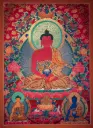
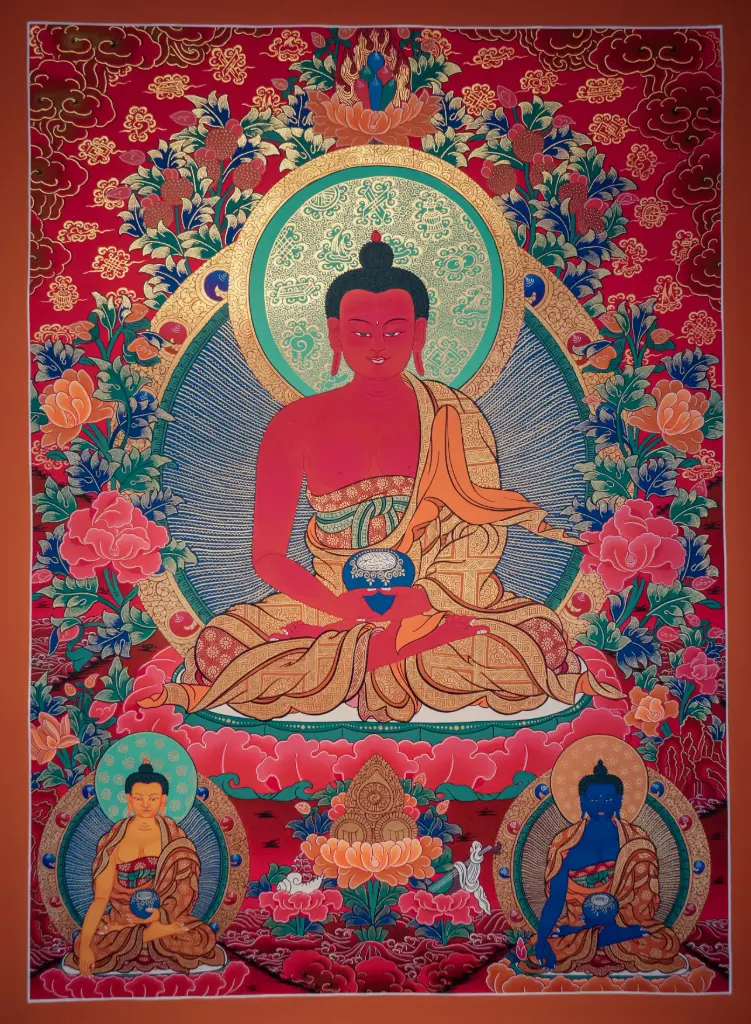
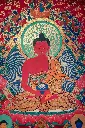
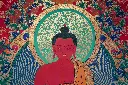
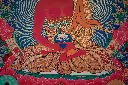
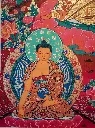
Amitabha, Shakyamuni, and Medicine Buddha Thangka – Red Serthang
The Three Buddhas: Boundless Light, Wisdom, and Healing
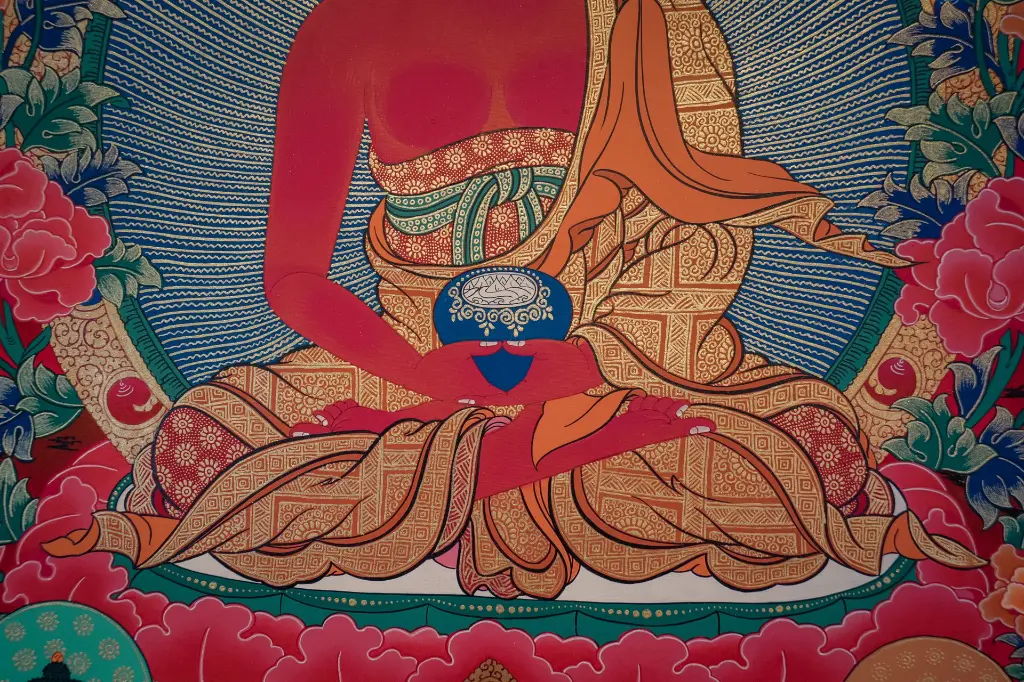
Amitabha Buddha leads this sacred assembly of enlightened masters. He sits as the sovereign of the Western Pure Land.
This triad represents the past, present, and future healing path. The composition follows the Sukhavativyuha Sutra (Sukhāvatī-vyūha) for devotional practice.
Specifications
Dimensions: 60 × 45 cm
Materials: 24K Gold and Pure Mineral Pigments on Cotton Canvas
Origin: Kathmandu, Nepal
Artistic Style: Menri Style Tibetan
Background Type: Serthang Golden Background
Type: Original Hand-Painted
Brocade: Custom Silk Options Available
Consecration: Available Upon Request
Iconography of Amitabha: Infinite Light Across This Assembly
Amitabha as Boundless Light
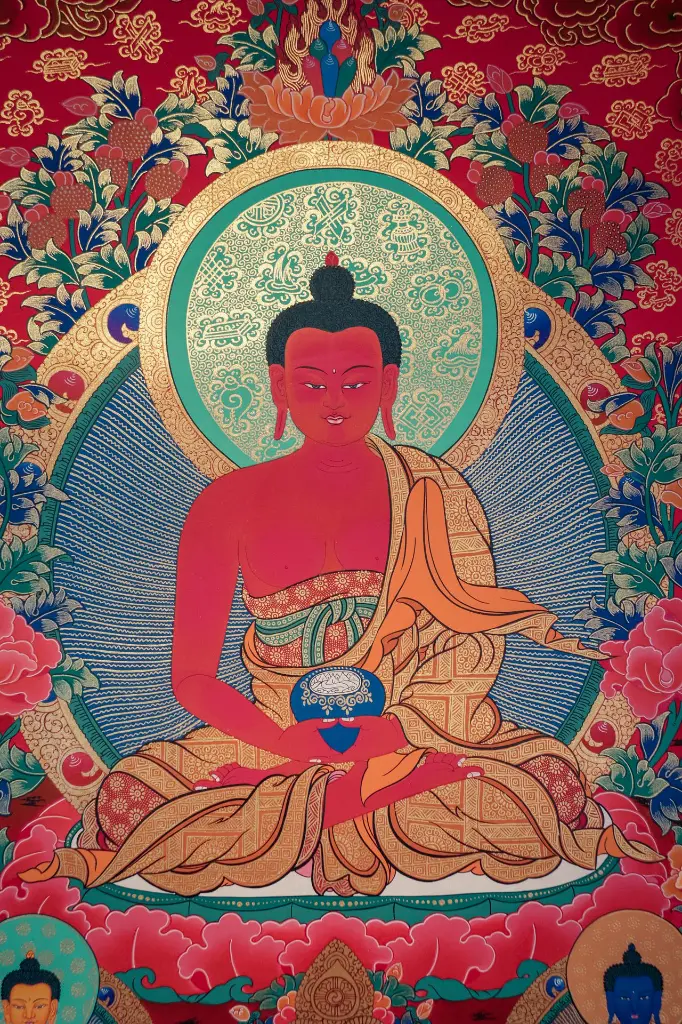
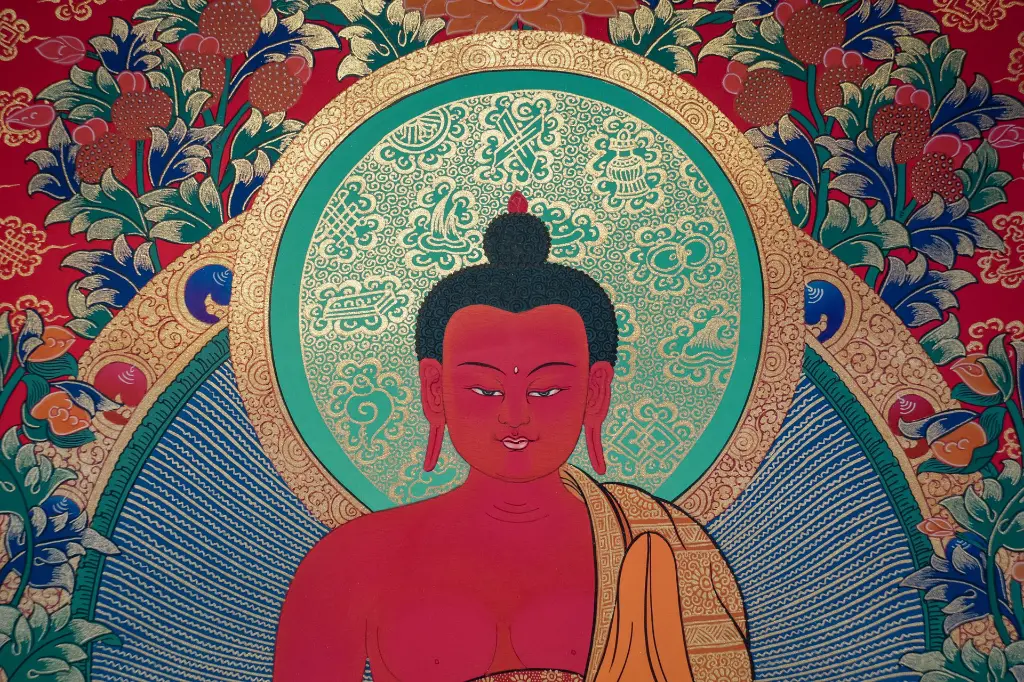
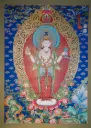
Amitabha appears with a vibrant, ruby-red complexion. He rests in the vajra posture upon a floral throne.
Dhyana mudra shows perfect meditative stability for this practice.
The alms bowl represents the cessation of worldly desire.
This form aids practitioners in visualizing the Sukhavati realm. It provides a focal point for achieving a peaceful mind.
Supporting Figures: Shakyamuni and Medicine Buddha
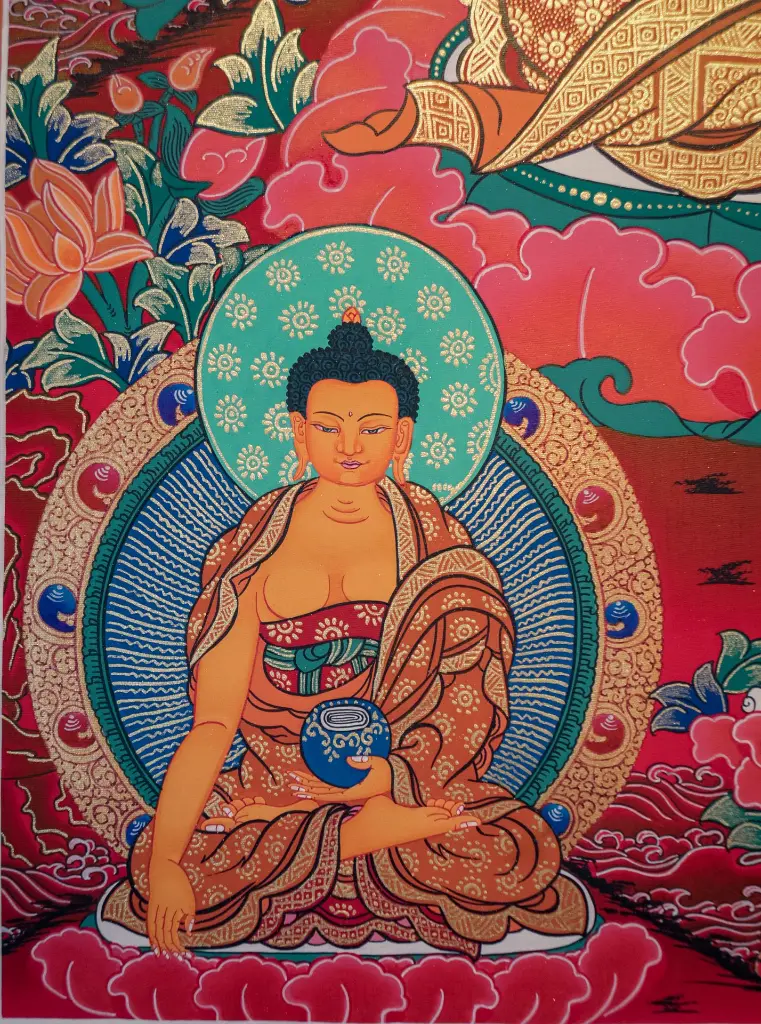
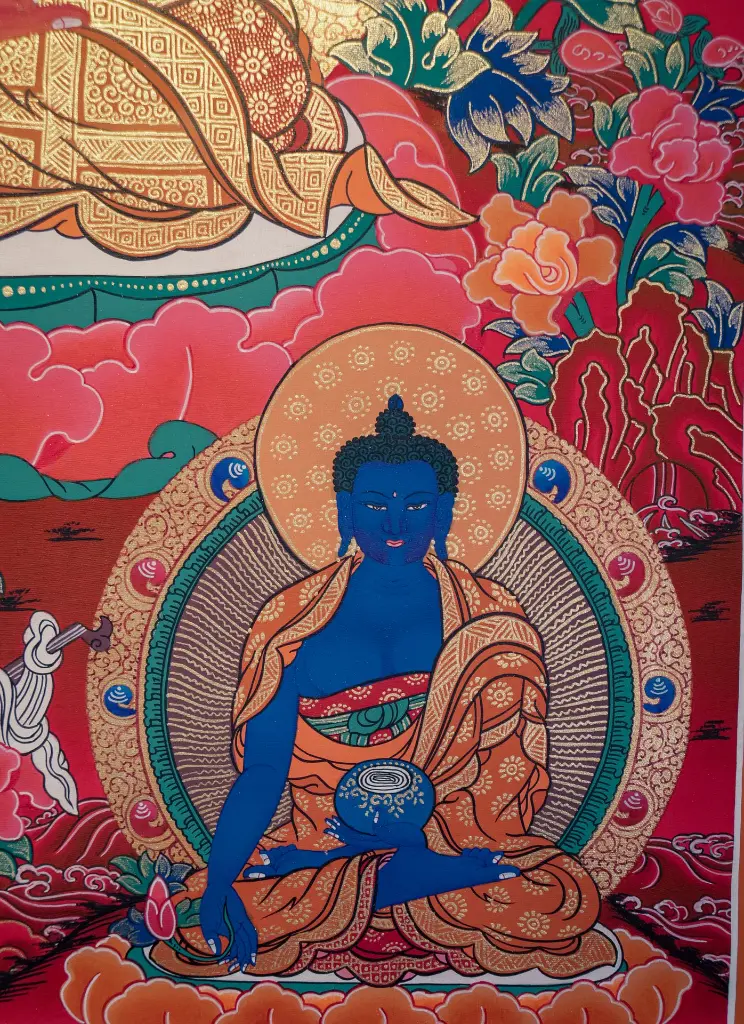
Shakyamuni and Medicine Buddha sit at the lower base. They provide a foundational balance to the central figure.
Below: The Historical and Healing Buddhas
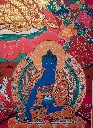
Shakyamuni resides on the lower left with a golden complexion. Medicine Buddha sits on the lower right in lapis blue.
Their presence creates a complete field of merit and protection. The arrangement follows traditional Tibetan spatial hierarchy and spiritual order.
Sacred Setting and Visual Landscape
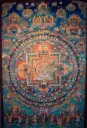
The red background features intricate gold clouds and floral motifs. A golden halo radiates behind the central Buddha figure.
24K gold lines define the petals of the lotus seat.
Vibrant peonies bloom around the throne to signify purity.
The Serthang style emphasizes the use of fine gold linework. This technique creates a luminous atmosphere throughout the entire canvas.
Lineage and Scriptural Context
This thangka follows the Mahayana tradition of the Three Buddhas. It originates from the Sukhavativyuha Sutra (Sukhāvatī-vyūha) scriptural lineage.
The Menri style preserves the correct iconometric proportions for each deity. This alignment ensures the painting serves as a valid ritual object.
These figures offer a complete path for modern spiritual practitioners. The assembly represents the union of healing, wisdom, and light.
Sacred Setting and Heritage
The floral throne symbolizes the unfolding of enlightened potential. Gold detailing enhances the depth of the deep red background.
Artists apply gold using the traditional "tsak" hair-line technique. Every mineral pigment layer is ground by hand in Kathmandu.
The iconography adheres to the Gelug and Kagyu school traditions. It maintains the lineage of the historical Buddha, Shakyamuni.
How to Welcome This Thangka
Mantra: Om Ami Dewa Hrih
This thangka supports daily visualization and merit-making rituals. It serves as a focal point for a dedicated home altar.
Placement & Interaction:
Hang at eye level in a quiet space.
Begin mornings with one minute of reflection.
This assembly brings the presence of the Buddhas into focus.