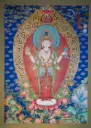
Chenrezig Drowa Kundrol Thangka With Amitabha Buddha Blessing– Standing Esoteric Form – Menri Style
Avalokiteshvara thangka - Visual Presence of the Universal Liberator
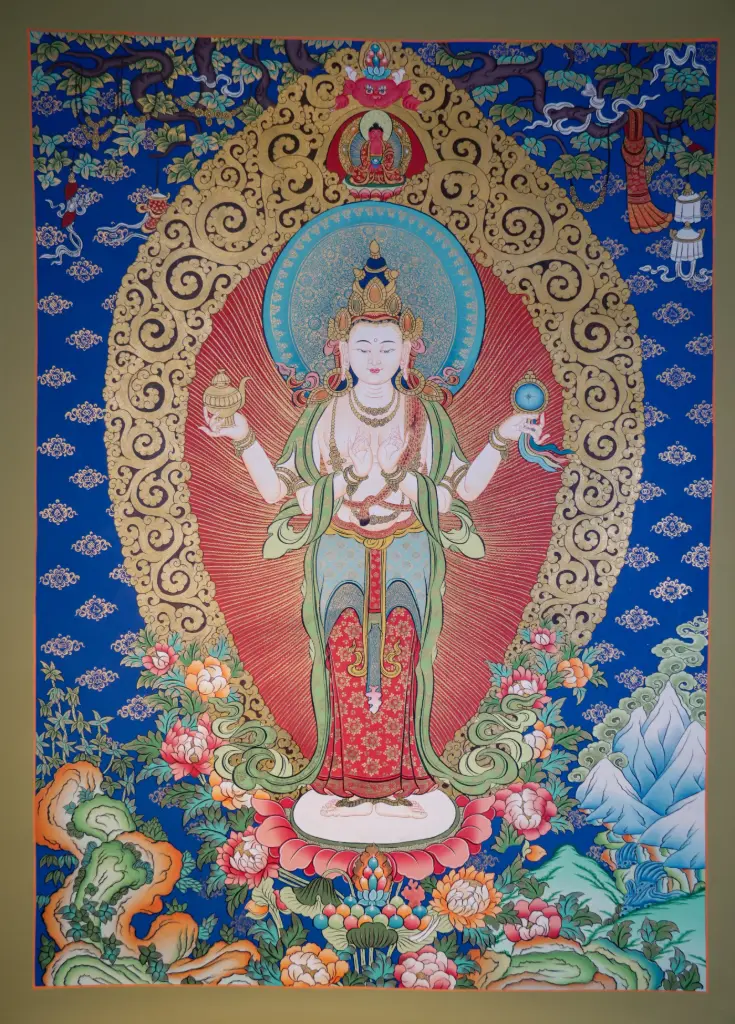
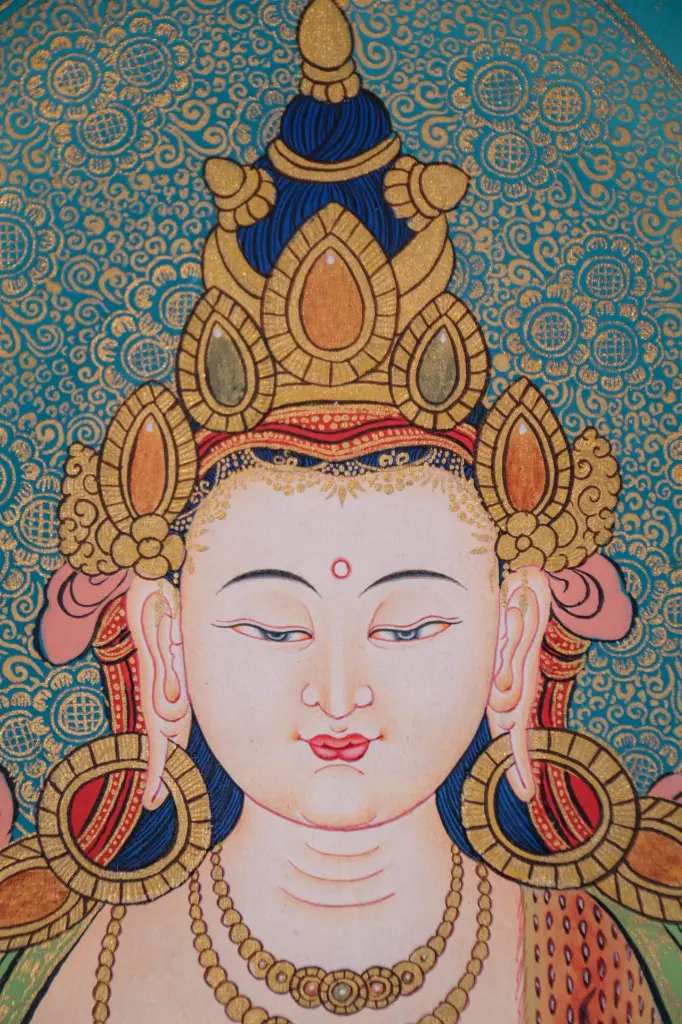
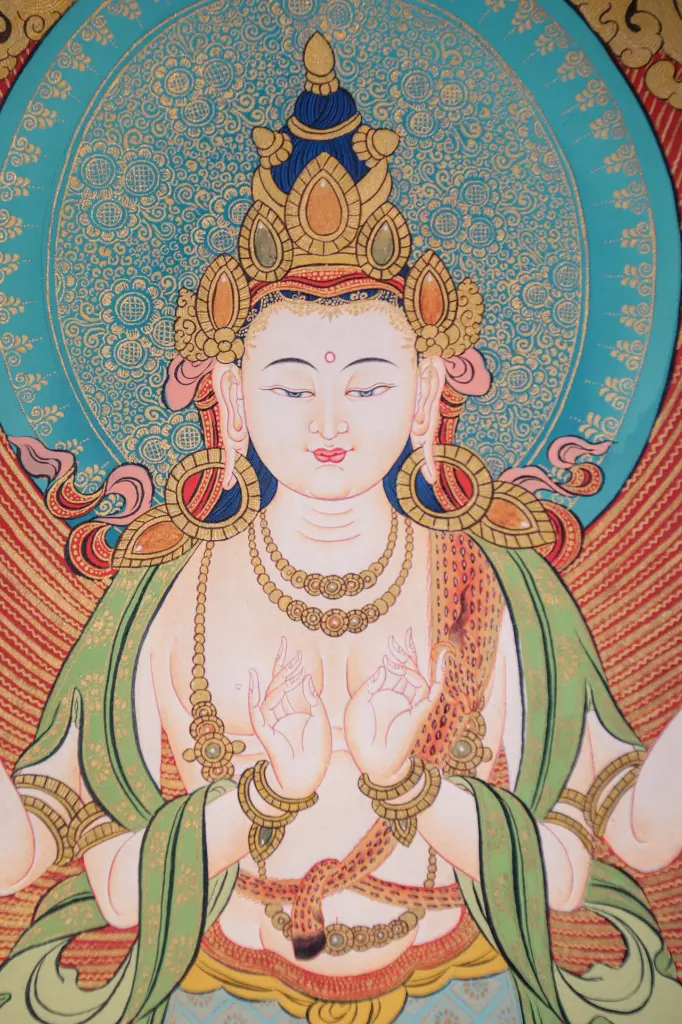
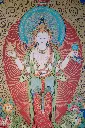
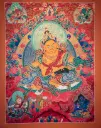
This hand-painted Buddhist art depicts a rare standing Avalokiteshvara. Fine mineral pigments illuminate his pristine white body against deep lapis blue.
This Chenrezig Drowa Kundrol Thangka portrays the deity standing in samabhanga. His four arms bear rare esoteric ritual implements from Dzogchen traditions.
Artwork Specifications Chenrezig Drowa Kundrol Thangka
Master artists painted this traditional Himalayan art in Kathmandu, Nepal.
Dimensions: 75 cm Height × 55 cm Width
Materials: Natural Stone Pigments with 24K Gold on Cotton Canvas
Origin: Kathmandu, Nepal
Artistic Style: Menri Style Tibetan
Background: Celestial Sky
Type: Original Hand-Painted Artwork
Composition: Main Deity with Upper Buddha
Consecration: Consecration Available Upon Request
Nyingma Terma Transmission of Chenrezig holding ritual mirror
This esoteric standing form arises from Nyingma Revealed Treasure traditions. Known as Drowa Kundrol, he liberates beings from all six realms.
Unlike seated forms, standing postures represent active, immediate compassionate intervention. The imagery holds profound significance within Bardo and Dzogchen teachings.
Chenrezig Drowa Kundrol Thangka Iconography
Central Deity
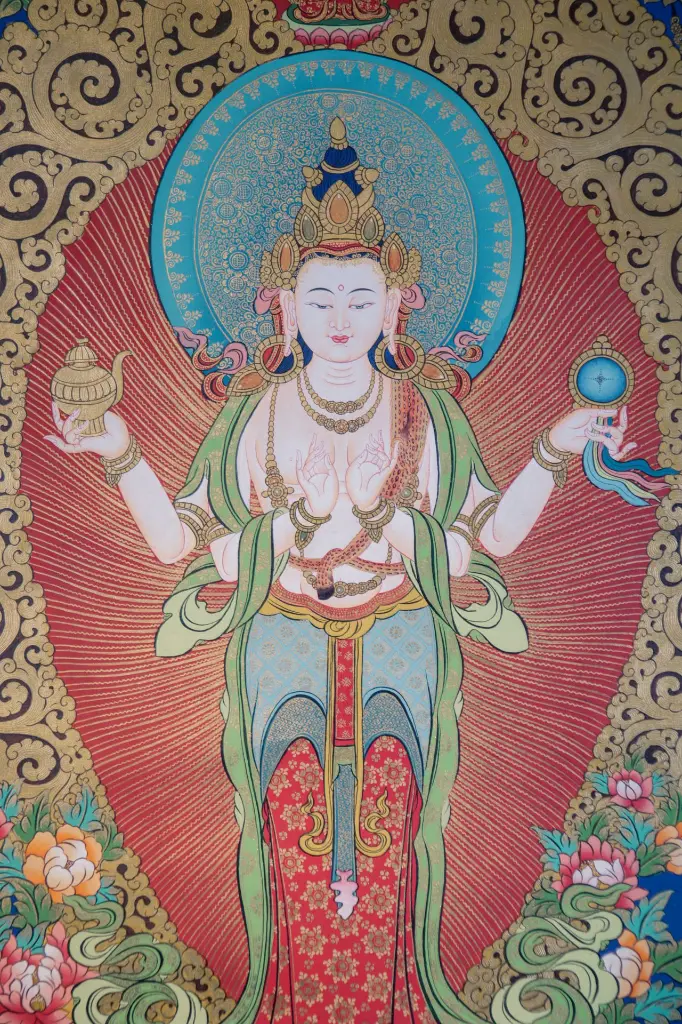
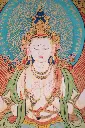
Chenrezig stands upright in samabhanga upon a double-lotus pedestal. His primary hands form double vitarka mudra at his chest.
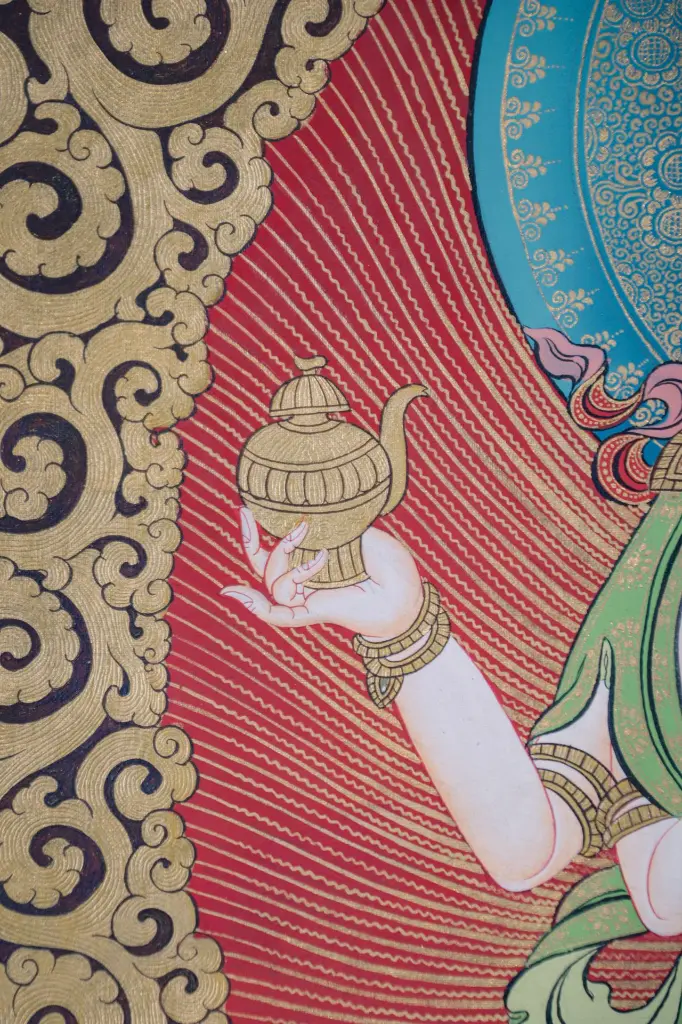
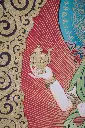
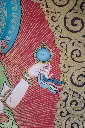
His upper right hand holds a golden bumpa nectar vase.
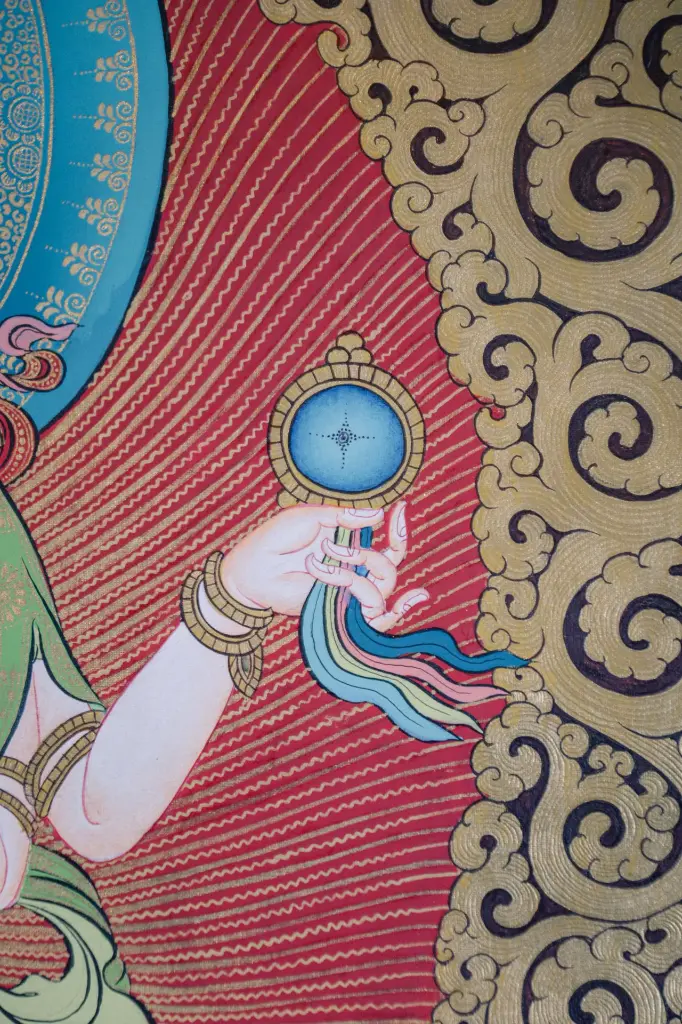
His upper left hand holds a polished melong mirror.
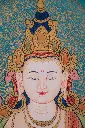
A five-pointed jewel crown adorns his serene, peaceful countenance.
Intricate silk robes and golden jewelry drape gracefully over him.
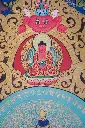
Upper Figure
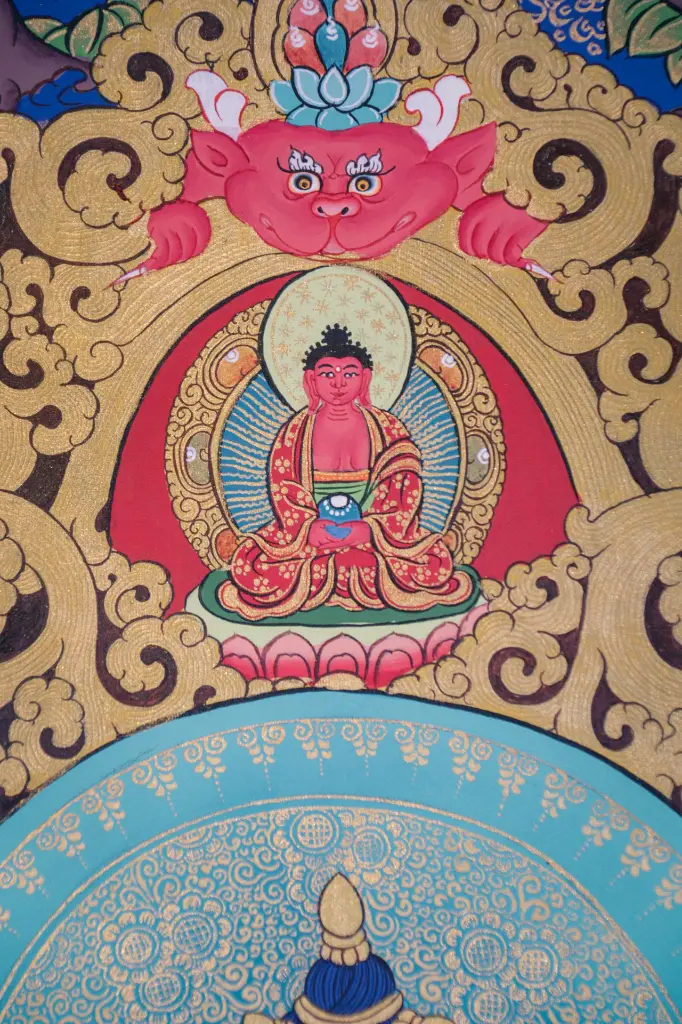
Amitabha Buddha sits above the golden halo in dhyāna mudra. He rests within a red aura, marking Chenrezig's spiritual Buddha family.
Celestial Expanse and Earthly Offerings
Golden ashtamangala motifs float across the dark celestial sky background. Lush green hills and colorful peony blossoms frame the lower landscape. Precious sensory offerings rest gracefully before the central lotus seat.
Iconometry and Pigment Layering
The artist followed the strict nava tāla iconometric canon. Pure mineral pigments establish smooth gradients across his flowing garments. Burnished 24K gold defines the surrounding aura and intricate patterns.
Sacred Environment and Meditation Practice
Place this Nepali thangka painting in a quiet meditation space. Keep the mineral pigment thangka away from direct sunlight and excess moisture.
Recite the core six-syllable mantra Oṃ Maṇi Padme Hūṃ. Observe the central mirror, reflecting the pure nature of mind. May all sentient beings attain liberation from samsaric suffering.