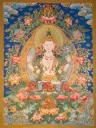
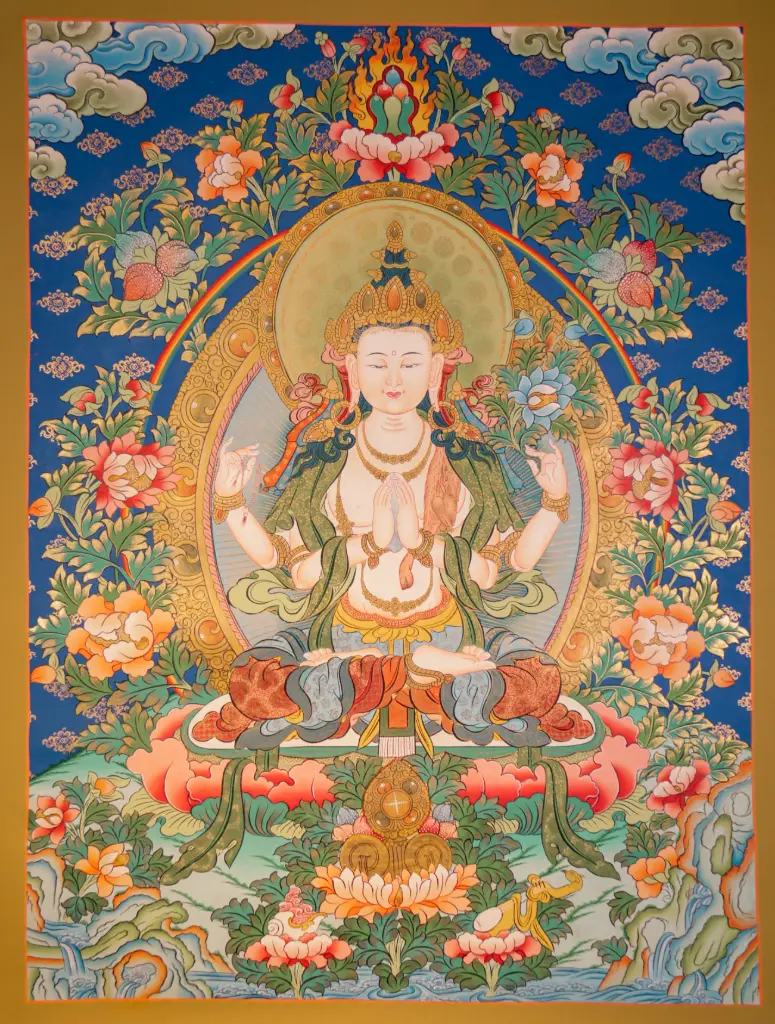

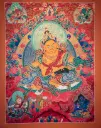
Four-Armed Chenrezig Menri Thangka – Cintamani in Namaskara Mudra
Divine Compassion in Luminous White
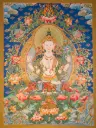
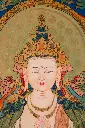
This hand-painted Tibetan Buddhist thangka depicts Four-Armed Chenrezig. He sits calmly against a celestial blue sky.
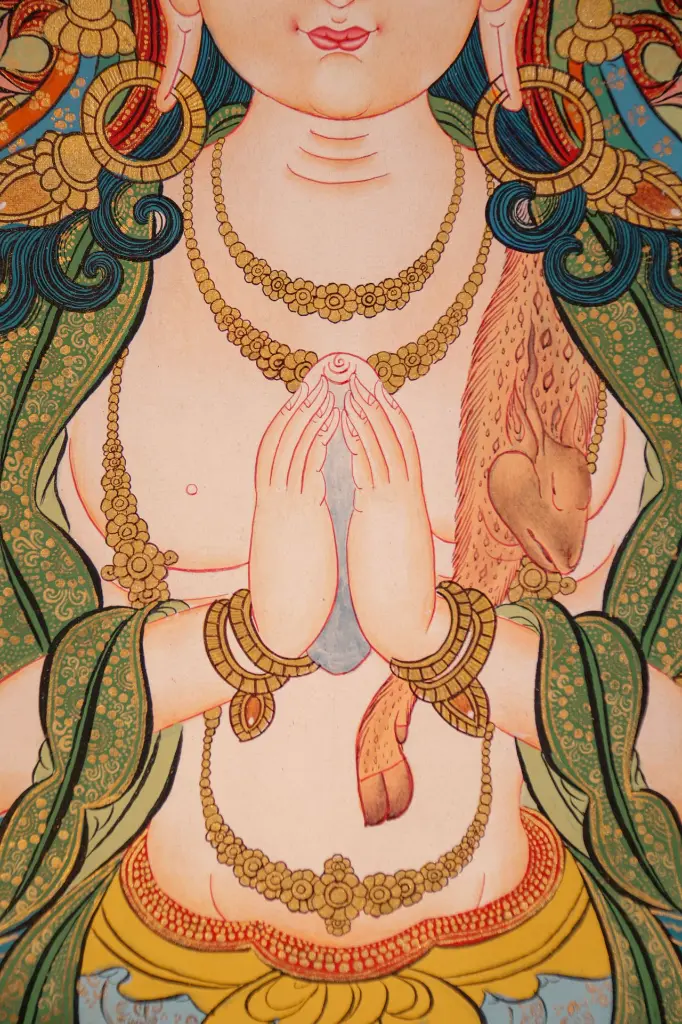
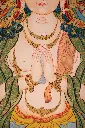
Chenrezig is the bodhisattva of infinite compassion. He listens attentively to the suffering of all living beings. His central hands clasp a wish-fulfilling jewel before his heart.
Specifications of Four-Armed Avalokiteshvara
Factual details describe this original Nepali thangka painting.
Dimensions: 75 × 50 cm
Materials: Pure Mineral Pigments with Genuine Gold Highlights
Origin: Kathmandu, Nepal
Artistic Style: Menri Style Tibetan
Background: Celestial Sky
Type: Original
Composition: Single Deity
Consecration: Consecration Available Upon Request
Iconographic Lineage of Avalokiteśvara
The four-armed form of Avalokiteśvara originated in Indian Mahāyāna texts.
Tibetan translators established this canonical visual tradition during the early propagation.
Kathmandu artists refined these classical proportions within the Menri style.
They combined precise line work with rich, pure mineral pigments.
Visual Attributes of Chenrezig
Central Deity
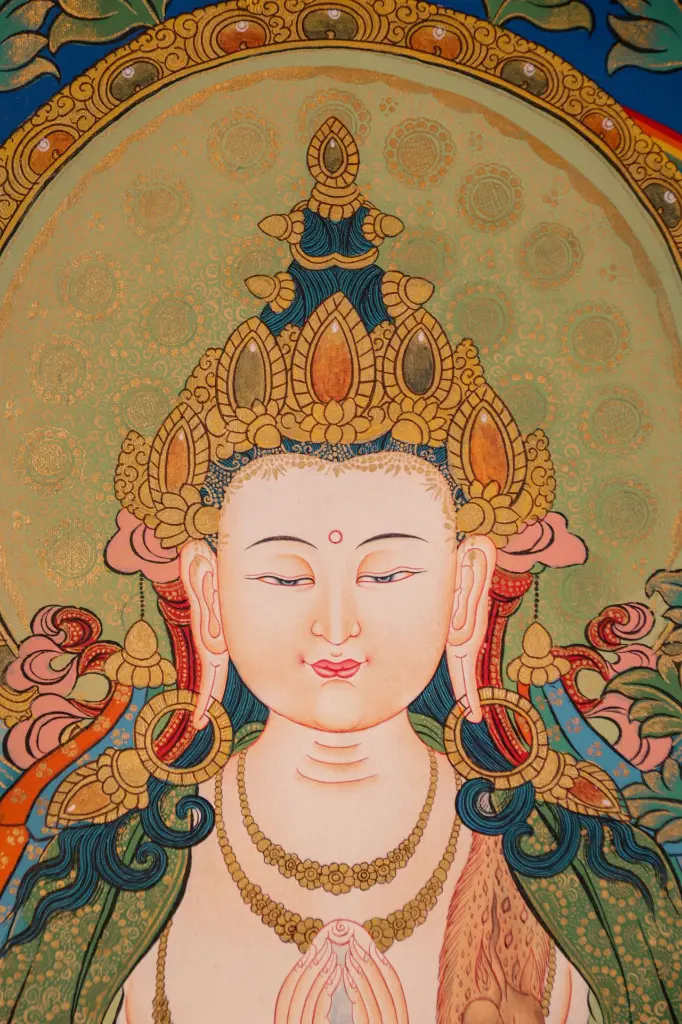
Chenrezig shows a luminous white body and peaceful face.
He sits in full vajraparyaṅka posture upon a lotus moon throne.
His main hands join in namaskara mudrā, holding a radiant cintāmaṇi.
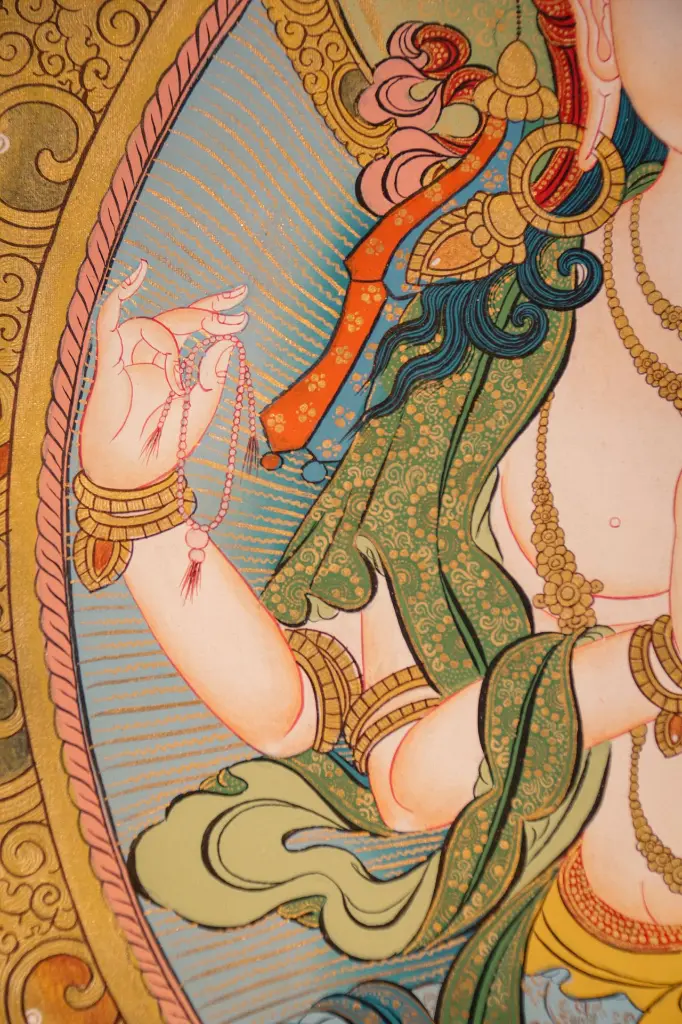
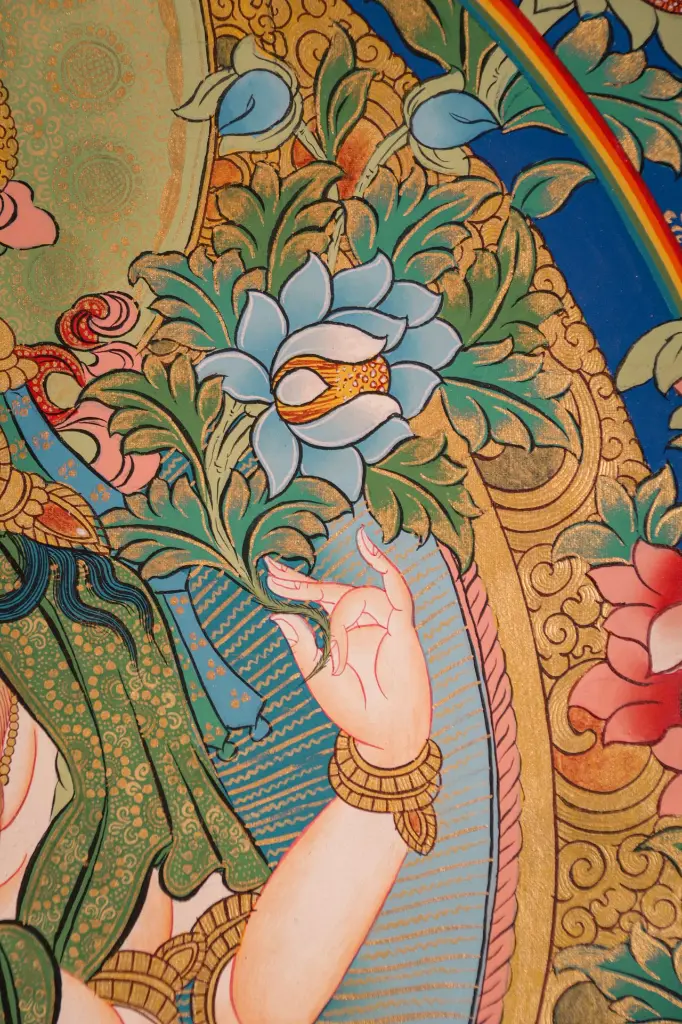
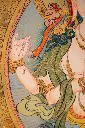
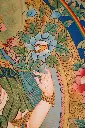
His upper right hand holds a mala of crystal akṣamālā beads. His upper left hand holds a blue utpala lotus stem.
Fine silk garments and golden ornaments adorn his form. A radiant rainbow halo surrounds the central figure.
Celestial Sky and Earthly Landscape
The blue sky features soft clouds and floating golden aṣṭamaṅgala symbols.
Lush peony vines frame the outer halo.
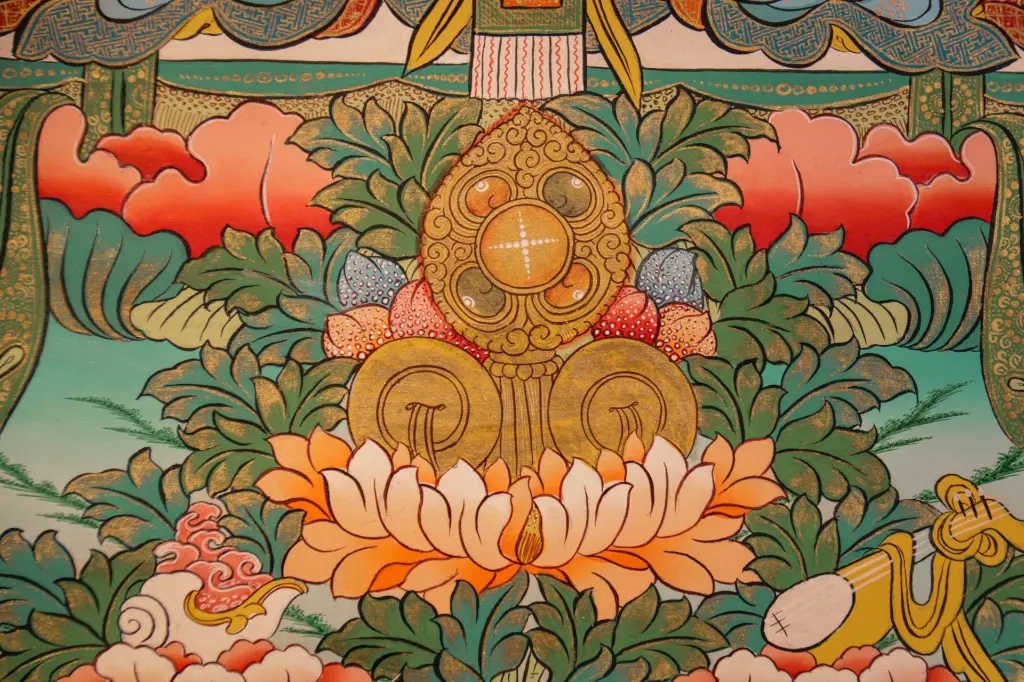
The green landscape contains pure water, precious gems, a mirror, and a gold vīṇā.
Menri Grid and Pigment Application
Artists lay out the figure using the classical nava tāla grid.
Fine mineral pigments create smooth color transitions across the cotton canvas.
Sacred Space and Mantra
The primary mantra is oṃ maṇi padme hūṃ. Reciting this mantra cultivates universal compassion.
Place the artwork in a clean space away from direct sunlight.
Rest your gaze upon the central cintāmaṇi during quiet reflection.