

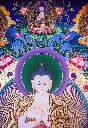
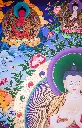
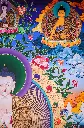
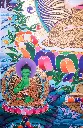
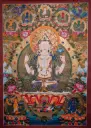
Five Dhyani Buddha Thangka – Gold Detailing – Menri Style
Five Dhyani Buddha Thangka – Nagarjuna Lineage Mandala
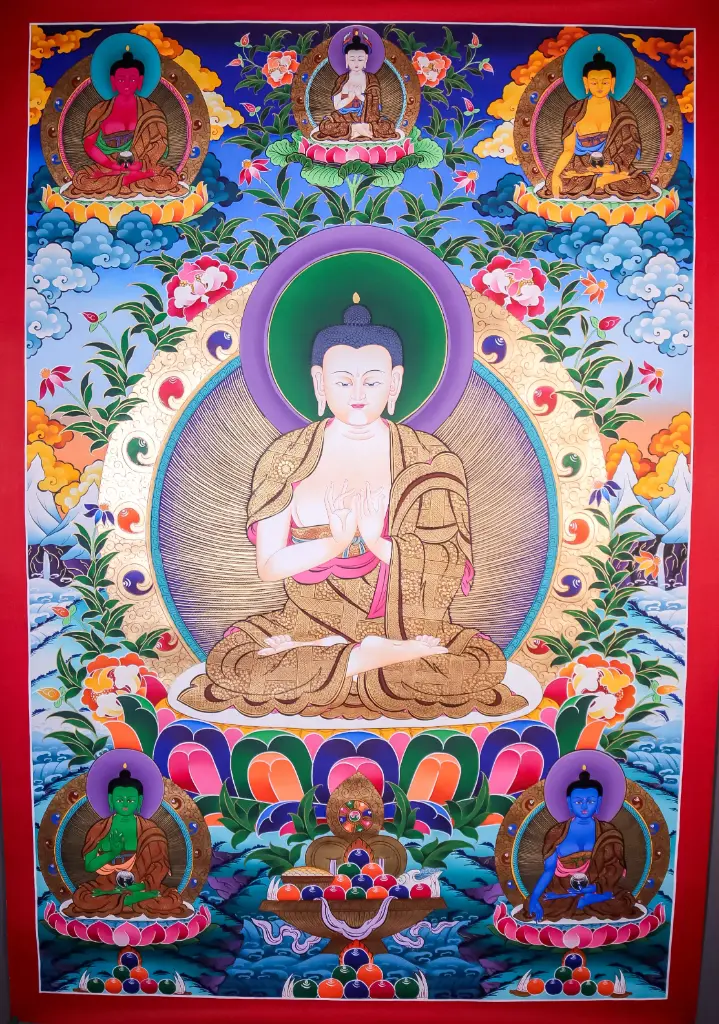
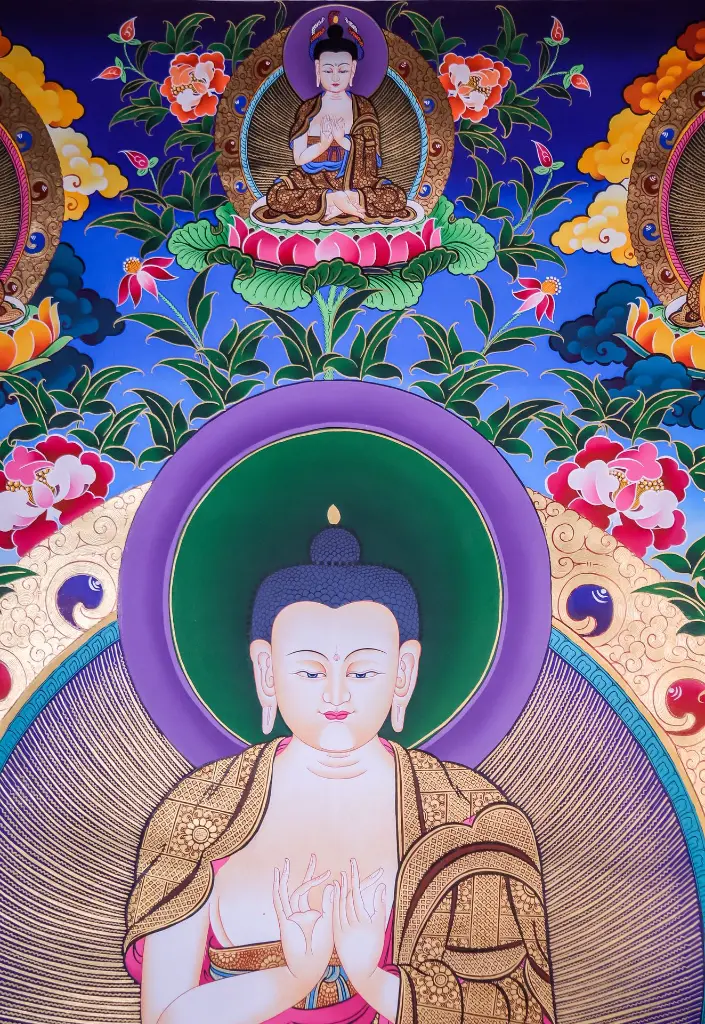
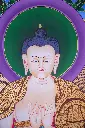
Vairocana sits at the center in deep stillness. Around him rest the four Buddhas of the families.
The mood feels quiet and carefully ordered. It recalls old monastery halls at first light.
Each figure follows the Menri tradition with care. Natural mineral pigments and pure gold shape every robe.
The colors hold a soft, patient depth. You can sense the hand behind each line.
Specifications
Dimensions: 150 x 100 cm
Materials: Natural mineral pigments, 24K gold, cotton canvas
Origin: Patan, Nepal
Artistic Style: Menri
Background Type: Landscape with clouds, flowers, and mountains
Type: Original Hand-Painted
Brocade: Custom Silk Options Available
Consecration: Blessed or Available Upon Request
Sacred Setting and Visual Landscape
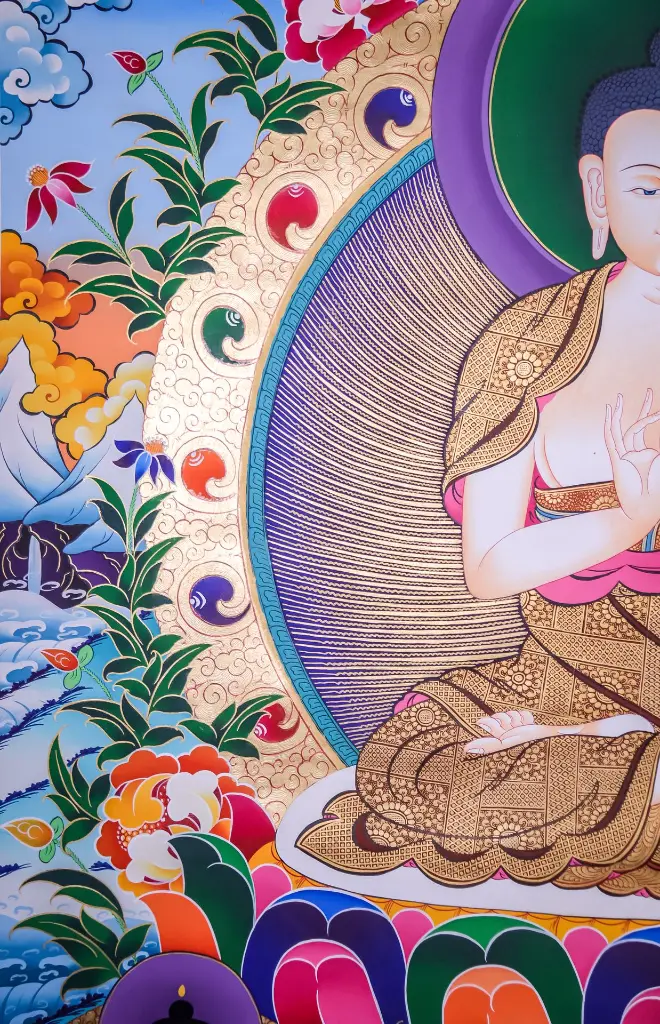
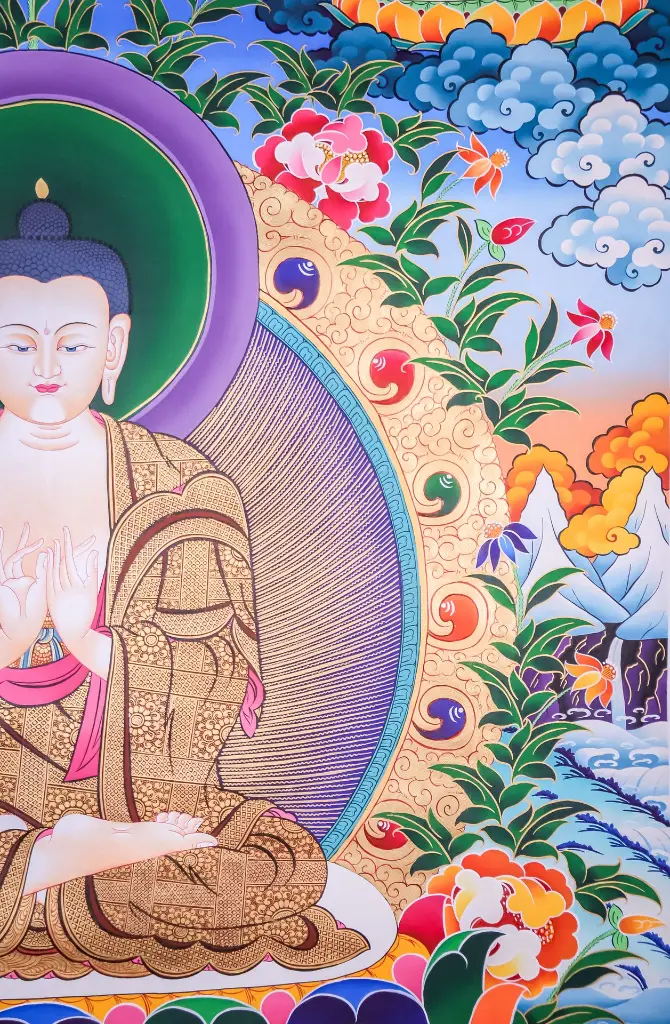
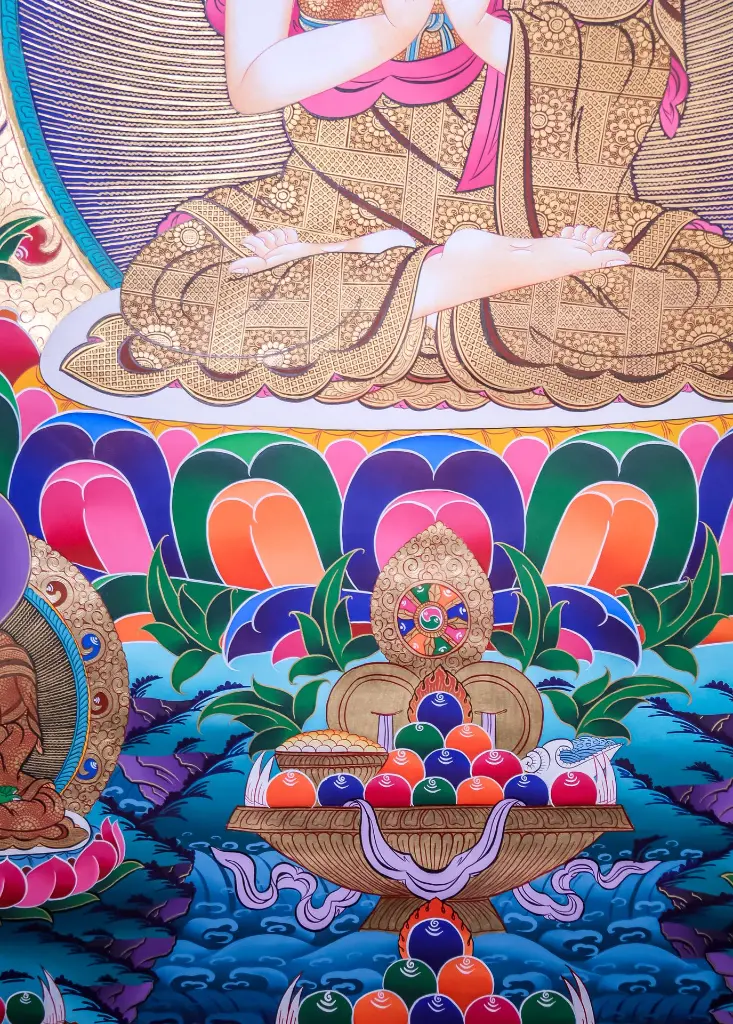
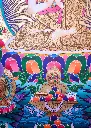
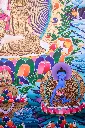
Vairocana rests upon a wide lotus throne. A gold halo and green nimbus frame him.
The lotus shows purity rising above the world. It grows clean from the waters below.
Look outward, and the landscape slowly opens. A few clear details guide the eye.
A fine gold aureole frames the central Buddha.
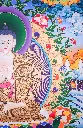
Peonies and lotus blooms drift across blue skies.
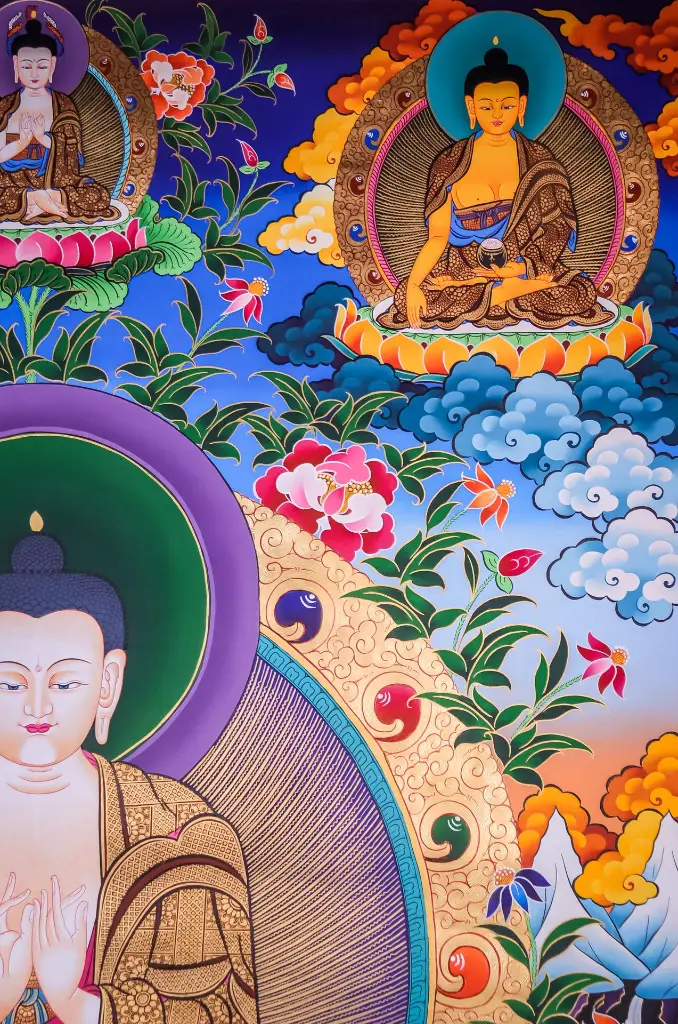
Snow peaks, vines, and clouds fill the background. They follow the balanced manner of Menri painting.
The setting ties the figures to nature. Yet the eye still returns to the center.
Iconography and Sacred Assembly
Vairocana as the Center of Awareness
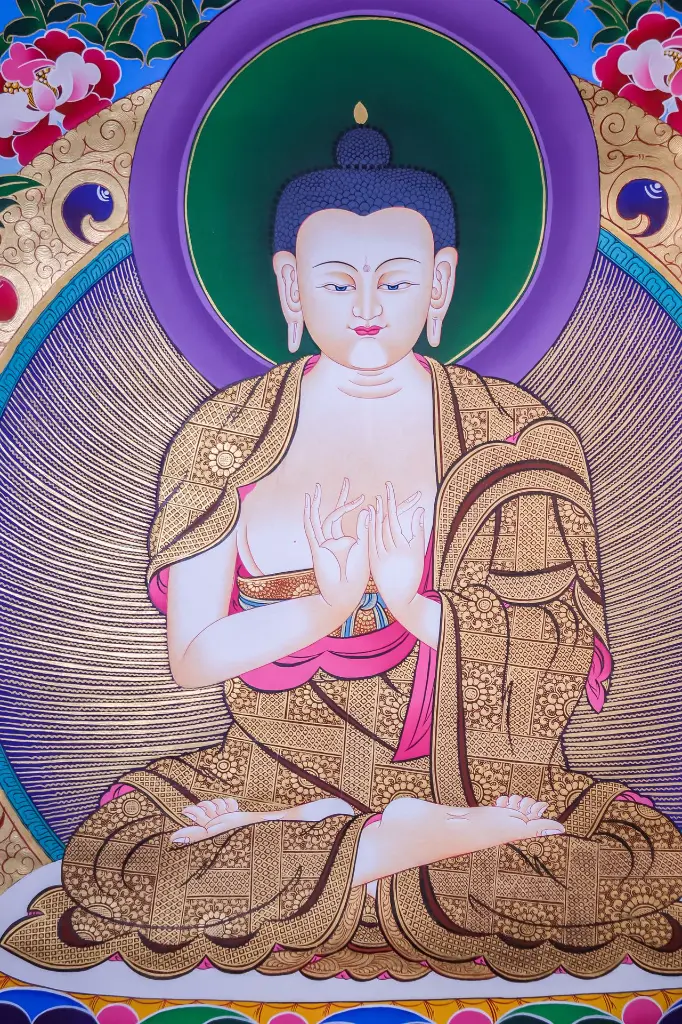
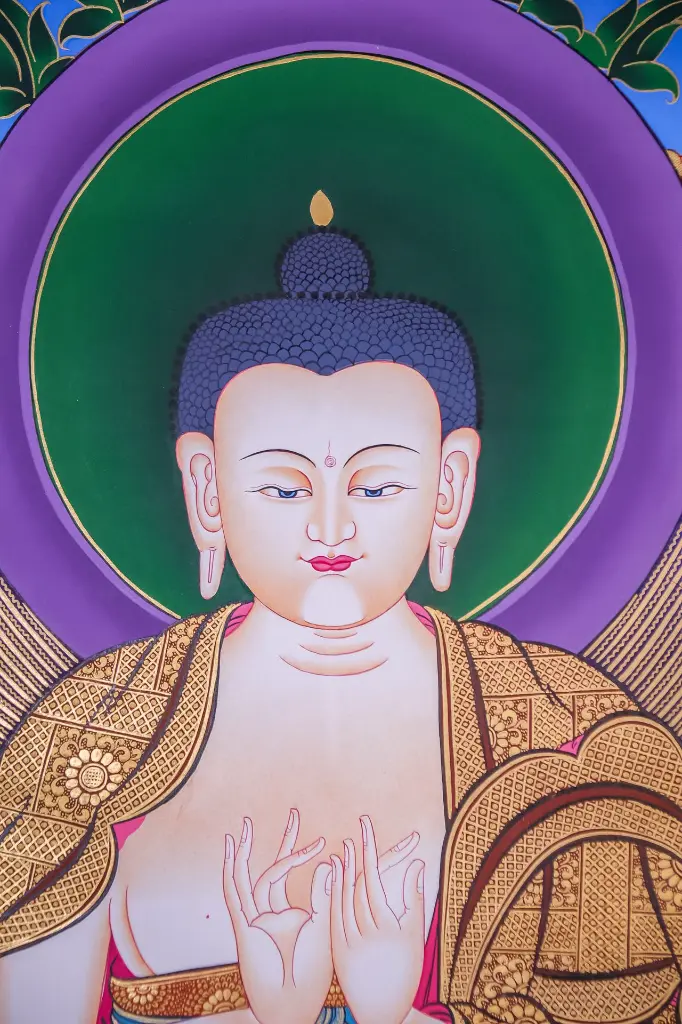
Vairocana appears in a pale, luminous form. His expression stays even and unhurried.
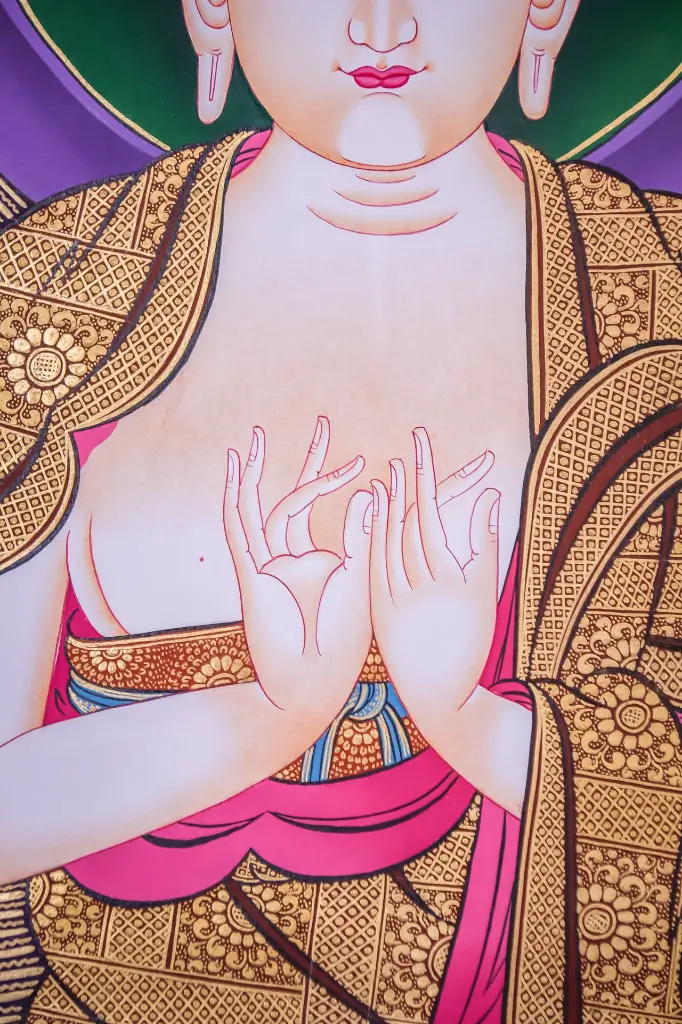
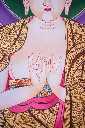
His posture is upright, the gaze gently lowered. His meaning rests in one clear gesture.
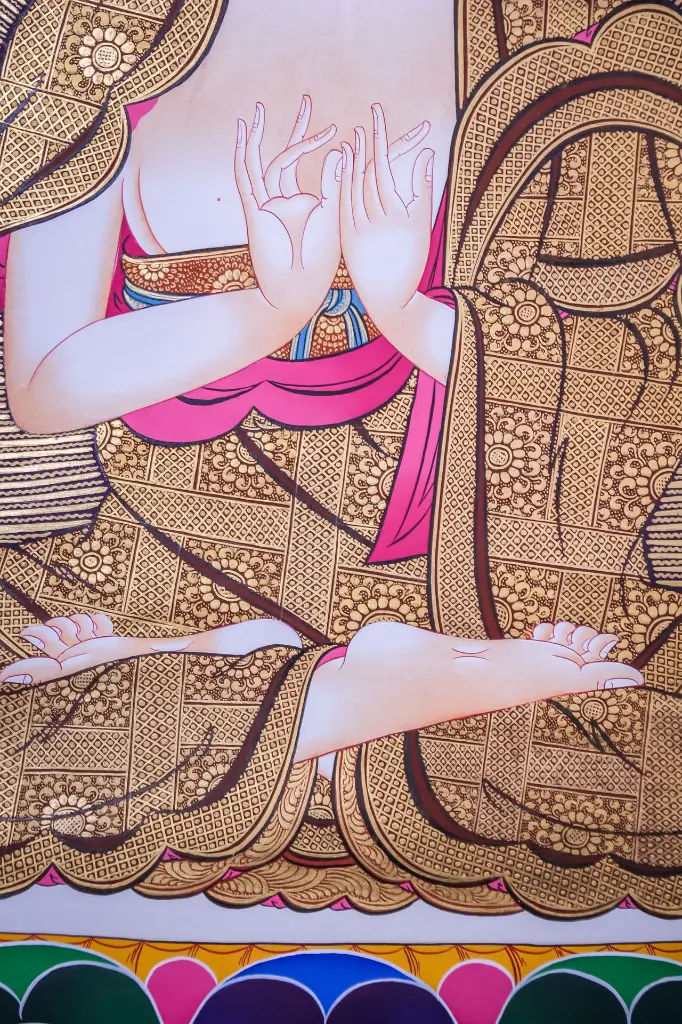
His hands form the dharmachakra mudra of teaching.
He holds the central place of the mandala.
This gesture marks the moment teaching begins. Knowledge moves outward and takes living form.
As the center, he stands for pure awareness. The other four families arise from him.
Supporting Figures and Assembly
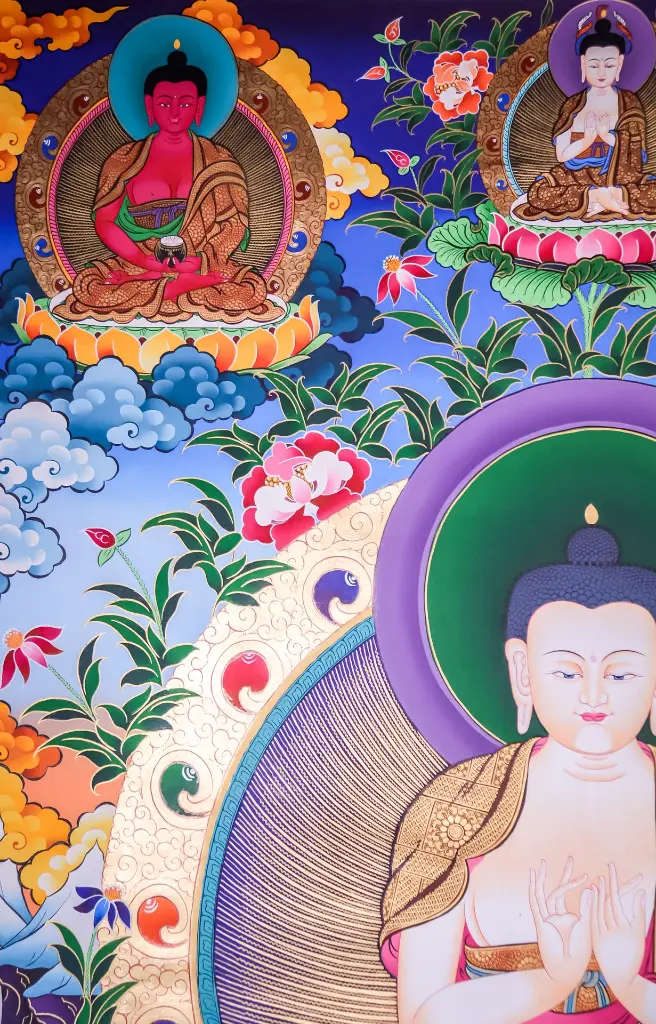
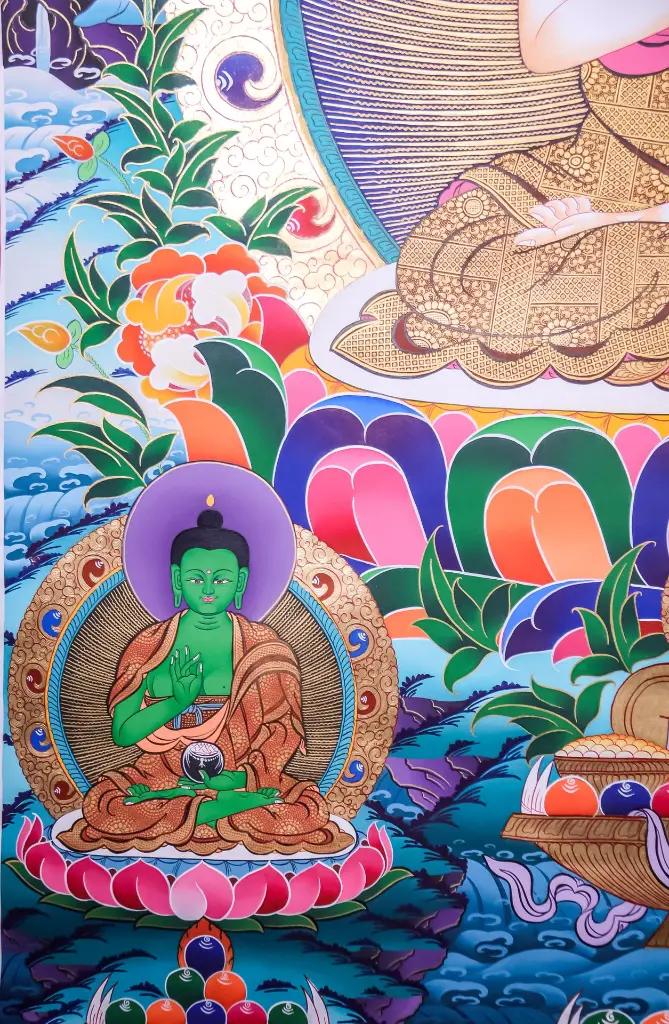
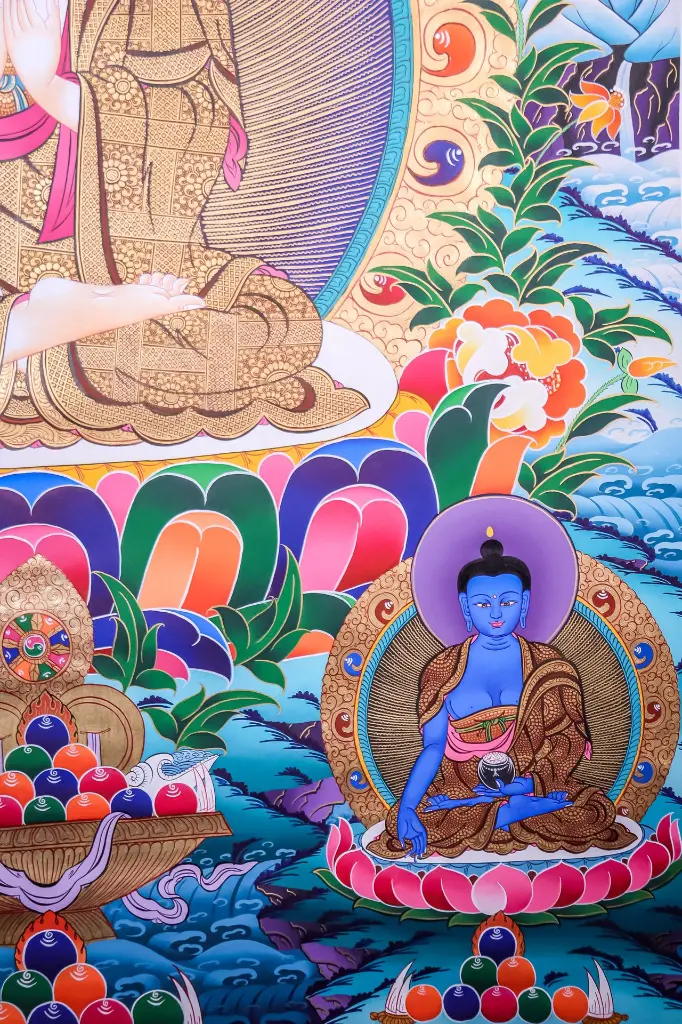
The four Buddhas sit at the four corners. Each rests on a lotus throne with a halo.
Their placement maps the four directions clearly. The center holds them all in unity.
Amitabha sits upper left in red, Ratnasambhava upper right in gold.
Amoghasiddhi sits lower left in green, Akshobhya lower right in blue.
At top center, Nagarjuna appears in prayer. He honors the lineage that carried these teachings.
Each Buddha governs a wisdom and a direction. The corners answer the center in steady harmony.
Lineage and Scriptural Context
The Five Dhyani Buddhas anchor Vajrayana teaching. Each family shows a transformed aspect of the mind.
This framework runs through the tantric texts. The Himalayan monastic schools preserved it carefully.
These families matter for a simple reason. They map the path from confusion to wisdom.
This painting draws on that living tradition.
It reflects mandala teachings from Vajrayana sources.
It aligns with practice on the five families.
The arrangement still serves practitioners today. It offers the same grounding it always has.
Collector Significance and Rarity
A full five-Buddha assembly demands careful planning. The hand must stay steady across every figure.
The challenge lies in keeping each Buddha distinct. The whole must still hold in balance.
Gold detailing is applied with fine, controlled precision.
Layered background and matched figures show patient work.
Works of this caliber are usually held long-term. They pass within families or temple shrines.
Artisan Mastery
Every figure follows the Menri iconometric grid. Proportion is measured here, never simply guessed.
These set ratios give the Buddha's calm form. The work stays recognizable and balanced.
You can read the craft in two stages.
Mineral pigments are built in thin, layered washes.
Gold is applied and burnished by hand.
This thangka was painted in Nepal. A living tradition kept it alive for generations.
The skill passes from teacher to student. The continuity stays unbroken and working.
Frequently Asked Questions
Why is this placement significant?
The five Buddhas follow their traditional directions. This order reflects the Vajrayana mandala structure.
Is this suitable for temple or home use?
Yes, it suits both a shrine and a home. Its scale fits a dedicated, quiet wall.
Does it require consecration?
You may use it as is or blessed. Consecration is available upon request.
How to Welcome This Thangka Into Your Life
Spend a short moment with it daily. Let your eye rest at the center.
It suits practitioners, collectors, and quiet seekers. The scale fits a main wall or shrine.
A few simple steps help it settle.
Hang it at eye level in soft light.
Begin mornings with one minute of reflection.
Let Vairocana hold a calm place daily. There is no rush, only a return.