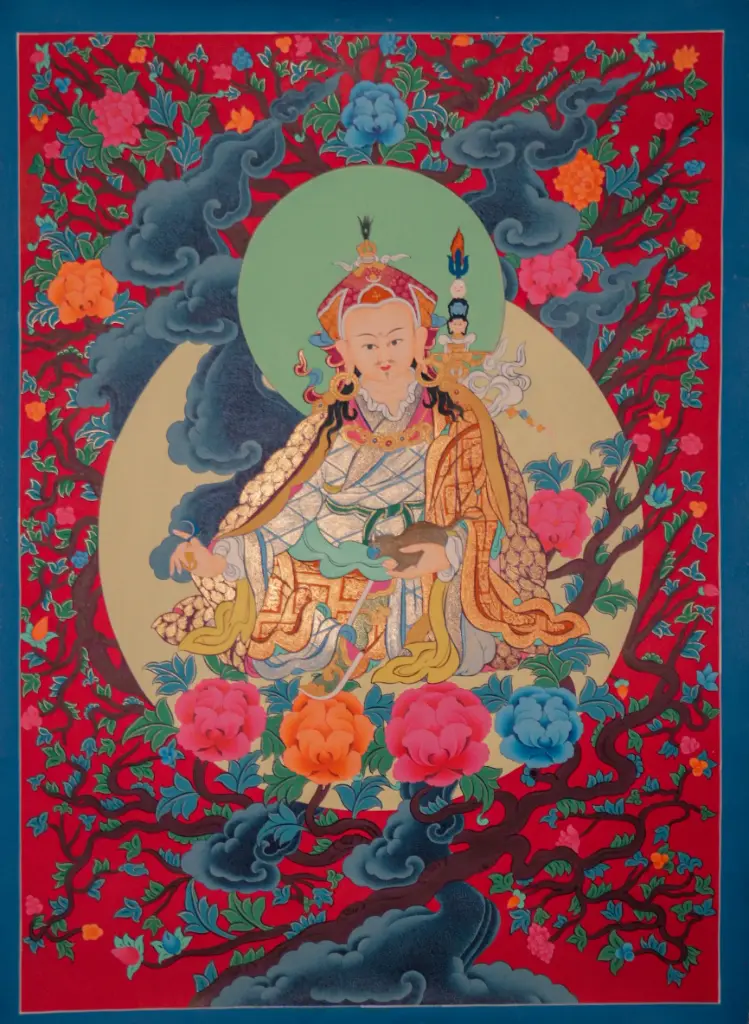
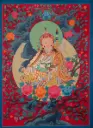
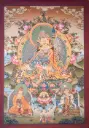
Guru Rinpoche Thangka – Flowering Tree Throne – Menri Style
A Lotus-Born Master Framed by Blossoms
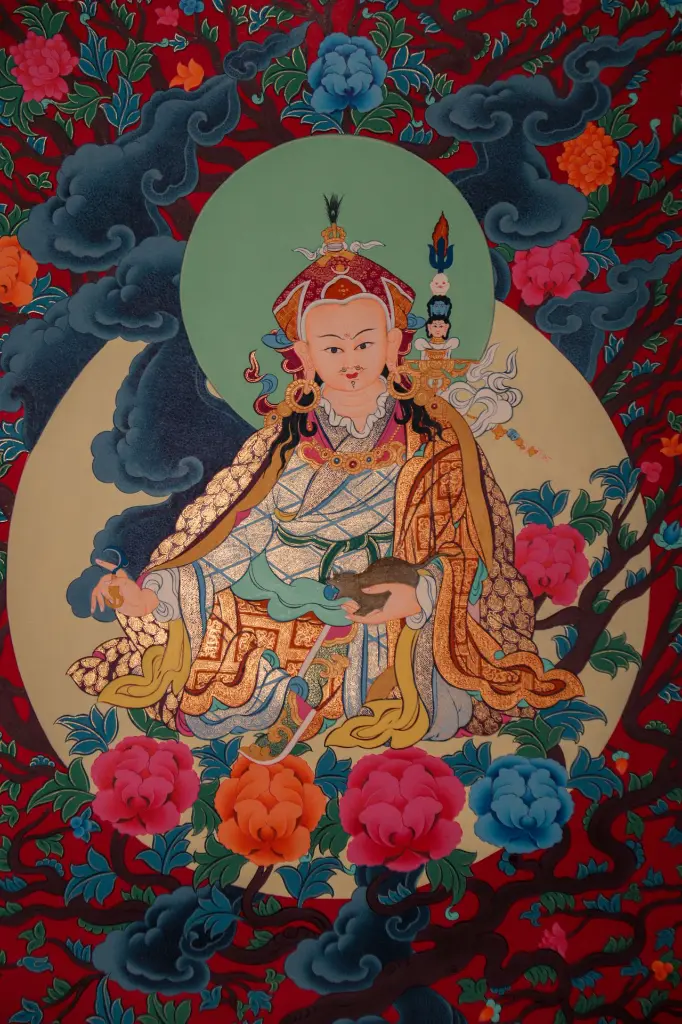
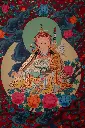
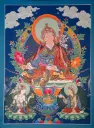
Guru Rinpoche sits at the center of this vivid painting. Flowering branches wrap around him against a deep red ground.
He introduced Vajrayāna Buddhism to Tibet in the eighth century. His lotus hat and steady half-wrathful gaze remain instantly recognizable.
The tree canopy, drifting clouds, and green nimbus reward slow, careful looking.
Artwork Specifications
The details below describe this thangka's confirmed features. Each element reflects traditional Menri workshop practice.
- Dimensions: 45 × 60 cm
- Materials: Mineral Pigments with Gold Leaf on Cotton Canvas
- Origin: Kathmandu, Nepal
- Artistic Style: Menri Style Tibetan
- Background: Marthang Red
- Type: Original
- Composition: Single Deity
- Consecration: Consecration Available Upon Request
Tags |
Padmasambhava in the Menri Tradition
The Menri school was founded by Menla Döndrup in the fifteenth century. It became a defining style for central Tibetan painting.
Menri workshops favor balanced compositions and refined figure work. Ornament, brocade, and jewelry receive especially close attention.
Marthang red grounds traditionally suit semi-wrathful subjects. Padmasambhava's expression fits this convention closely.
Guru Rinpoche: Form and Attributes
The Central Figure
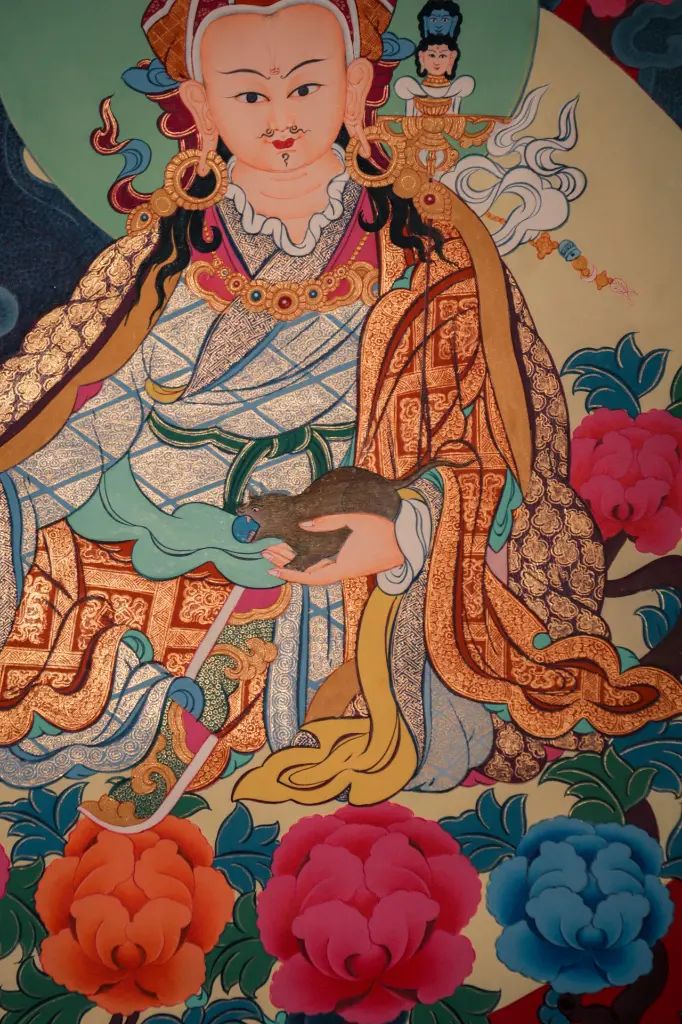
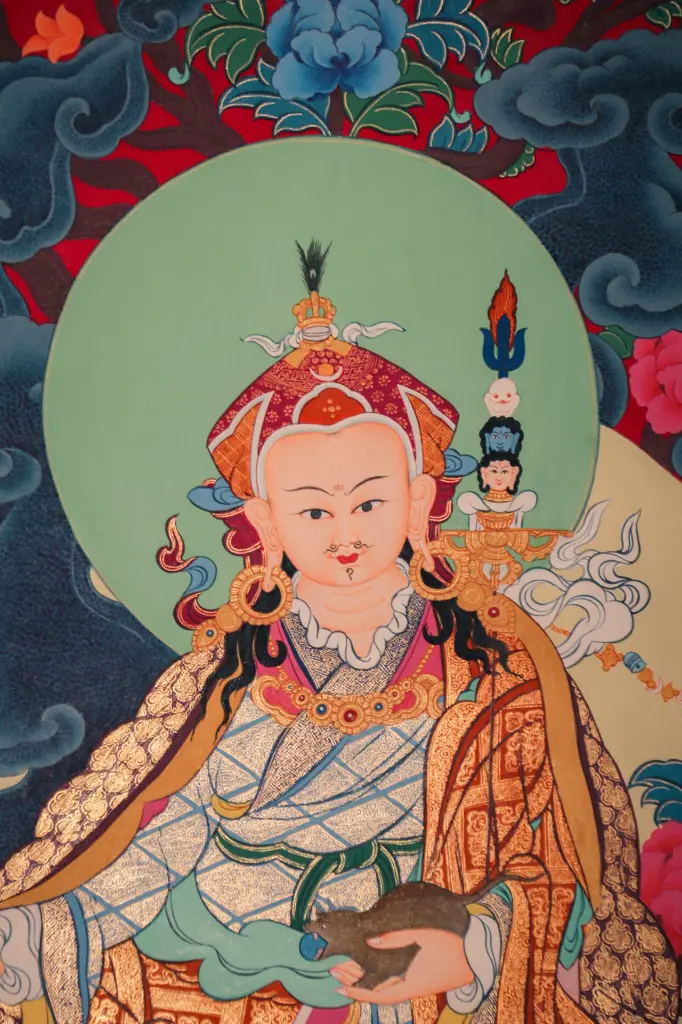
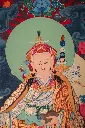
His complexion is light. His expression blends calm with quiet ferocity.
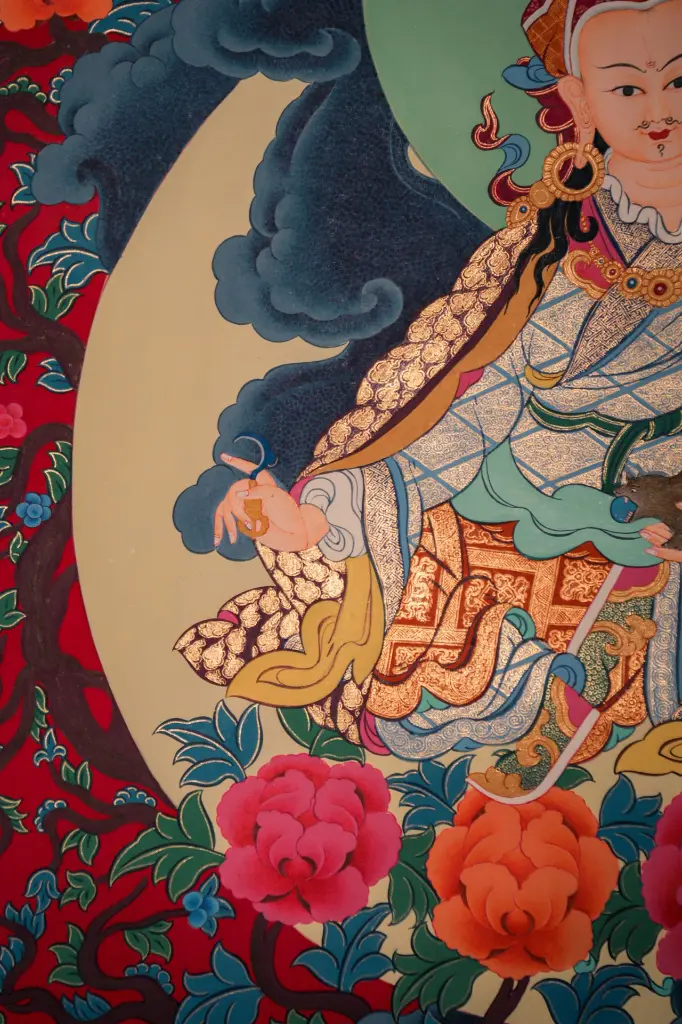
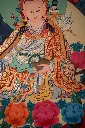
The right hand rests at the knee, holding a golden vajra. The left hand rests in dhyāna mudrā, cradling a kapāla.
He sits in rājalīlāsana, the posture of royal ease. A khaṭvāṅga leans against his left shoulder.
His ornaments and robes include several distinct elements. Each one carries clear iconographic meaning.
Five-petaled lotus hat with vulture feather and sun-moon crest
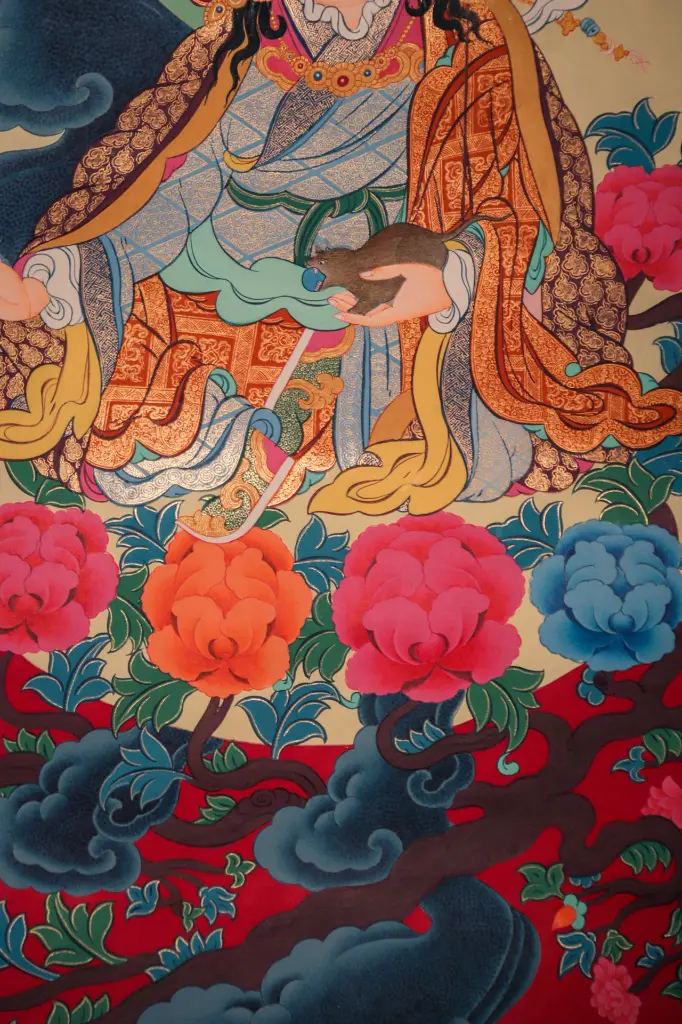
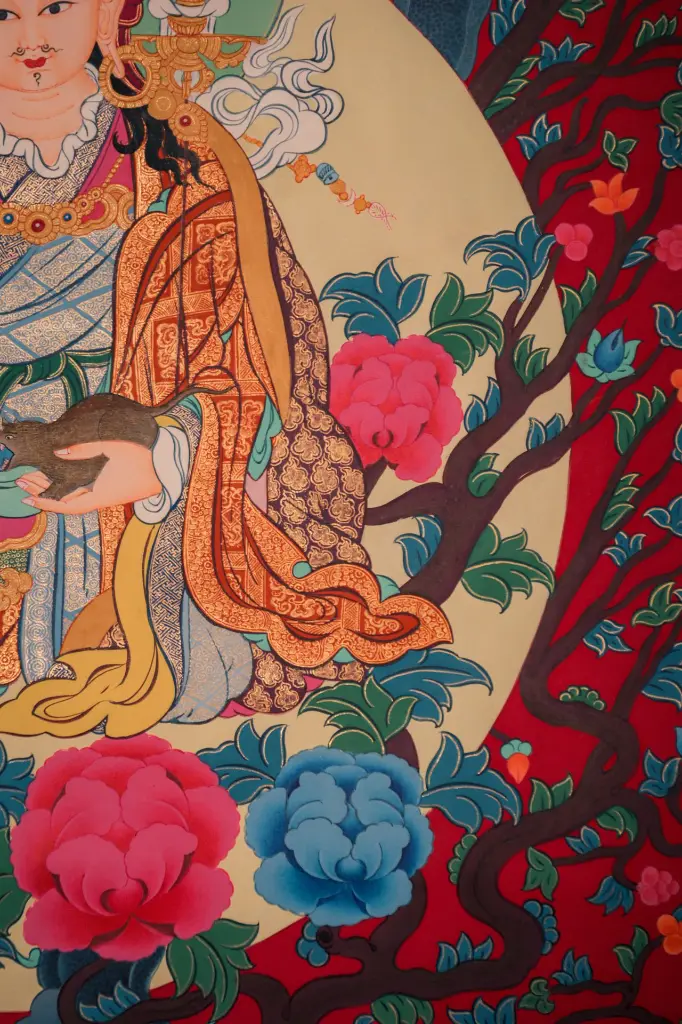
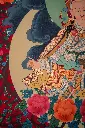
Layered brocade robes patterned in fine gold leaf
Circular gold earrings and a jeweled collar
Green inner nimbus with a golden outer aureole
The Flowering Tree Setting
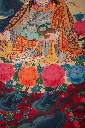
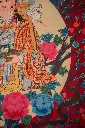
A gnarled tree rises from the lower edge. Its branches spread across the entire red field.
Peonies in pink, orange, and blue bloom throughout the canopy. Blue-grey stylized clouds drift softly behind the figure.
Brushwork and Proportion
The figure follows the nava tāla proportional canon. Gold leaf covers the robes and hat in layered detail.
Fine linework defines every leaf and petal. Ornament rendering follows Menri conventions of precise, controlled detailing.
Mantra and Display Guidance
The Vajra Guru mantra is central to Nyingma practice. It invokes Padmasambhava's blessing stream.
Oṃ Āḥ Hūṃ Vajra Guru Padma Siddhi Hūṃ
A few simple guidelines support respectful display and quiet viewing.
Place the thangka on a clean, elevated surface
Keep it away from direct sunlight and moisture
Avoid hanging it near incense smoke
Sit before the image and observe details slowly
May this painting support steady, unhurried contemplation.