Guru Rinpoche Yeshe Tsogyal and Mandarva Thangka – Twin Consorts – Menri Tibet
Padmasambhava, Mandarava, Yeshe Tsogyal Thangka Painting
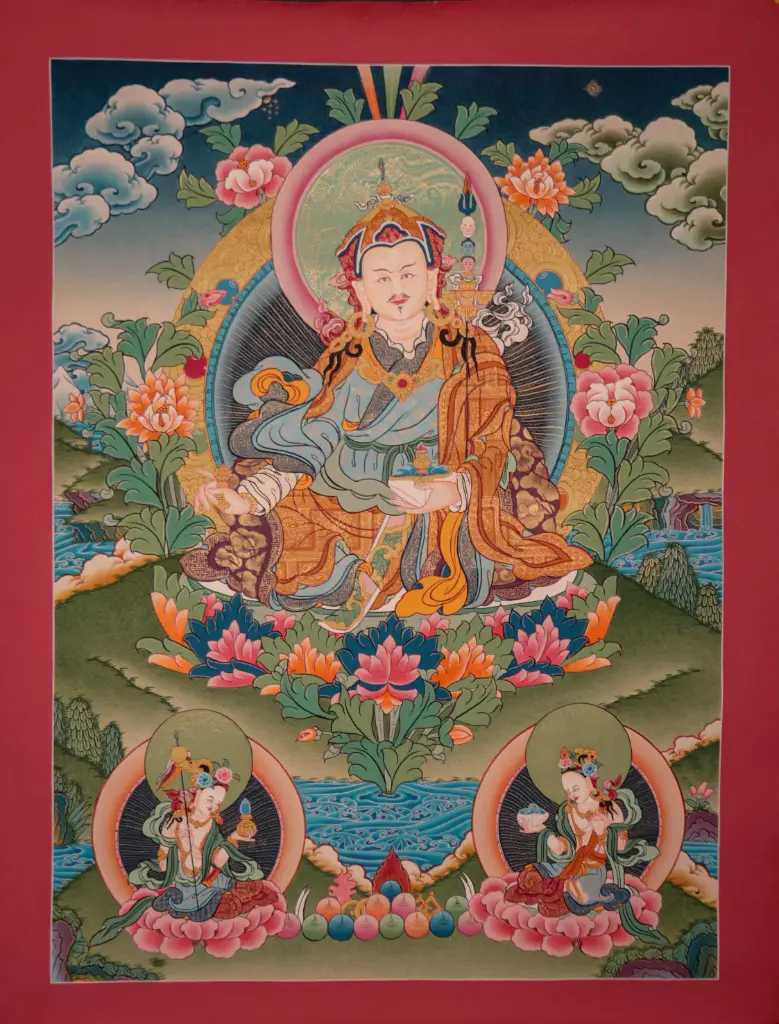
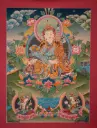
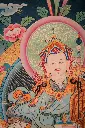
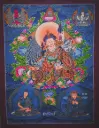
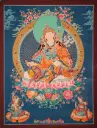
This Guru Rinpoche thangka presents Padmasambhava as the central focus. A softened, faded palette of rose, teal, saffron, and mineral green gives the painting a gentle visual character.
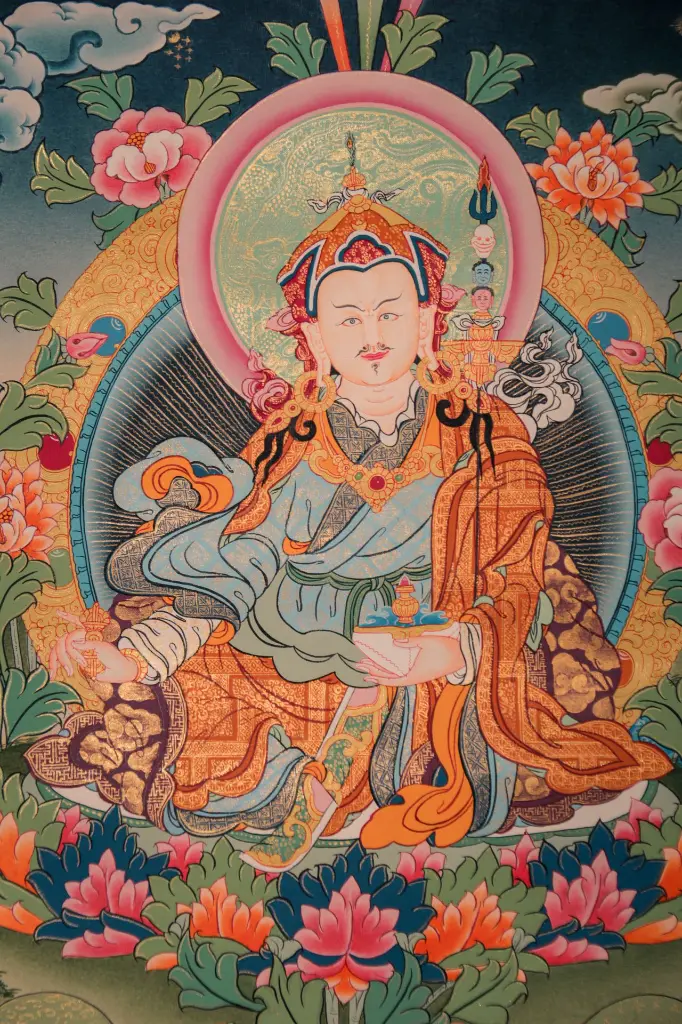
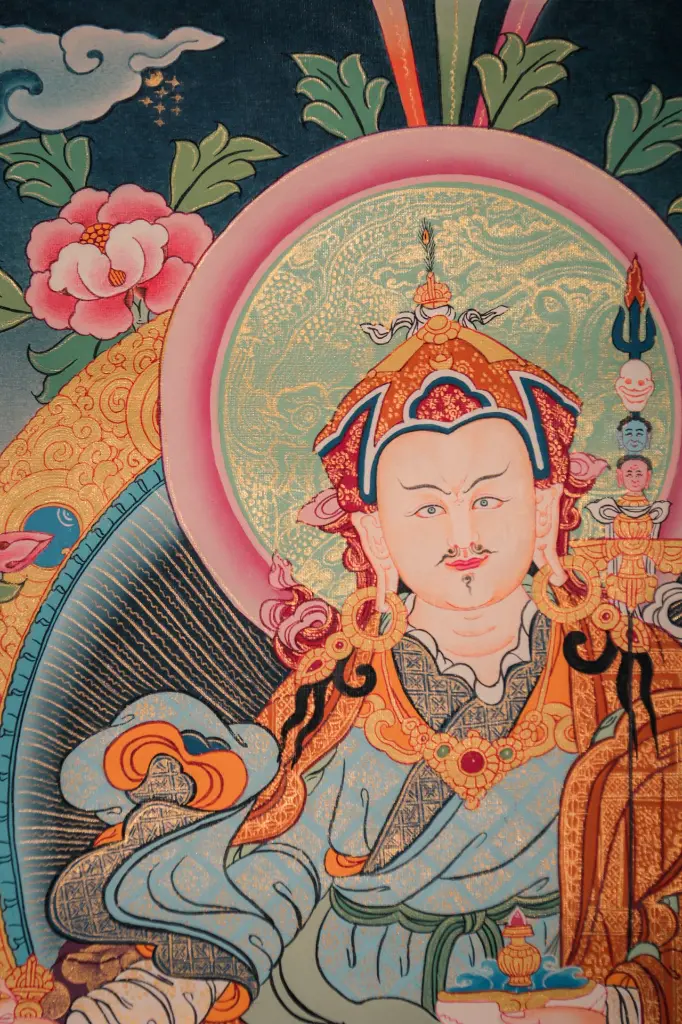
Guru Rinpoche, or Padmasambhava, is the Lotus-Born master central to the Nyingma tradition. Look closely at his khaṭvāṅga staff, rising beside his left shoulder.
Catalog Details for This Painting
The following are hypothetical catalog specifications, pending material and workshop confirmation.
Dimensions: 60 × 45 cm
Materials: Mineral and Stone Pigments with Gold Detailing
Origin: Kathmandu, Nepal
Artistic Style: Menri Style Tibetan
Background: Naturalistic
Type: Original
Composition: Central Guru Rinpoche with two lower consorts
Consecration: Consecration Available upon Request
Tags |
The Orgyen Principal Figures
Himalayan Art Resources identifies Padmasambhava, Mandāravā, and Yeshe Tsogyal as the Three Orgyen Principal Figures. This composition places the master above his two consorts in a clear vertical hierarchy.
The Menri tradition developed from the work of Menthangpa Menla Döndrup. Its carefully organized figures, floral motifs, and balanced landscape framing remain visible here.
Padmasambhava and His Vajra
Guru Rinpoche as Central Deity
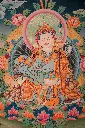
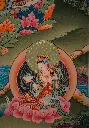
Guru Rinpoche wears a lotus hat with upturned side flaps. His face is pale, composed, moustached, and directed forward.
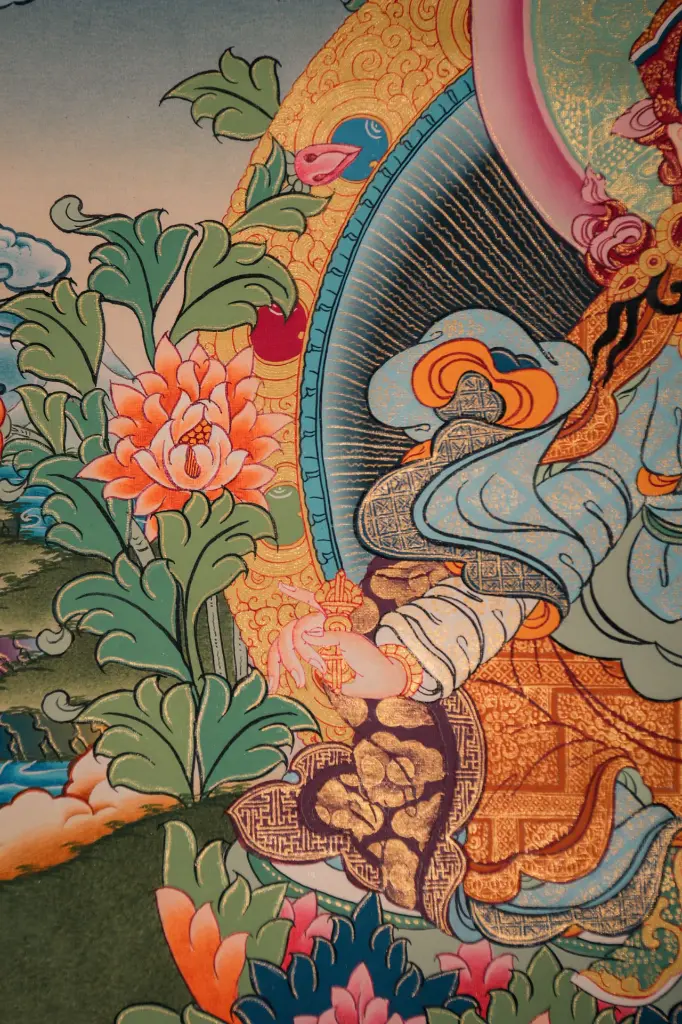
His right hand holds a vajra at knee level.
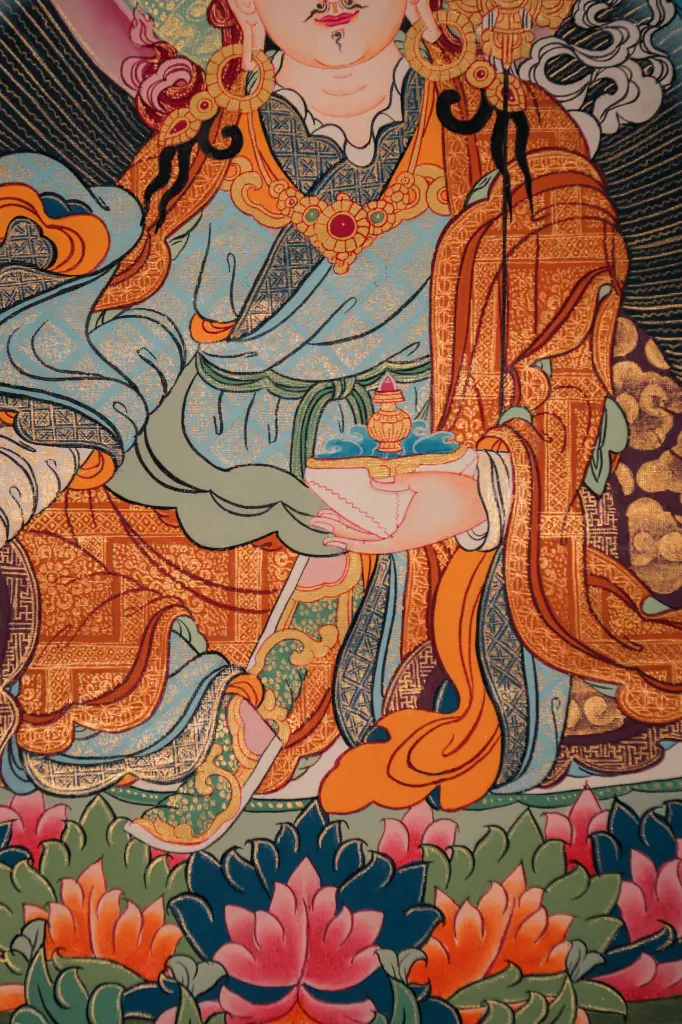
His left hand supports a white kapāla or skull cup.
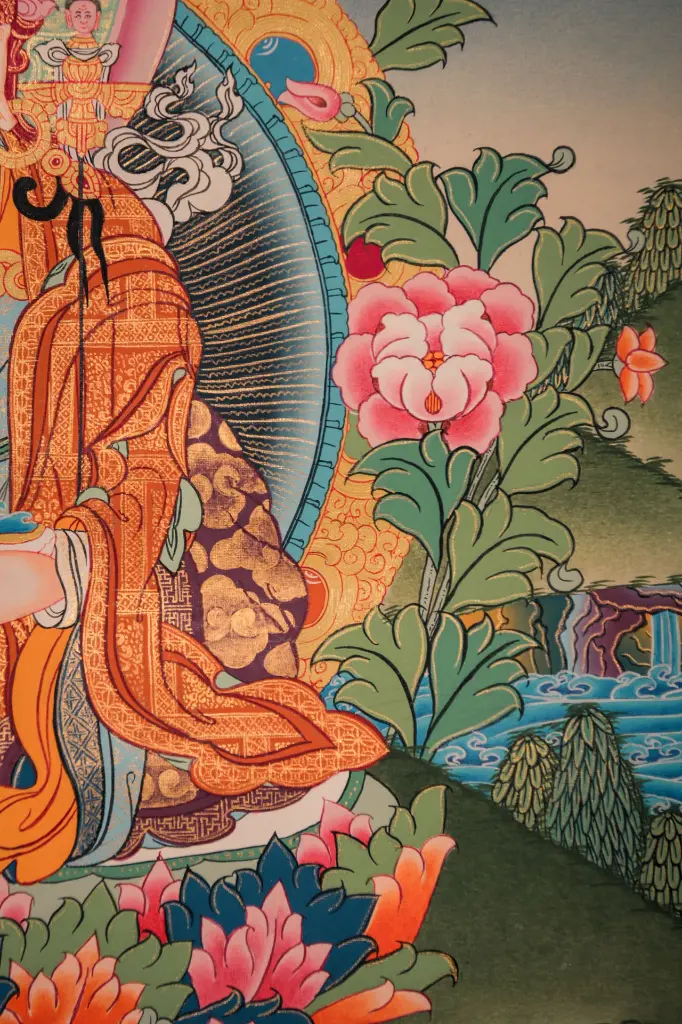
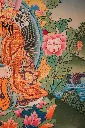
A three-pronged khaṭvāṅga rests against his left shoulder.
He sits in lalitāsana, the posture of royal ease.
Layered robes include blue inner garments and gold-patterned outer cloth.
A circular nimbus surrounds his head and upper body.
His seat is a broad multicolored lotus throne.
The vajra is a ritual sceptre associated with indestructibility. The khaṭvāṅga is a tantric staff, shown here with a trident finial and stacked heads.
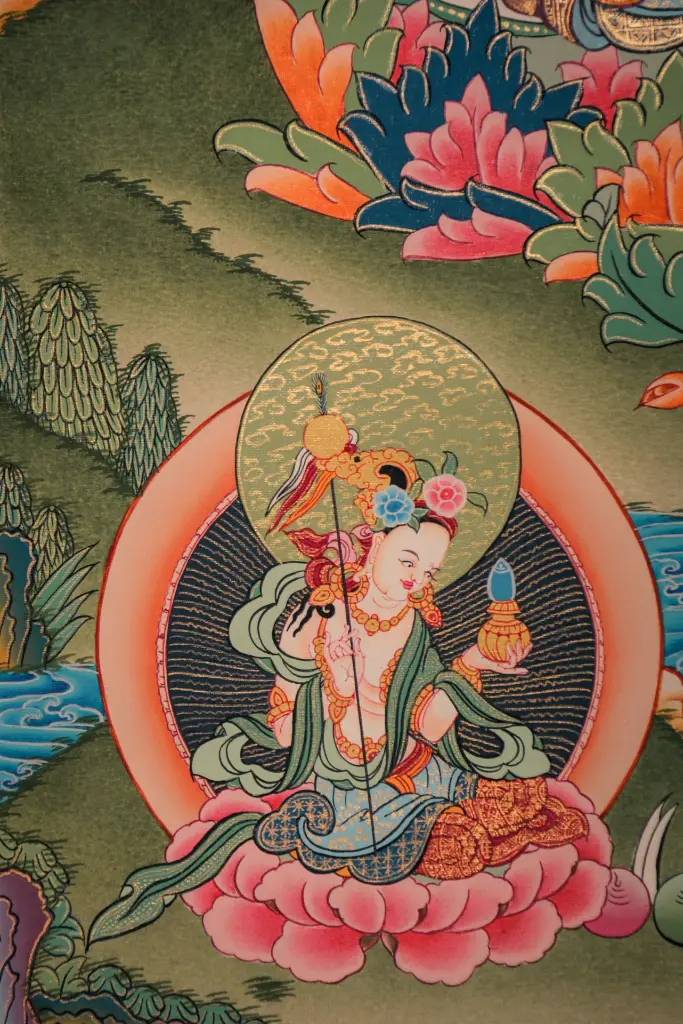
Mandāravā
Mandāravā occupies the lower left corner. She sits on a pink lotus, smaller in scale than Padmasambhava.
She wears flowing green garments, jeweled ornaments, and a flowered crown. A raised golden implement is visible beside her shoulder.
Yeshe Tsogyal
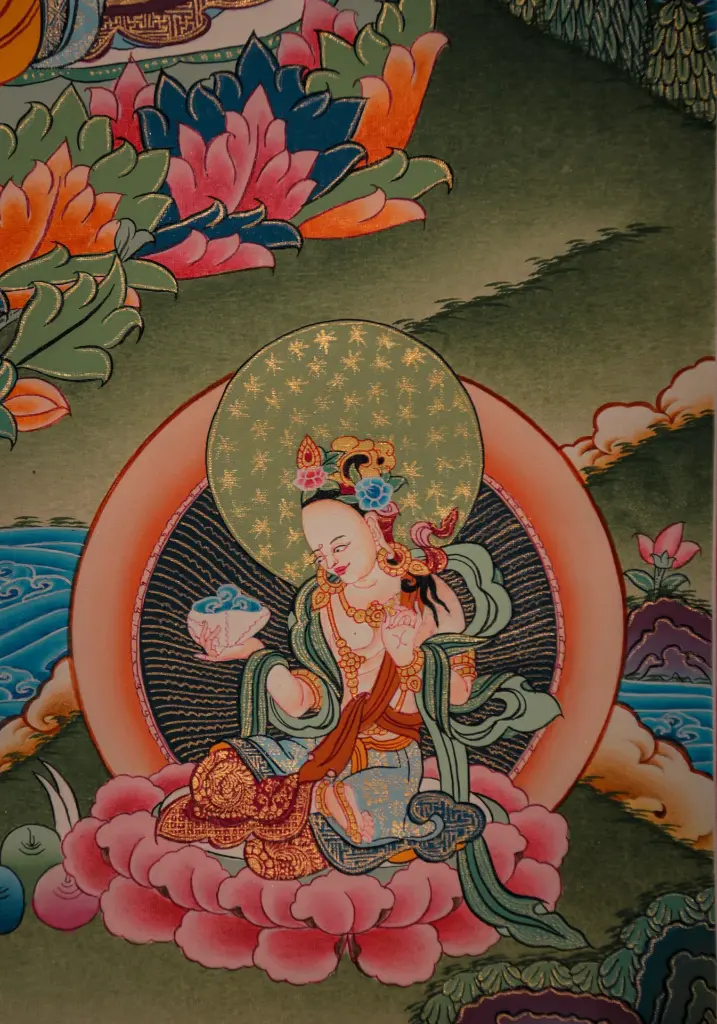
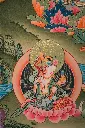
Yeshe Tsogyal appears at the lower right. She also sits upon a pink lotus beneath a green circular halo.
Her figure balances Mandāravā across the lower register. She wears ornate jewelry, a floral crown, and holds a pale bowl-shaped object.
Lotus, River, and Cloud Landscape
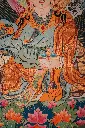
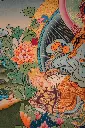
Pink and orange lotus blossoms gather beneath the central throne. Blue water flows behind the lower figures in curling wave patterns.
Green hills, flowering plants, and layered clouds fill the landscape. The central halo is framed by a gold torana-like arch and leafy floral scrolls.
Menri Proportion and Painted Surface
Traditional Tibetan figure construction uses measurement systems including tāla and aṅgula. A nava tāla canon can organize sacred proportions across the body, throne, ornaments, and ritual attributes.
No workshop process or pigment analysis has been supplied. This mineral pigment thangka should therefore be cataloged without claims about gold purity or ritual completion.
A Respectful Place for Observation
The associated Vajra Guru mantra is: Oṃ Āḥ Hūṃ Vajra Guru Padma Siddhi Hūṃ. It is the established mantra of Padmasambhava in Tibetan Buddhist practice.
Place this traditional Himalayan art away from direct sunlight, smoke, and moisture. Observe the vajra, skull cup, and lotus throne while taking three slow breaths.
Deity yoga practice requires qualified-teacher guidance. May this Nepali thangka painting support careful looking and respectful study.