Thousand-Armed Lokeshwor Menri Thangka – Eleven Heads on Marthang Red
Radiant Form of All-Seeing Compassion
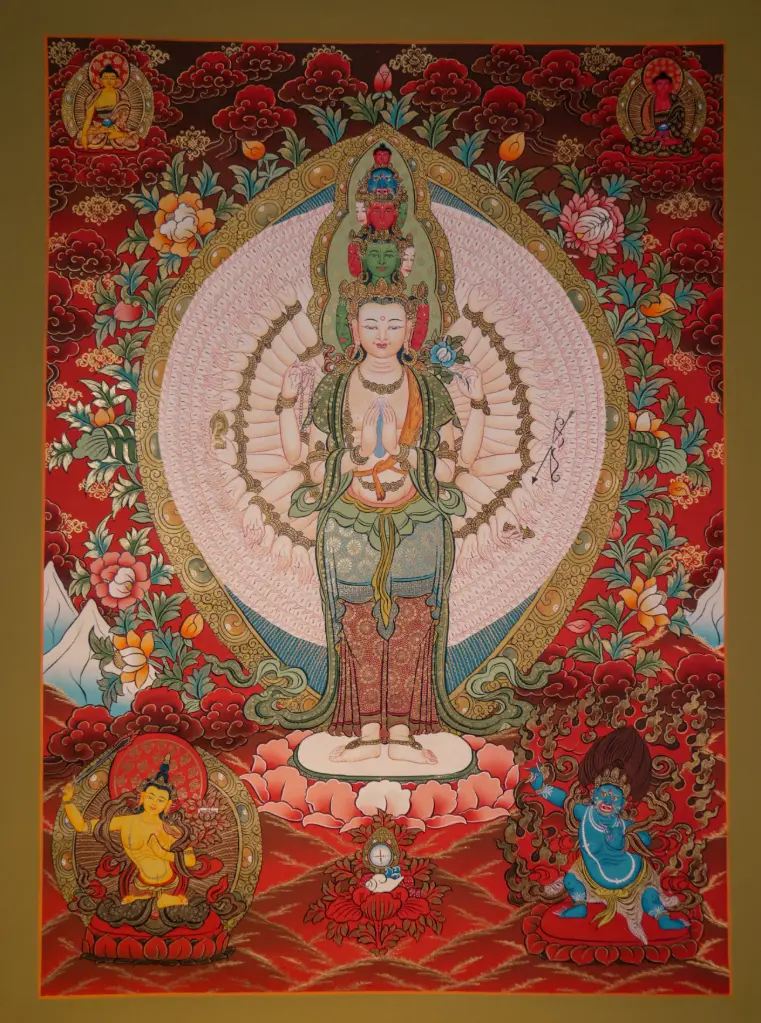
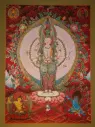
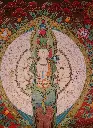
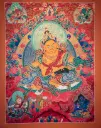
This hand-painted Tibetan Buddhist thangka presents Thousand-Armed Lokeshwor against a deep Marthang red ground. Eleven heads rise in tiers while a thousand arms form a luminous circular aura.
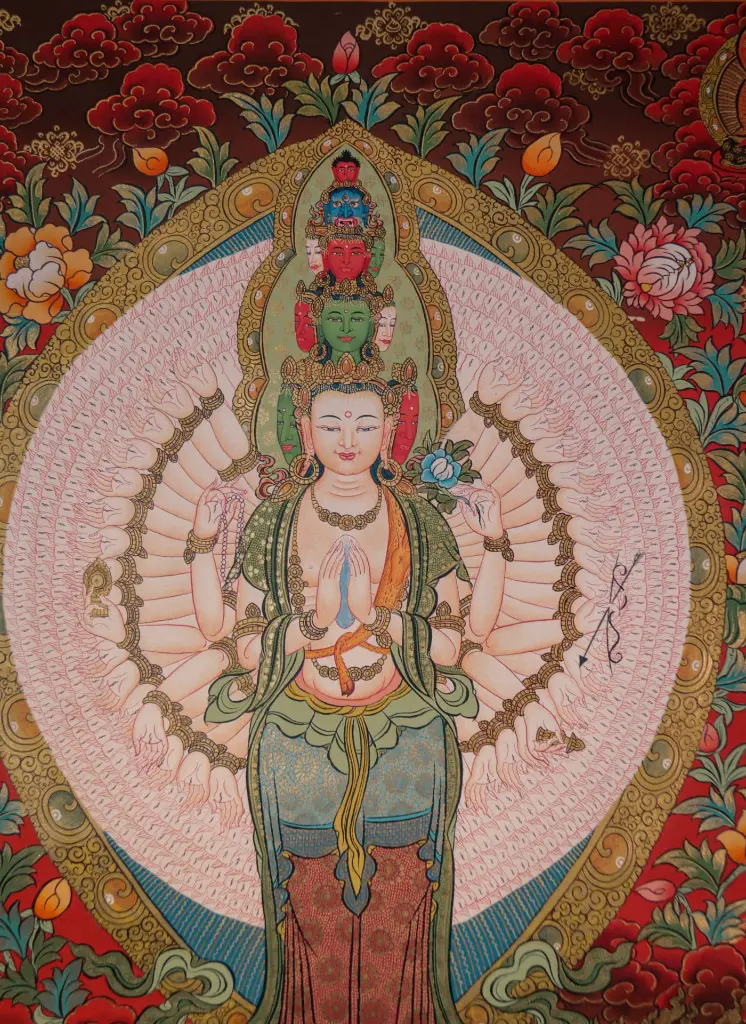
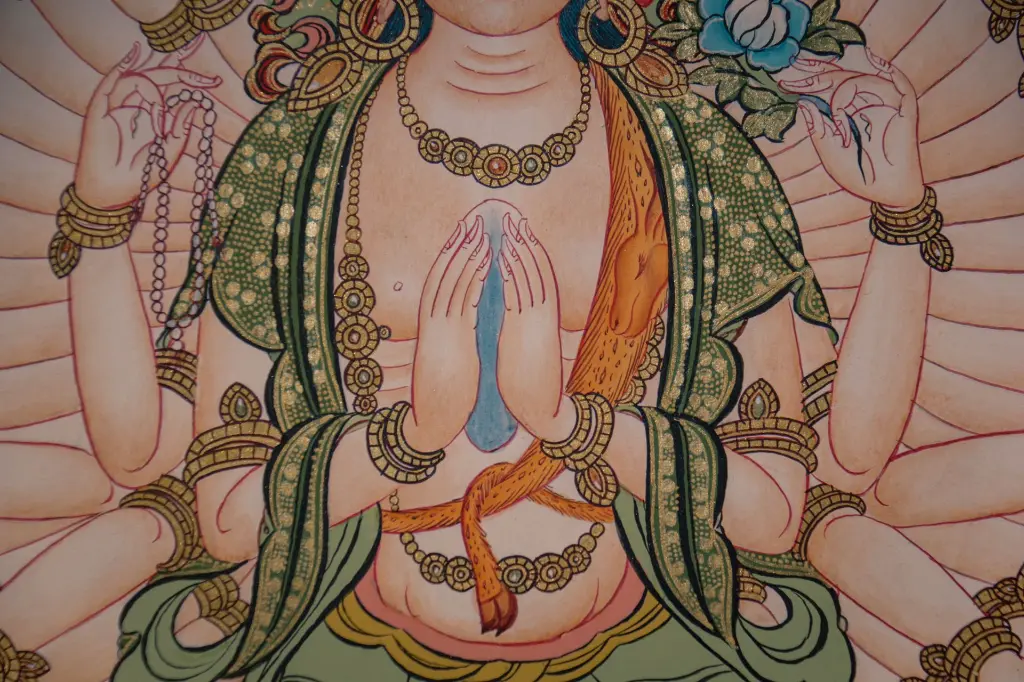
Lokeshwor, the Nepali name for Avalokiteśvara, embodies boundless compassion that responds to every cry. One clear feature draws attention at once: the open eye marked on each palm.
Tags |
Artwork Specifications
These facts identify the original Nepali thangka painting.
Dimensions: 60 × 40 cm
Materials: Pure Mineral Pigments with Genuine Gold Highlights
Origin: Kathmandu, Nepal
Artistic Style: Menri Style Tibetan
Background: Marthang Red
Type: Original
Composition: Main Deity + Upper and Lower Deities
Consecration: Consecration Available Upon Request
Transmission of the Eleven-Headed Form
The thousand-armed, eleven-headed form of Avalokiteśvara developed in Indian Mahāyāna tantra. It entered Tibet and the Kathmandu Valley by the twelfth century.
Menri painters adopted the standing posture and full arm-halo as a standard iconographic type. Newar and Tibetan workshops exchanged the stacked-head arrangement still visible here. The red Marthang ground heightens the white body in classic Menri contrast.
Figures and Defining Attributes of Lokeshwor
Central Deity
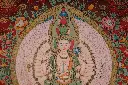
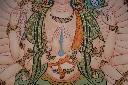
Lokeshwor stands in graceful upright posture on a white moon disc atop a pink lotus throne. His body is luminous white; the face remains peaceful with lowered gaze.
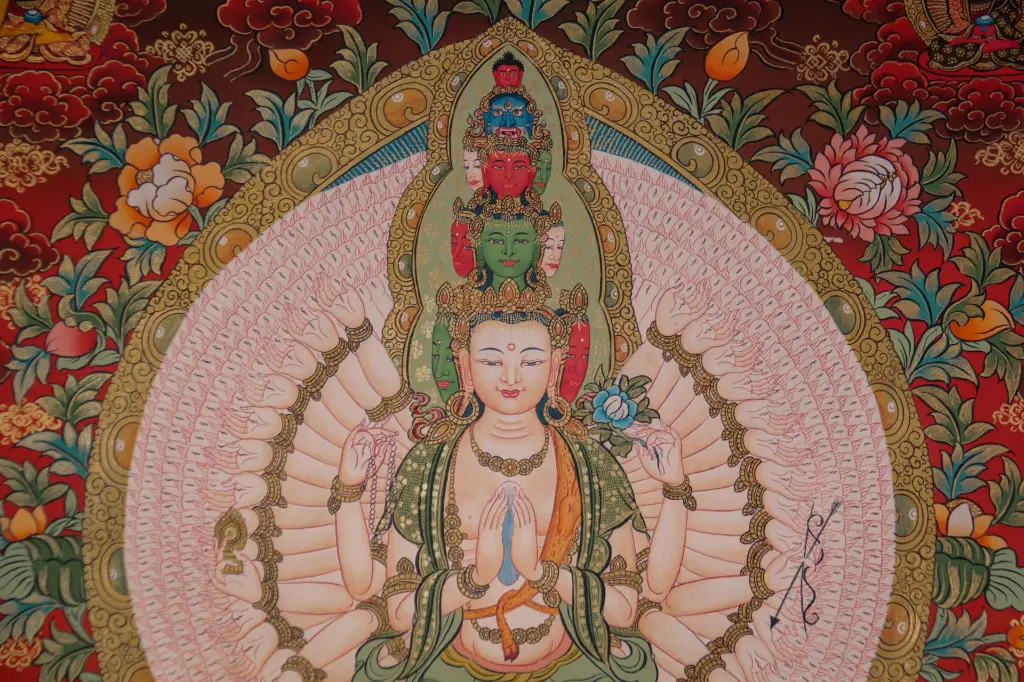
Eleven heads stack in five tiers: peaceful white, green, and red faces below, with a fierce red face and Amitābha at the crown. Primary hands join at the heart in namaskara mudrā. The remaining arms radiate outward, each palm marked with a wisdom eye. Upper hands hold akṣamālā, utpala lotus, bow, and other implements. Green scarves, silk dhoti, and full gold ornaments adorn him. A golden prabhāmaṇḍala encircles the thousand-arm halo.
Upper Lineage Figures
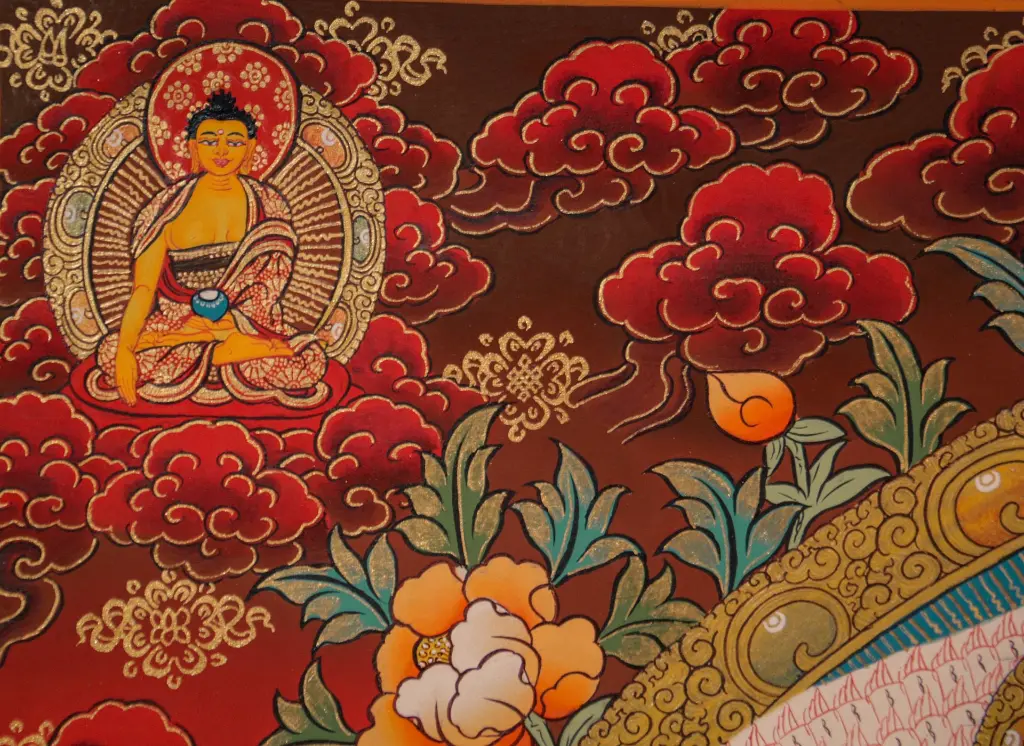
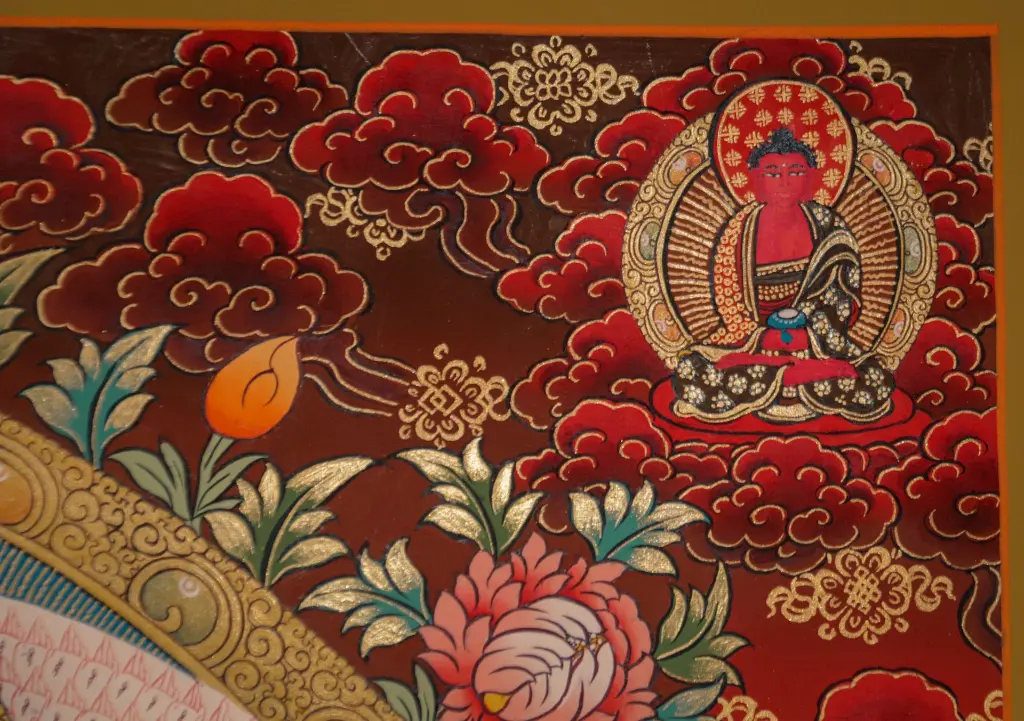
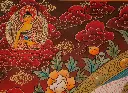
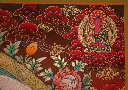
Śākyamuni Buddha sits at the upper left in saffron robes. Amitābha Buddha sits at the upper right in red robes. Both rest on lotus seats amid red clouds and confirm the compassion lineage.
Lower Attendant Figures
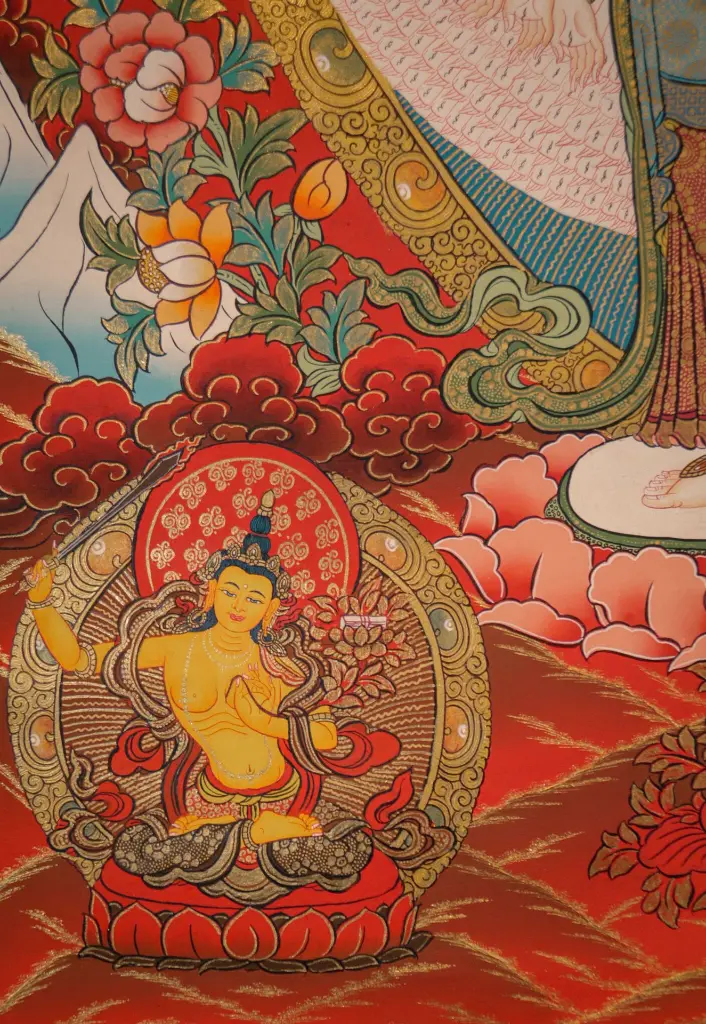
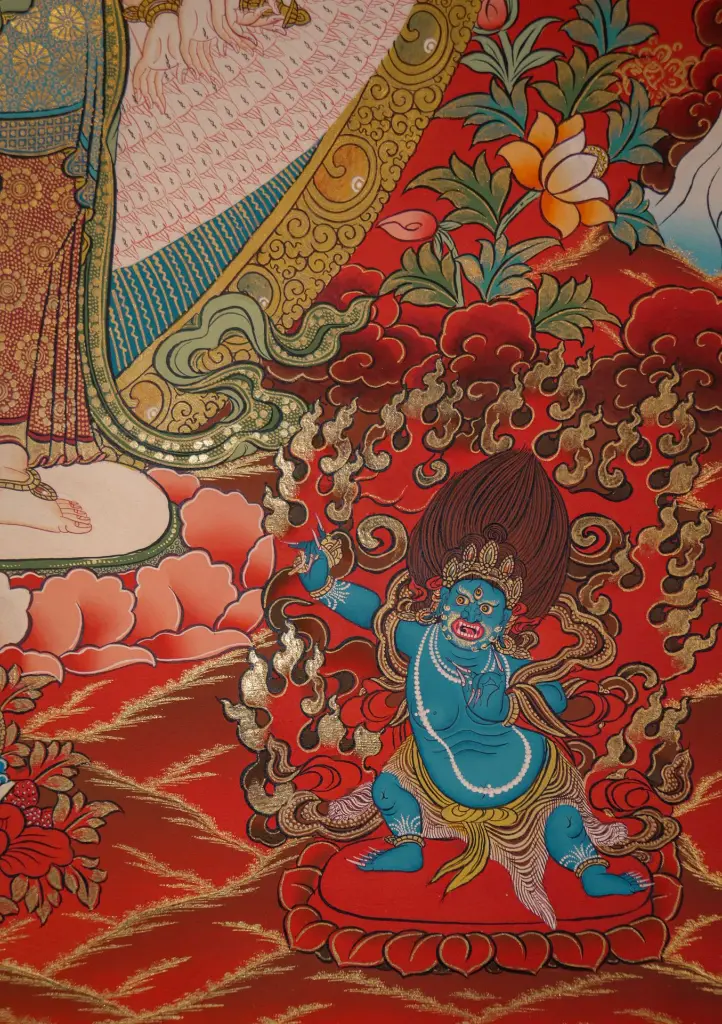
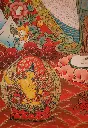
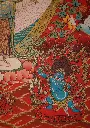
Mañjuśrī appears at the lower left, golden-yellow, wielding the wisdom sword and text. Vajrapāṇi stands at the lower right, dark blue and wrathful, surrounded by flames. Both sit on separate lotus seats and complete the protective assembly.
Marthang Red Sacred Setting
Deep red fills the entire field. Stylized red clouds and gold scrolling vines surround the central aura.
Peony and lotus blossoms frame the sides. Snow mountains appear at the far left and right edges. A jeweled offering vase rests at the bottom center.
Technique and Menri Iconometry
Menri artists construct the figure on the nava tāla iconometric grid. This system governs head tiers, arm lengths, and lotus proportions.
Fine gold lines define every palm-eye, ornament, and halo edge. Mineral pigments build the white body and saturated red ground in thin layers.
Placement and Daily Contemplation
The primary mantra is oṃ maṇi padme hūṃ. It invokes Lokeshwor’s compassionate activity for all beings.
Hang the thangka away from direct sunlight, smoke, and moisture. Rest the gaze on the central namaskara mudrā while breathing slowly.
Deity yoga requires guidance from a qualified teacher. May this image support steady compassion.