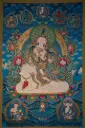
Samantabhadra Bodhisattva Thangka – White Elephant Mount – Menri Tradition
Luminous Presence of Perfect Conduct
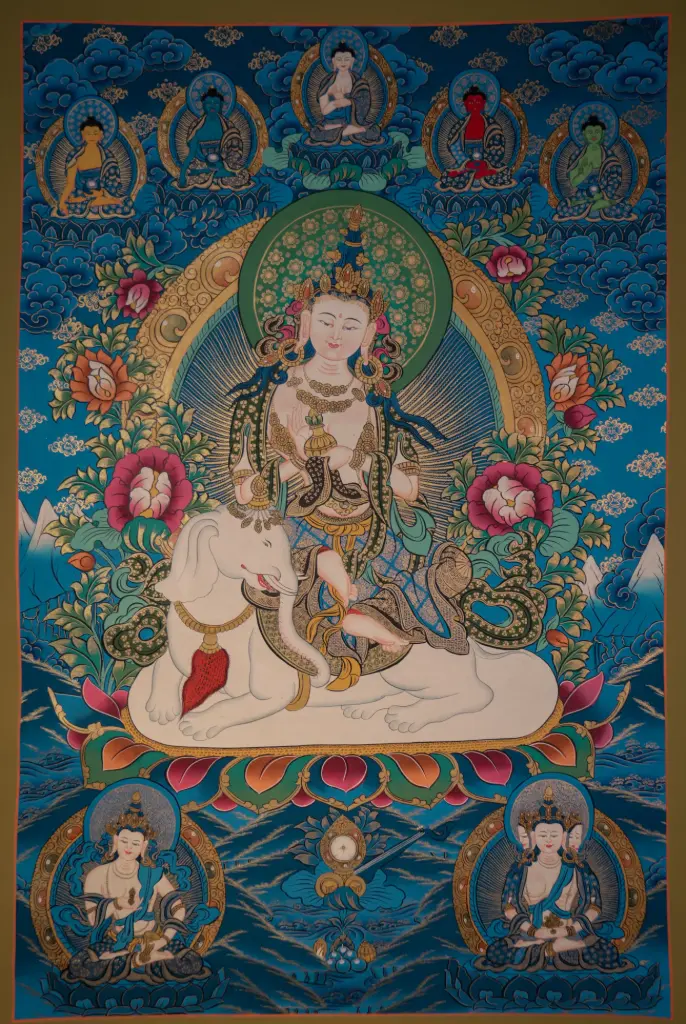
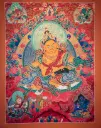
This hand-painted Buddhist art depicts Bodhisattva Samantabhadra upon a pristine white elephant mount. Vibrant mineral pigments illuminate the deity against a rich celestial background landscape.
The Samantabhadra Bodhisattva Thangka captures fundamental Mahayana principles of aspirational action and meditation. Surrounding figures complete a classic assembly of wisdom and lineage transmission.
Tags |
Artwork Specifications
Master artists in Nepal hand-painted this fine mineral pigment thangka on cotton canvas.
Dimensions: 75 cm Height × 55 cm Width
Materials: Natural Stone Pigments with 24K Gold on Cotton Canvas
Origin: Kathmandu, Nepal
Artistic Style: Menri Style Tibetan
Background: Naturalistic
Type: Original Hand-Painted Artwork
Composition: Main Deity with Surrounding Deities
Consecration: Consecration Available Upon Request
Legacy of Great Aspiration
In Mahayana traditions, Samantabhadra embodies the ultimate expansion of enlightened practice and prayer. Translators brought his iconographic forms from India into early Tibetan monasteries.
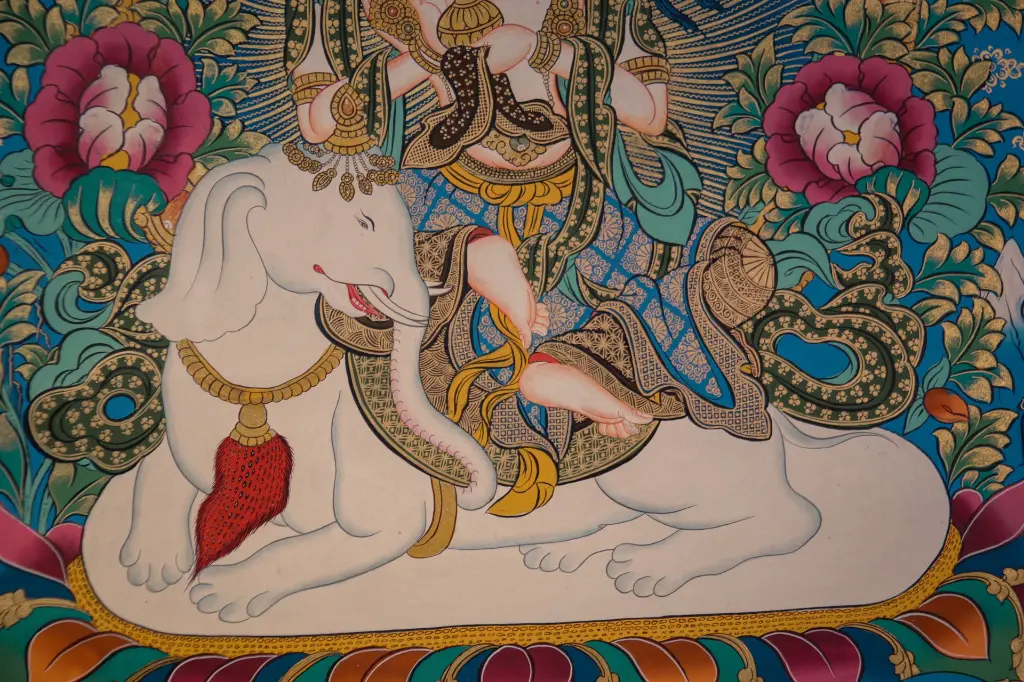
Artisans depict Samantabhadra seated upon a white elephant, symbolizing indomitable spiritual strength. His ten great vows form the foundation for compassionate conduct across Himalayan traditions.
Samantabhadra Bodhisattva Thangka Iconography
Central Deity
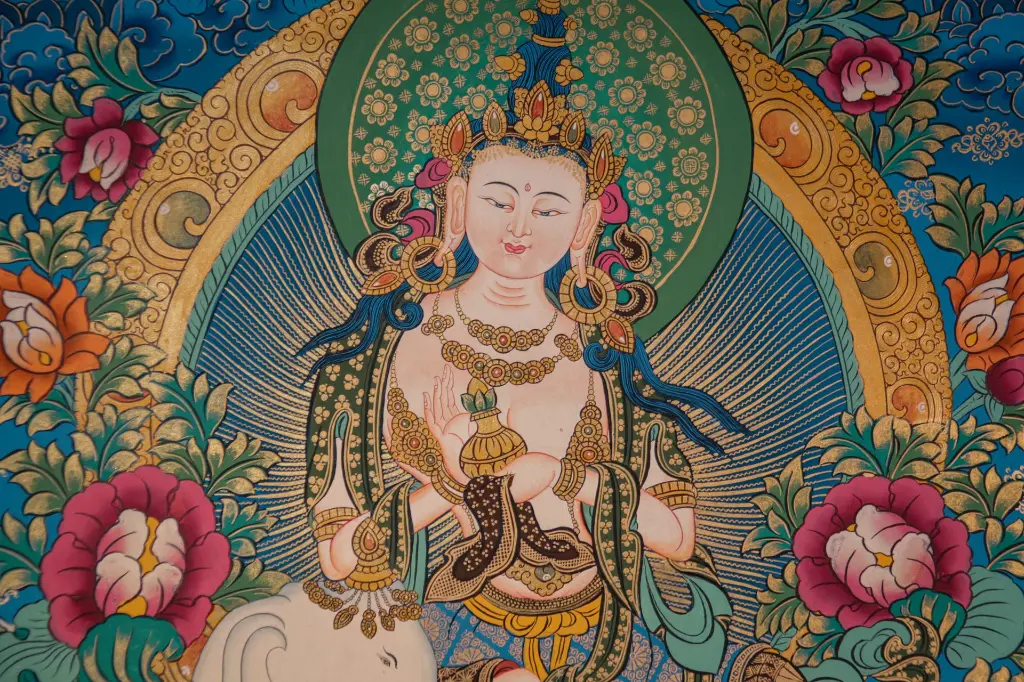
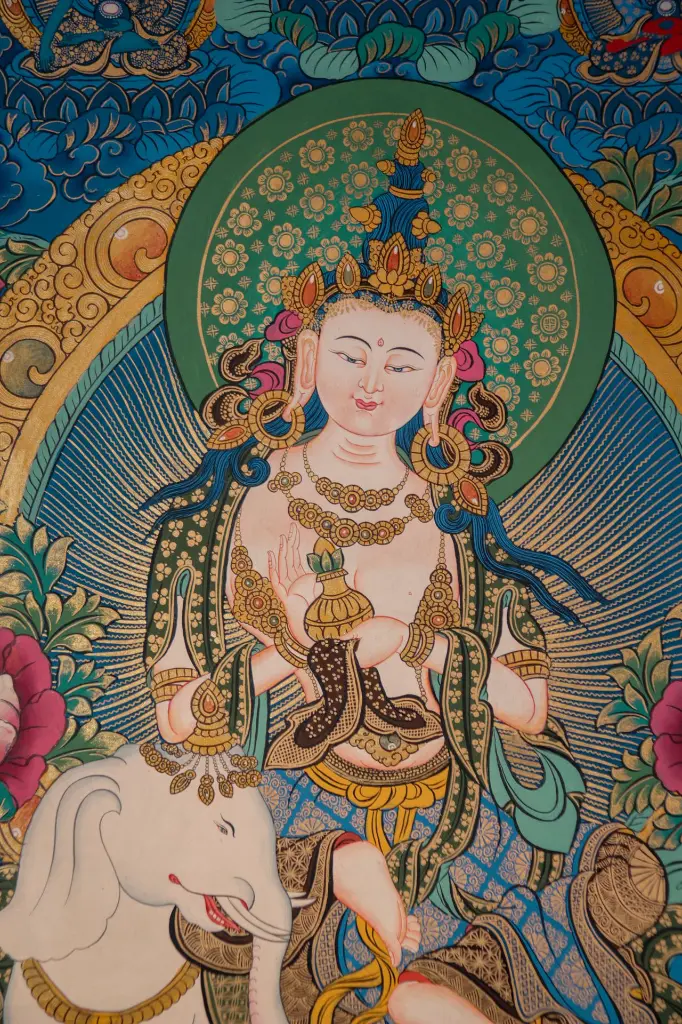
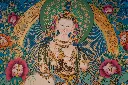
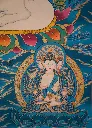
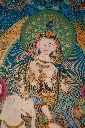
Samantabhadra sits in lalitāsana atop a reclining white elephant. His serene white body displays royal robes, golden jewels, and a five-pointed crown.
His right hand holds a golden nectar vessel at his chest.
His left hand rests gently near his knee in relaxed posture.
A green halo and gold-rayed aura surround his upper body.
The white elephant rests upon a multi-colored lotus throne.
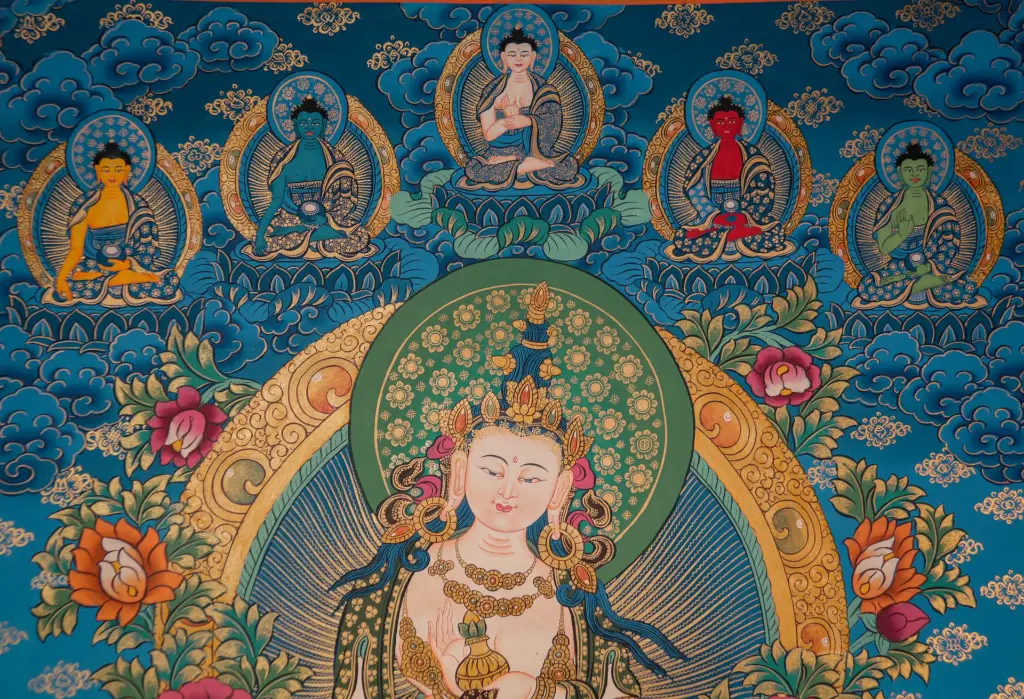
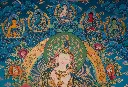
Upper Dhyani Buddhas
Five Tathāgata Buddhas reside within celestial aureoles along the upper sky.
Vairochana: Central white Buddha displaying the dharmachakra mudra.
Ratnasambhava: Yellow Buddha on the far left forming varada mudra.
Akshobhya: Blue Buddha on the inner left forming bhūmisparśa mudra.
Amitabha: Red Buddha on the inner right holding dhyāna mudra.
Amoghasiddhi: Green Buddha on the far right displaying abhaya mudra.
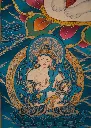
Lower Auxiliary Deities
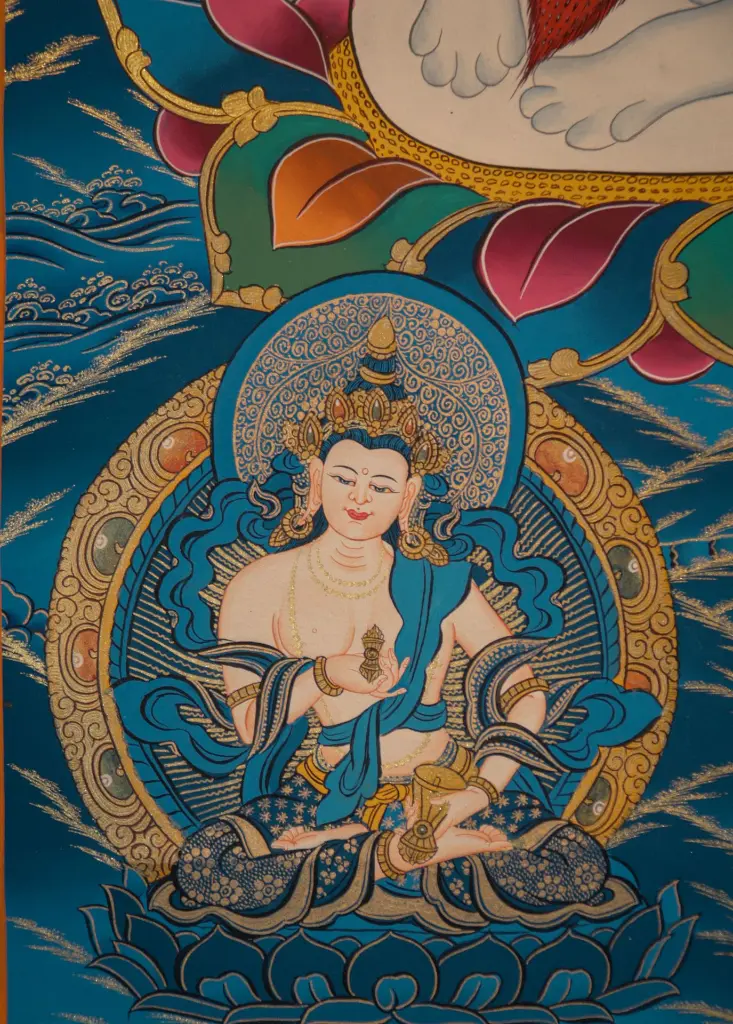
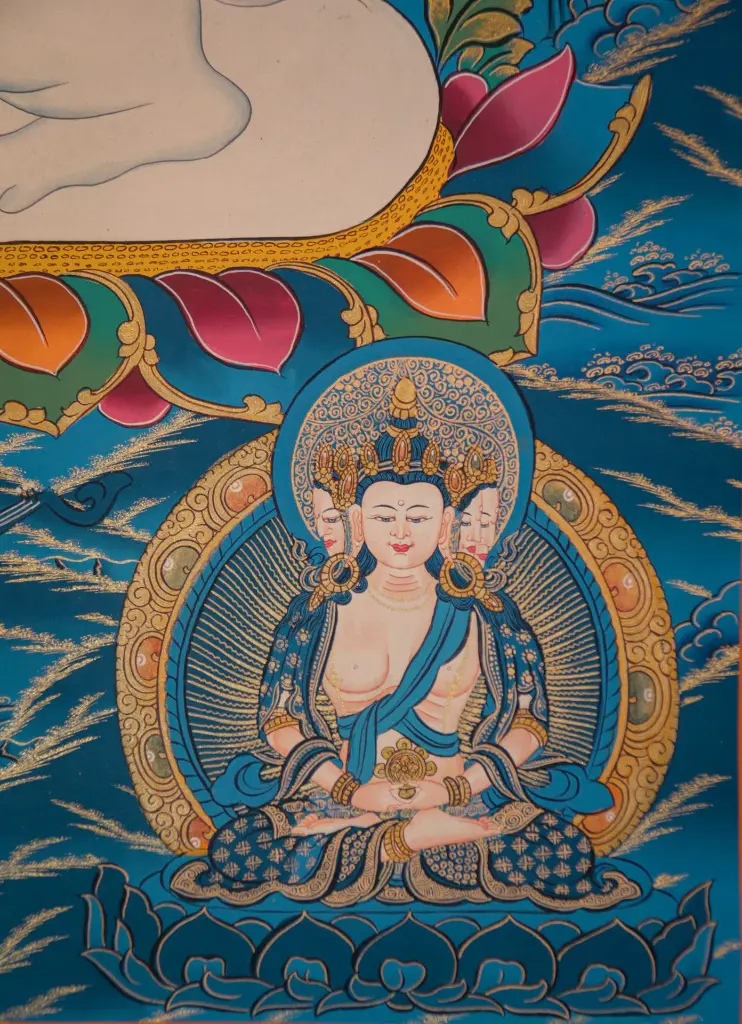
Two distinct figures frame the central ritual mirror at the canvas base.
Vajrasattva: Lower left white figure holding a vajra and ghaṇṭā.
Esoteric Vairochana: Lower right three-headed figure holding a dharmachakra in dhyāna mudra.
Verdant Landscape and Ritual Mirror
The environment features verdant green hills, blue waters, and lush floral blooms. Floating clouds support the upper Buddhas above rolling mountain peaks.
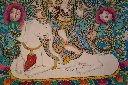
At the lower center, a golden ritual mirror stands upon a lotus stem. A sacred sword rests horizontally across the aquatic offering realm.
Classical Iconometric Precision
The artist executed this painting according to strict nava tāla iconometric proportions. Grid measurements ensure correct scale across all primary and surrounding figures.
Fine gold leaf highlights line the drapery and golden halos. Layered stone pigments generate deep chromatic contrast across the verdant background.
Sacred Space and Practice
Display this traditional Himalayan art in a respectful, clean location. Keep the Nepali thangka painting away from direct sunlight and moisture.
Practitioners recite the aspiration mantra Oṃ Samantabhadra Hūṃ. Contemplate the white elephant as a symbol of steadfast commitment. May all beings fulfill their altruistic intentions for universal benefit.