Shakyamuni Buddha Thangka – Earth Touching Mudra – Menri Tradition
Sacred Presence of Shakyamuni Buddha
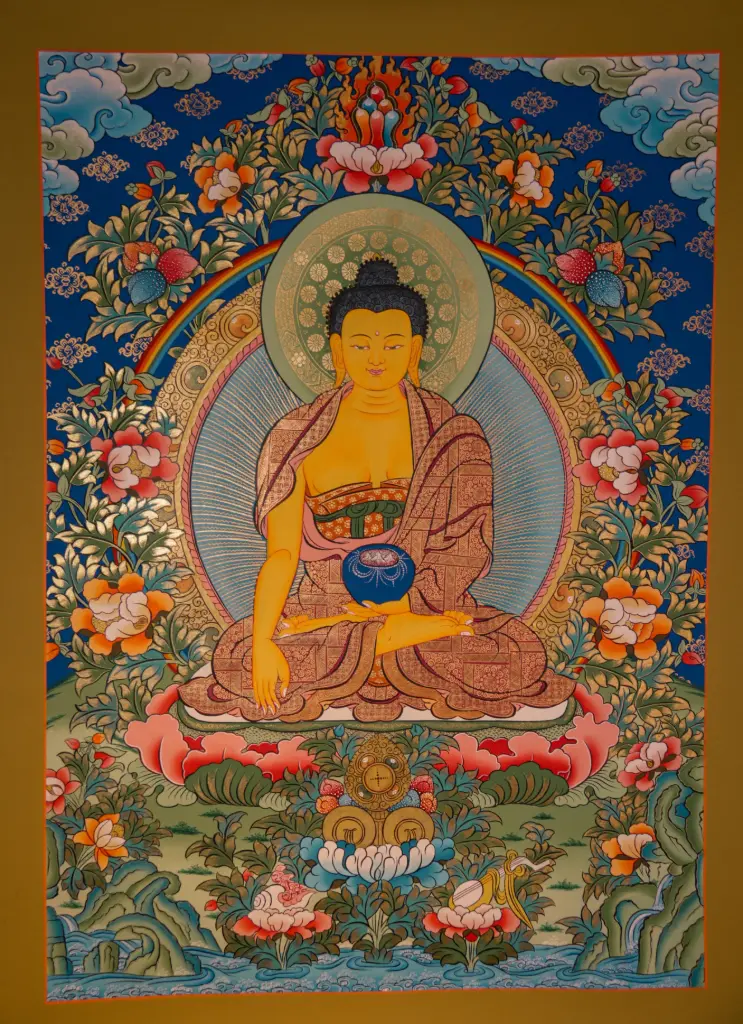
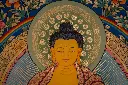
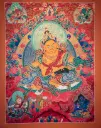
This hand-painted Shakyamuni Buddha thangka presents the historical Buddha in a tranquil floral environment. The composition emphasizes a large central figure framed by delicate blossoms and azure skies.
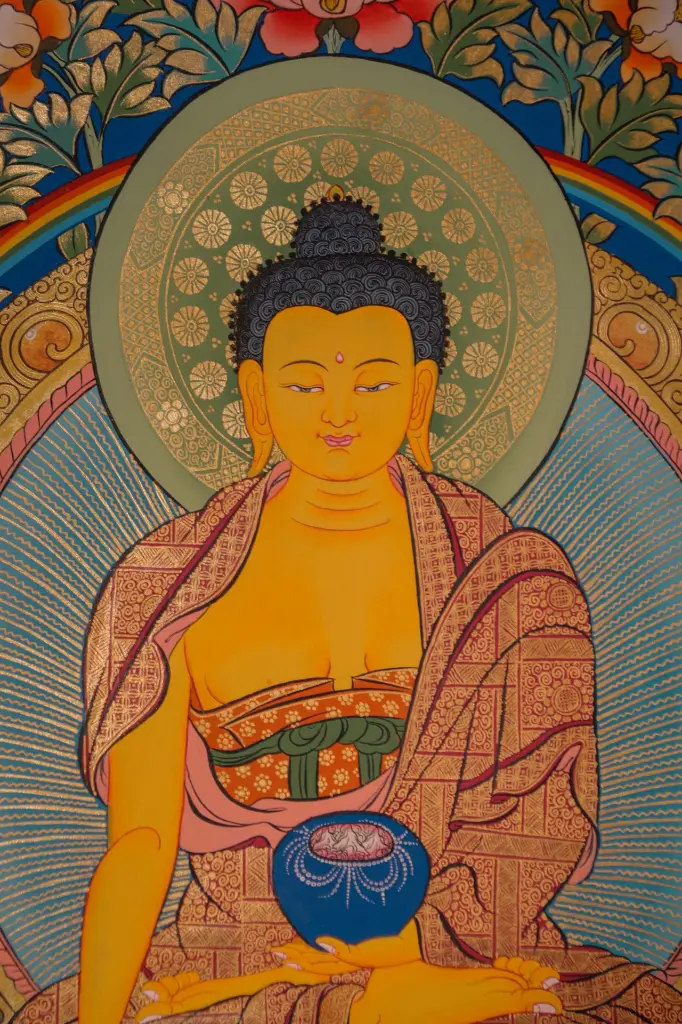
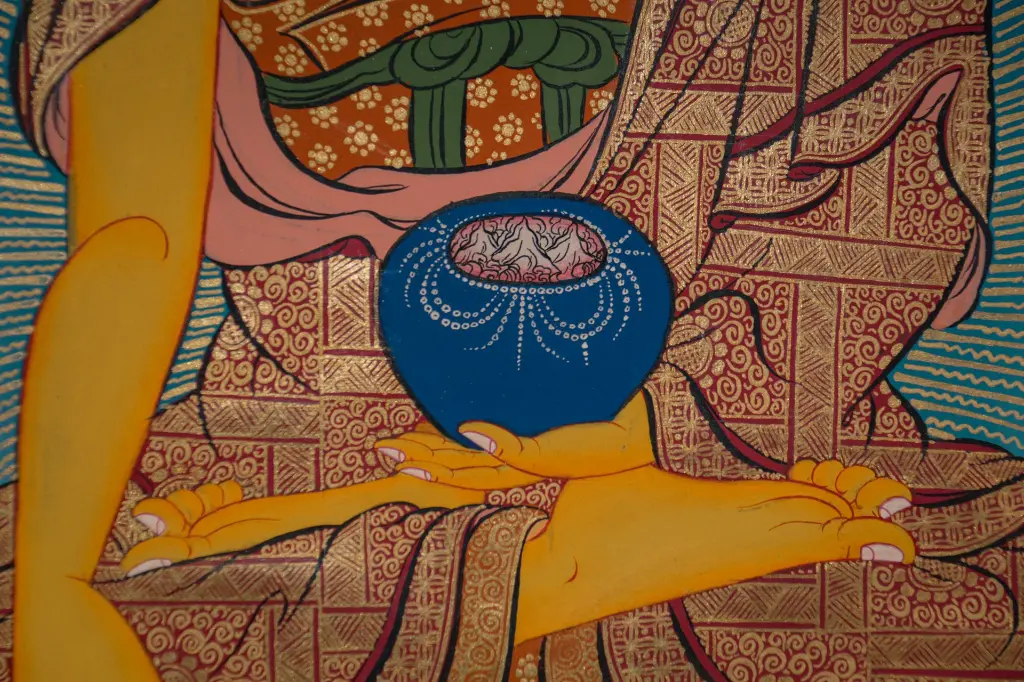
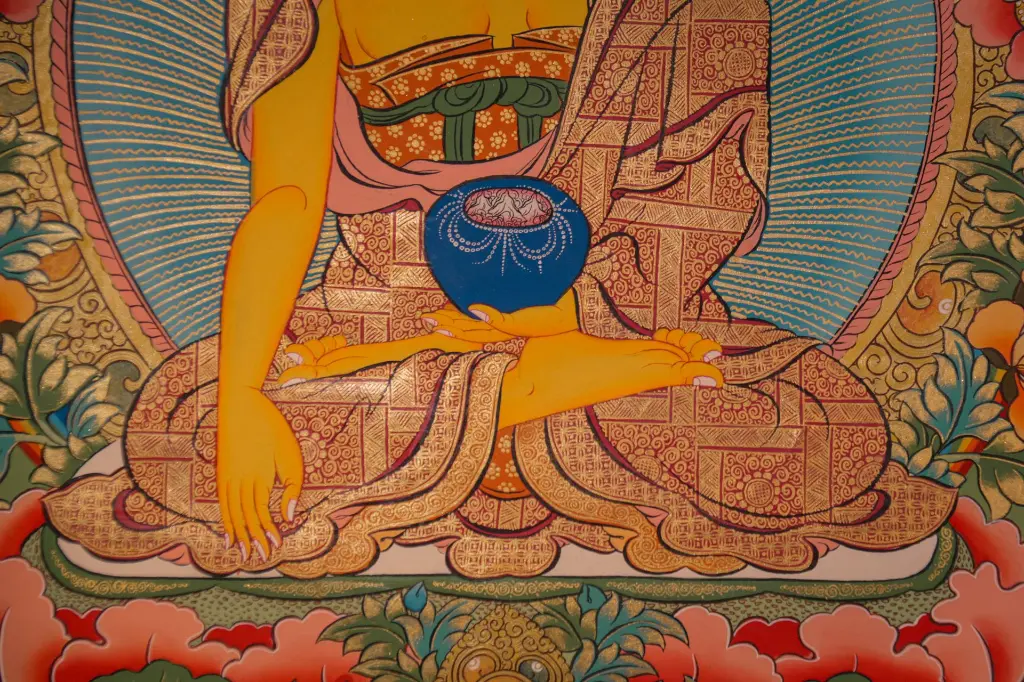
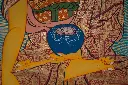
Shakyamuni serves as the foundational teacher of the historical Buddhist tradition. A detailed look reveals intricate gold patterns on his monastic robes.
Artwork Specifications
This fine piece of hand-painted Buddhist art follows traditional Menri stylistic standards.
Dimensions: 60 × 40 cm
Materials: Mineral Pigments with Gold Detailing on Cotton Canvas
Origin: Kathmandu, Nepal
Artistic Style: Menri Style Thangka
Background: Celestial Sky
Type: Original
Composition: Single Deity Composition
Consecration: Consecration Status Not Provided
Art Historical Transmission
The Menri school originated in fifteenth-century Tibet under Menla Döndrup. It emphasizes fine linework, luminous mineral colors, and intricate floral motifs.
Nepali artisan workshops in Kathmandu continue this rigorous lineage today. Traditional Himalayan art relies on these preserved techniques for iconographic precision.
Visual Iconography of these Shakyamuni Buddha Thangka
Central Deity
The golden-skinned figure sits in the firm vajraparyaṅka posture upon a moon disc. His right hand extends downward in the bhūmisparśa mudra. His left hand rests in dhyāna mudra, holding an alms bowl filled with three jewels.
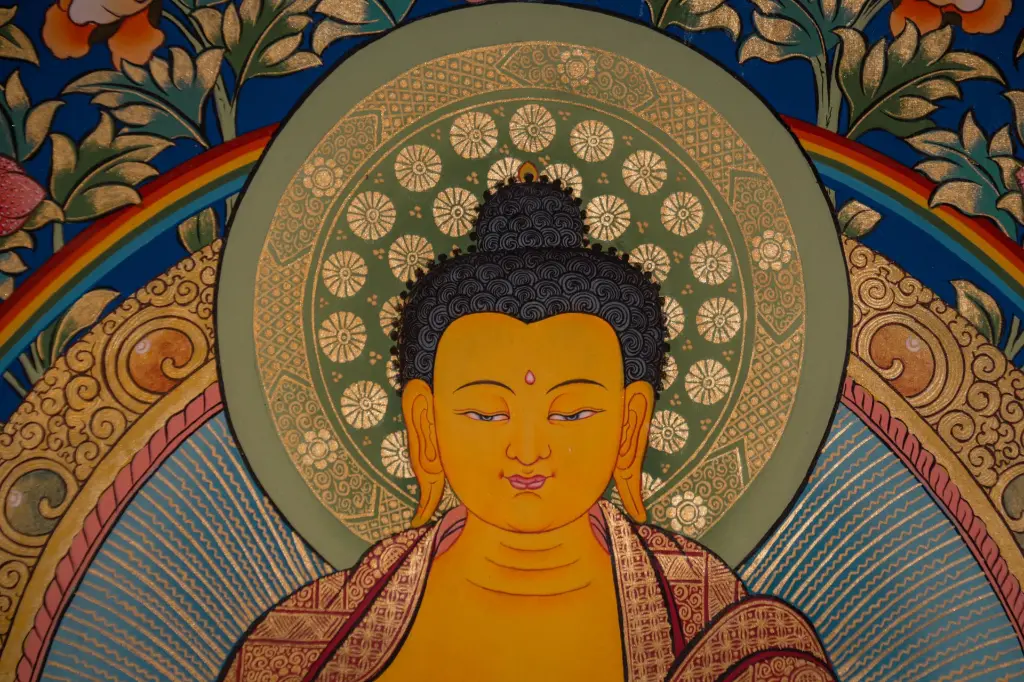
He wears ornate patchwork monastic robes (cīvara) trimmed with fine gold embroidery. An uṣṇīṣa crowns his head, accompanied by a small, distinct ūrṇā on his forehead.
The Sacred Environment
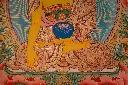
A multi-layered lotus throne supports the central figure above a verdant landscape. Surrounding the halo are elaborate peony blossoms, ripe fruit, and stylized clouds. Beneath the throne, precious offerings rest upon a blooming lotus above rippling waters.
Canon of Iconometry
This painting strictly adheres to the classical dasa tāla iconometric canon. The grid ensures precise proportions between the head, torso, hands, and throne. Master artists apply mineral pigments in translucent layers before outlining details with fine brushes and gold dust.
Guidance for Display and Meditation
Mantra:
Oṃ mune mune mahāmunayeka svāhā
Reciting this mantra recalls the supreme awakened qualities of the historical Buddha.
Display this traditional Nepali thangka away from direct sunlight and excessive humidity. Gently focus on the central figure’s calm gaze to support daily mindfulness practice.