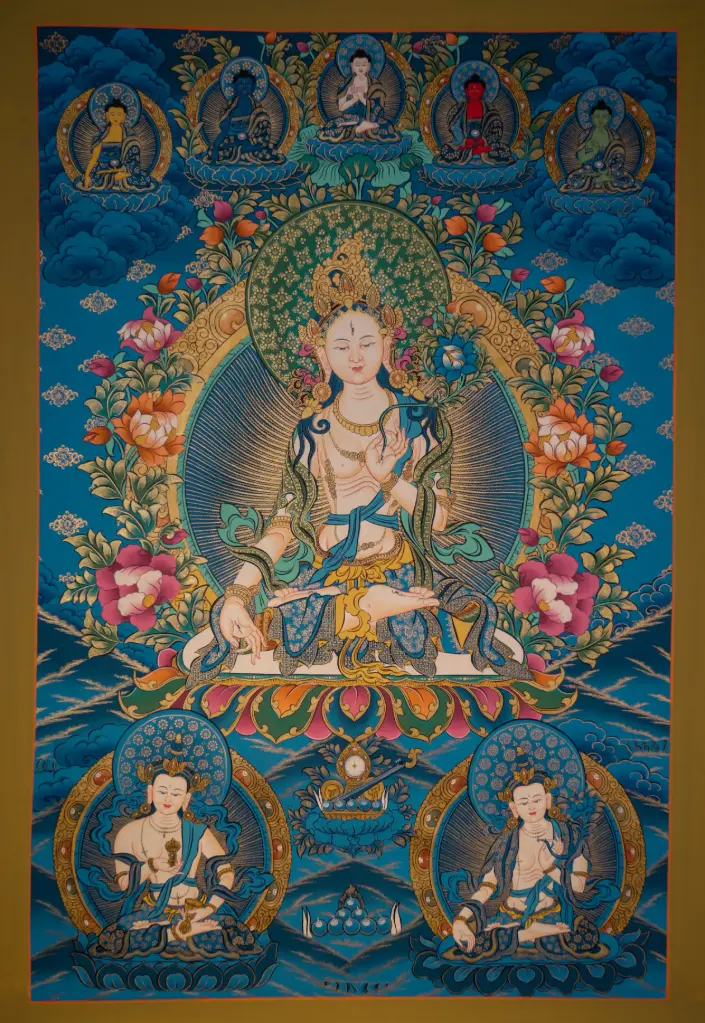
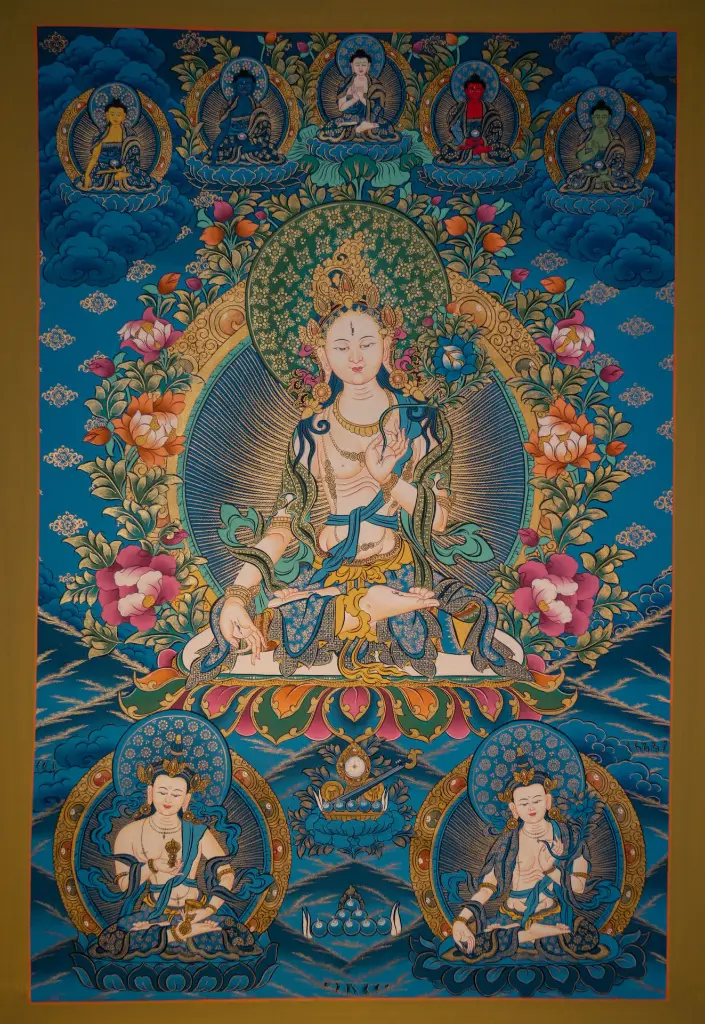
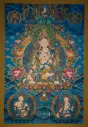
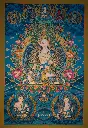
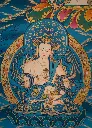
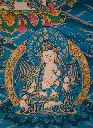
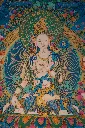
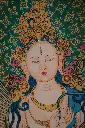
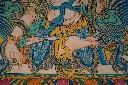
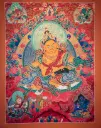
White Tara Menri Thangka with Five Dhyani Buddhas, Vajrasattva, and Emanation Tara
White Tara Visual Entrance and Divine Role
This hand-painted White Tara Thangka displays exquisite iconographic balance. High-grade mineral pigments illuminate her luminous white form on deep blue canvas.
Sitatārā embodies longevity, healing, and protection across Buddhist traditions. Her seven compassionate eyes observe suffering throughout all realms of existence.
Tags |
White Tara Thangka Specifications
Master artists in Kathmandu created this traditional Tibetan Buddhist thangka. The artwork adheres strictly to classical iconographic canons.
Dimensions: Height 75 cm by width 50 cm
Materials: Pure Mineral Pigments with Genuine Gold Highlights
Origin: Kathmandu, Nepal
Artistic Style: Menri Style Tibetan
Background: Celestial Sky
Type: Original
Composition: Main Deity with Upper and Lower Deities
Consecration: Consecration Available Upon Request
Artistic Heritage of White Tara in the Menri Tradition
Sitatārā emerged as a key longevity deity in early Indian Tantra. Her venerated iconography spread widely into Tibet and Nepal.
The Menri school refined her portraiture during the fifteenth century. Masters integrated delicate floral landscapes with strict canonical iconometry.
Kathmandu workshops maintain this Nepali thangka painting tradition with precision. Artists balance geometric structure with vibrant botanical motifs.
White Tara Iconography and Sacred Attributes
Central White Tara
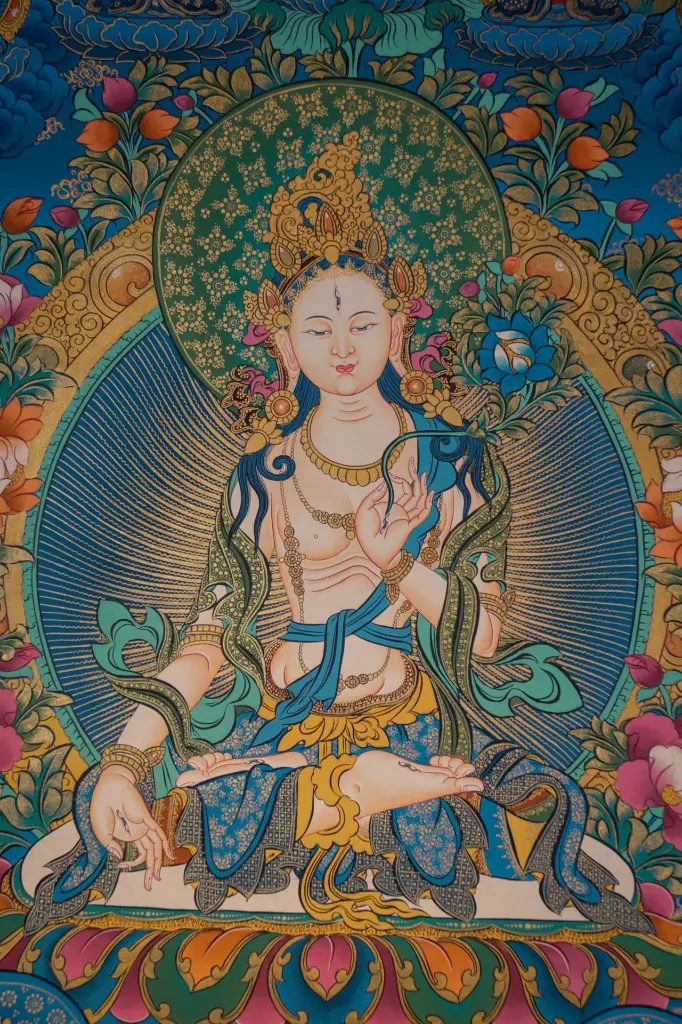
White Tara displays a translucent white body in vajraparyaṅka posture. Her serene face directs a compassionate gaze downward.
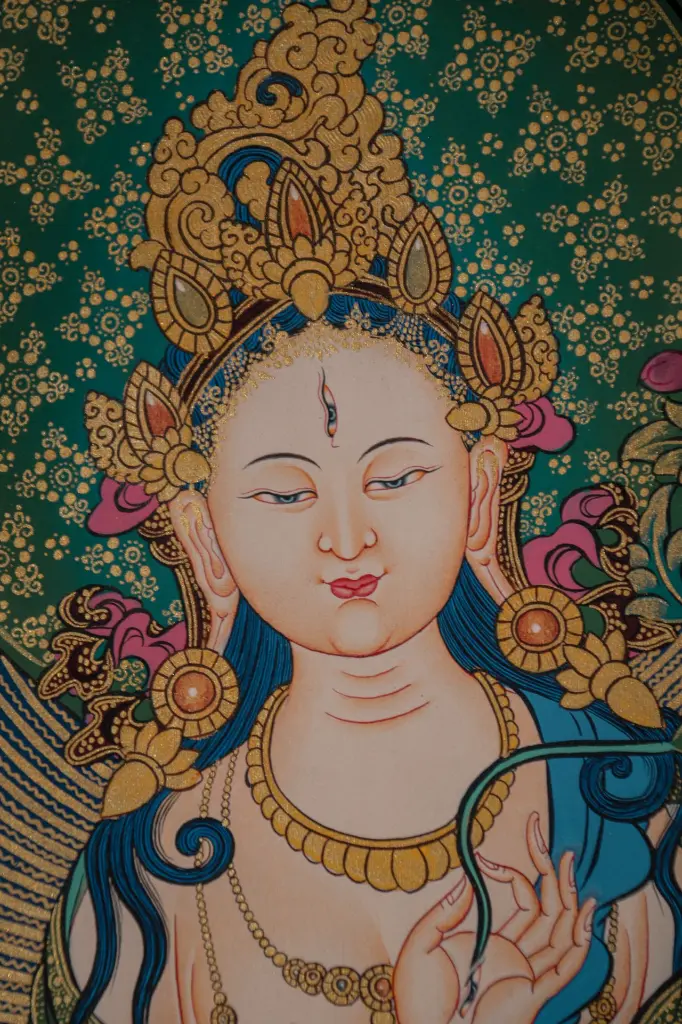
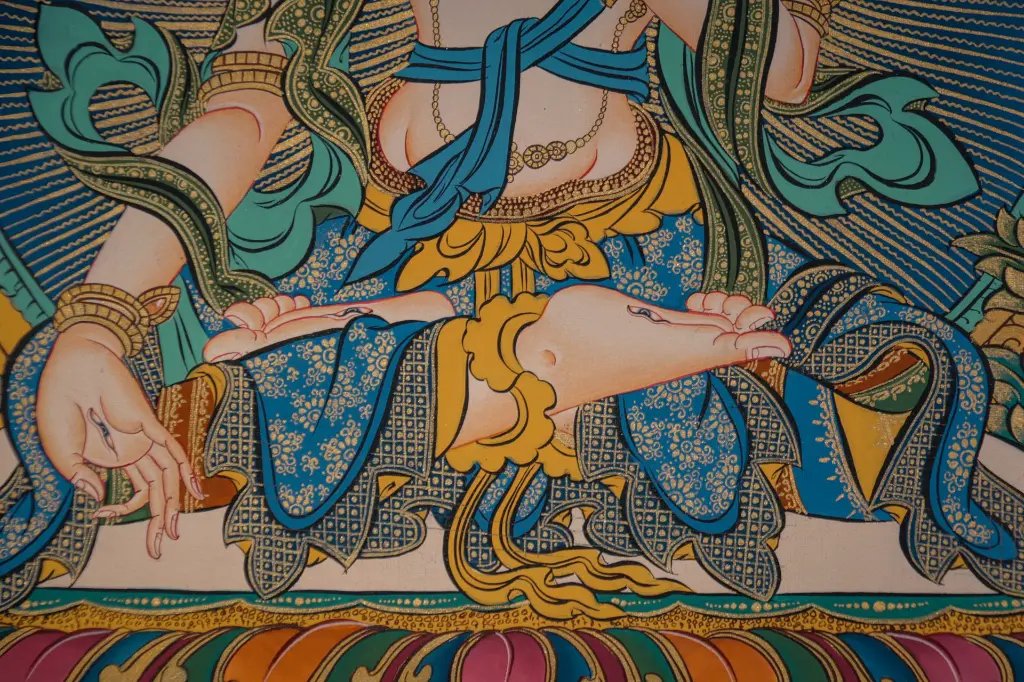
Seven wisdom eyes mark her forehead, face, palms, and feet. Her right hand extends outward in varada mudrā.
Her left hand forms vitarka mudrā at her chest. She holds the stem of a blooming utpala lotus flower.
She wears silk robes, golden ornaments, and a radiant halo. Her central figure sits upon a multi-colored lotus throne.
Additional Figures
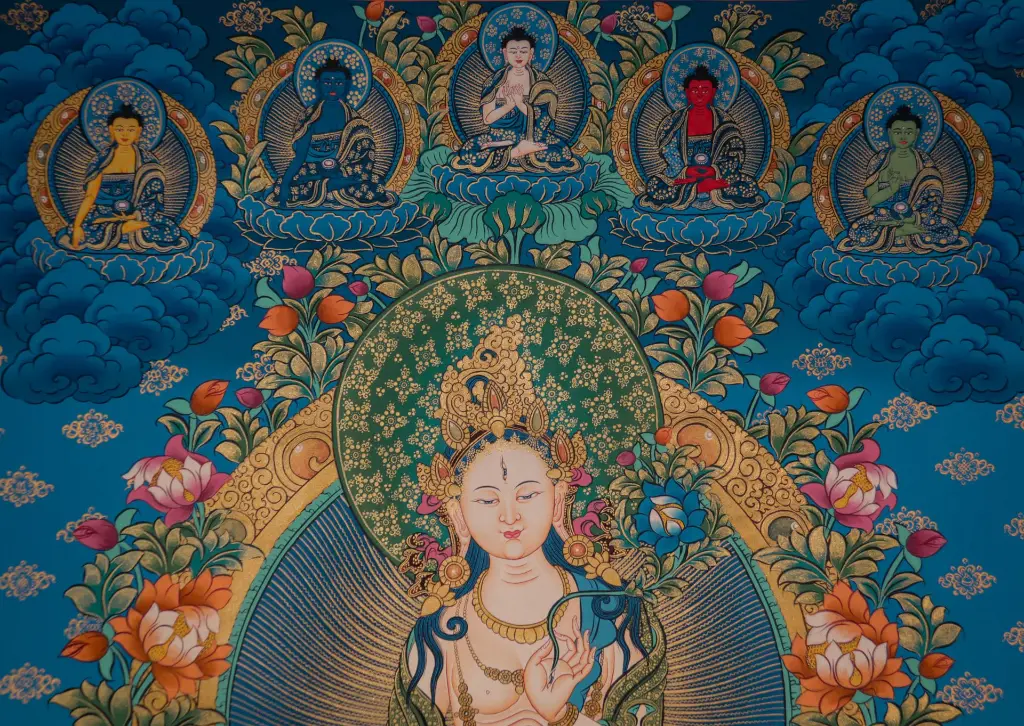
Five Dhyani Buddhas
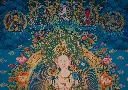
Five Tathāgatas sit above within glowing cloud aureoles. They symbolize transmuting five delusions into supreme wisdoms.
Vajrasattva
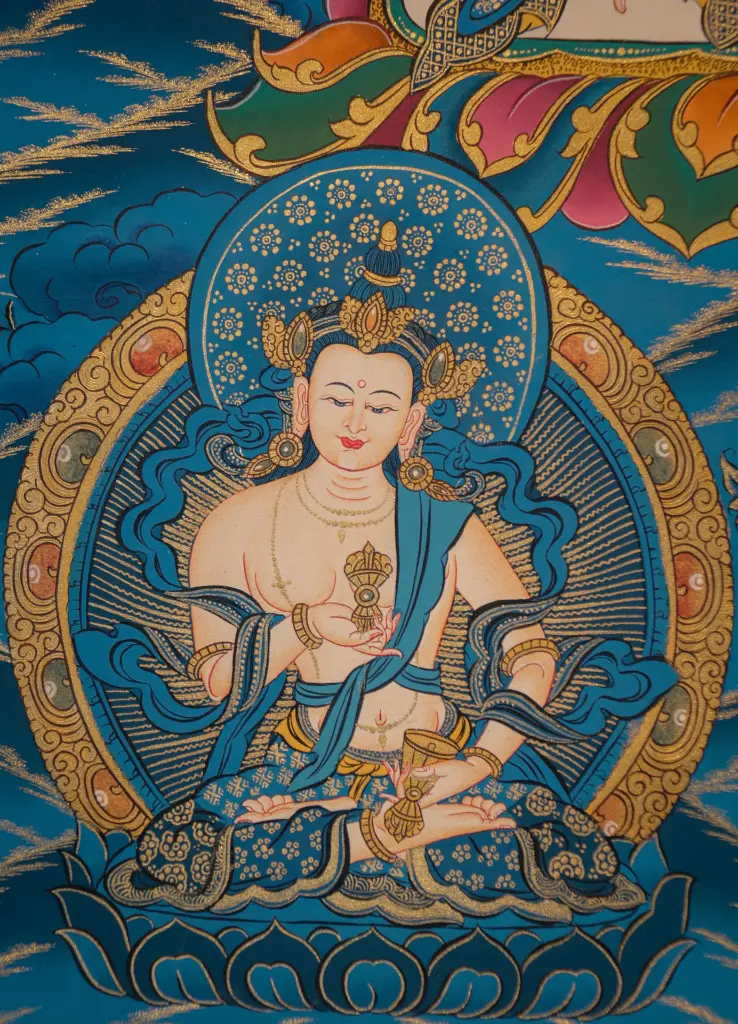
Vajrasattva rests at the lower left on a lotus seat. He holds a vajra and ghaṇṭā for spiritual purification.
Emanation White Tara
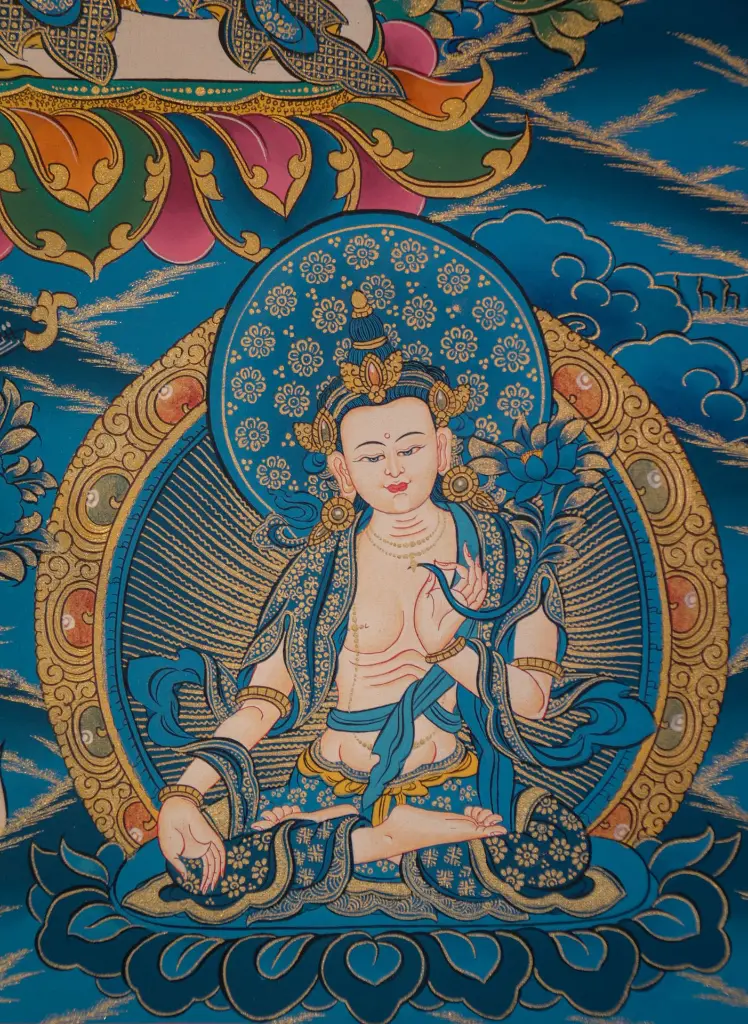
A simplified White Tara sits at the lower right. She holds a single utpala lotus stem in devotion.
Sacred Setting of White Tara
A deep blue sky features clouds and aṣṭamaṅgala symbols. These eight auspicious signs frame her radiant divine aura.
The terrestrial landscape holds floral clusters and green ground. In front, a vīṇā and sacred jewel offerings rest.
White Tara Technique and Iconometry
Artists aligned her form using the classical nava tāla grid. Precision proportions guide her head, torso, and limbs.
Layered natural mineral pigments deliver lasting color clarity. Fine gold highlights illuminate her lotus petals and crown.
Placement and Contemplation of White Tara
Her mantra is Oṃ Tāre Tuttāre Ture Mama Āyur Puṇye Jñāna Puṣṭiṃ Kuru Svāhā. Reciting this verse fosters longevity and divine wisdom.
Display this mineral pigment thangka in a clean, elevated space. Keep the cotton canvas away from moisture and direct sunlight.
Observe her central eye during quiet contemplation sessions. May this traditional Himalayan art bring peace and longevity to all.