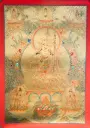
Guru Rinpoche Thangka – Lotus Born Master with Consorts – Contemporary Mixed Style
Visual Presence of Padmasambhava
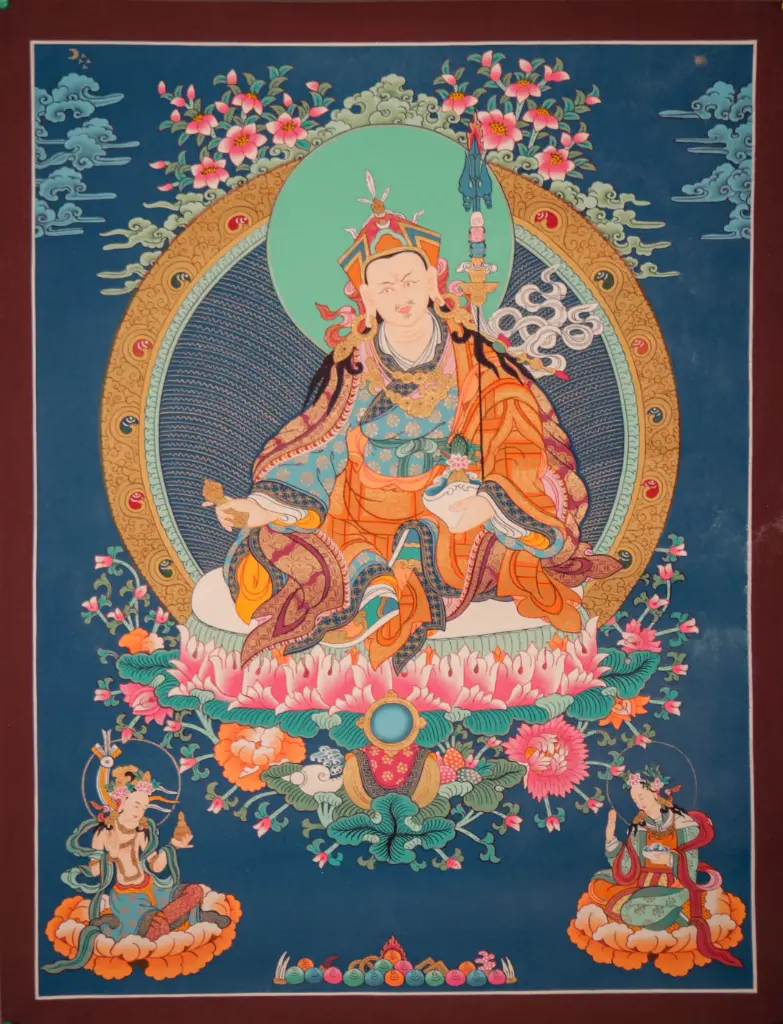
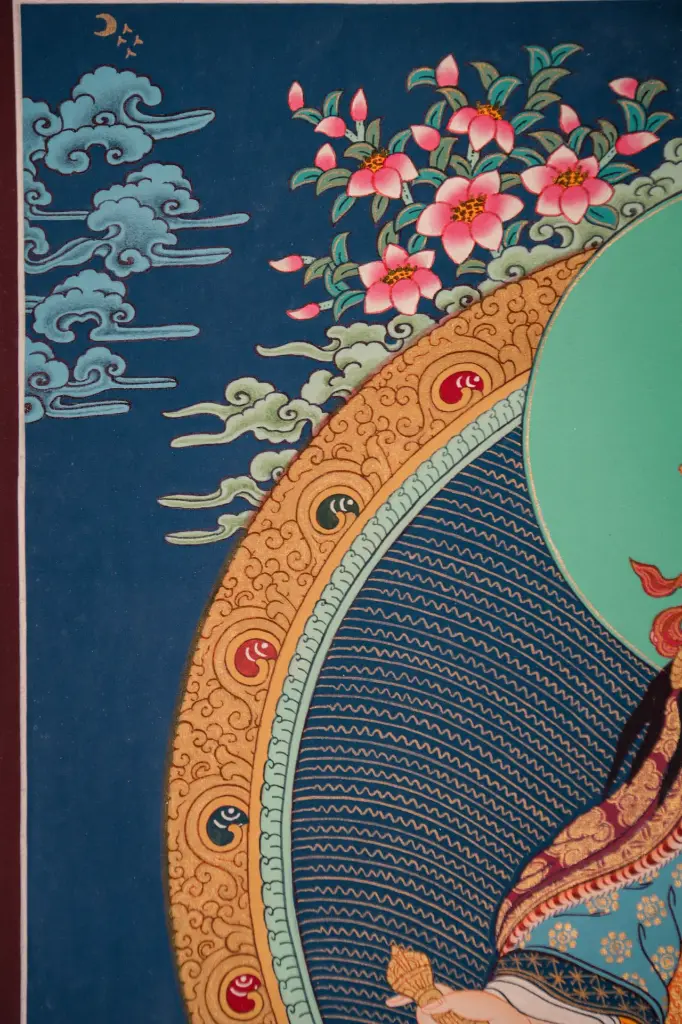
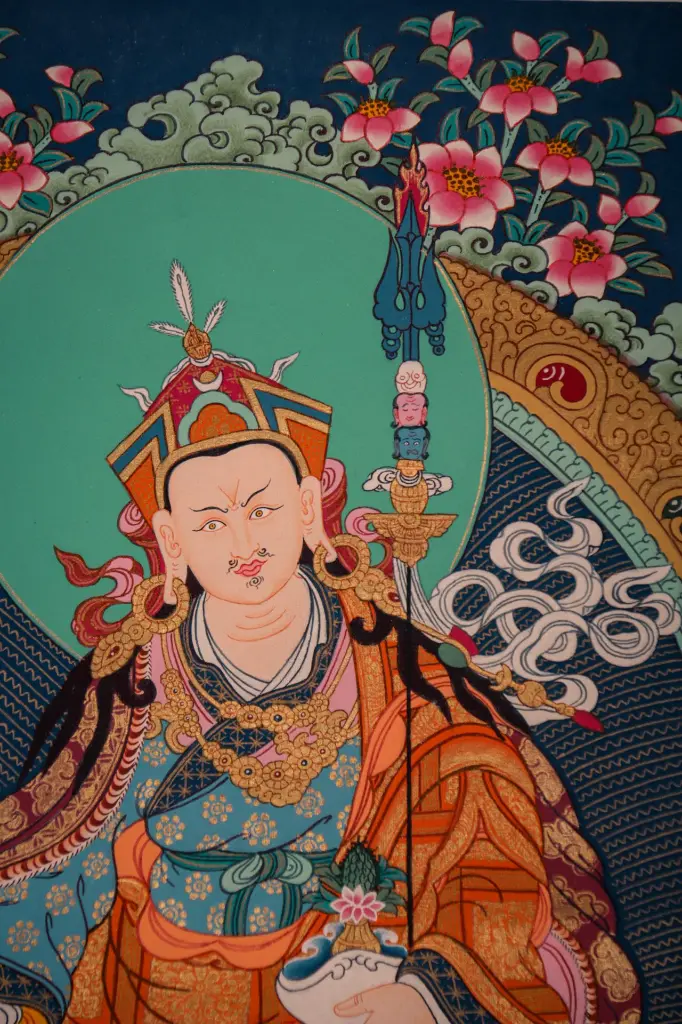
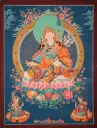
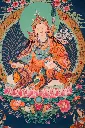
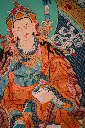
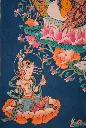
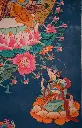
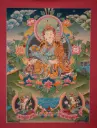
This hand-painted Buddhist art depicts Guru Rinpoche seated on a lotus cushion against a deep mineral blue canvas. Flanked below by his two main consorts, the main figure commands central attention.
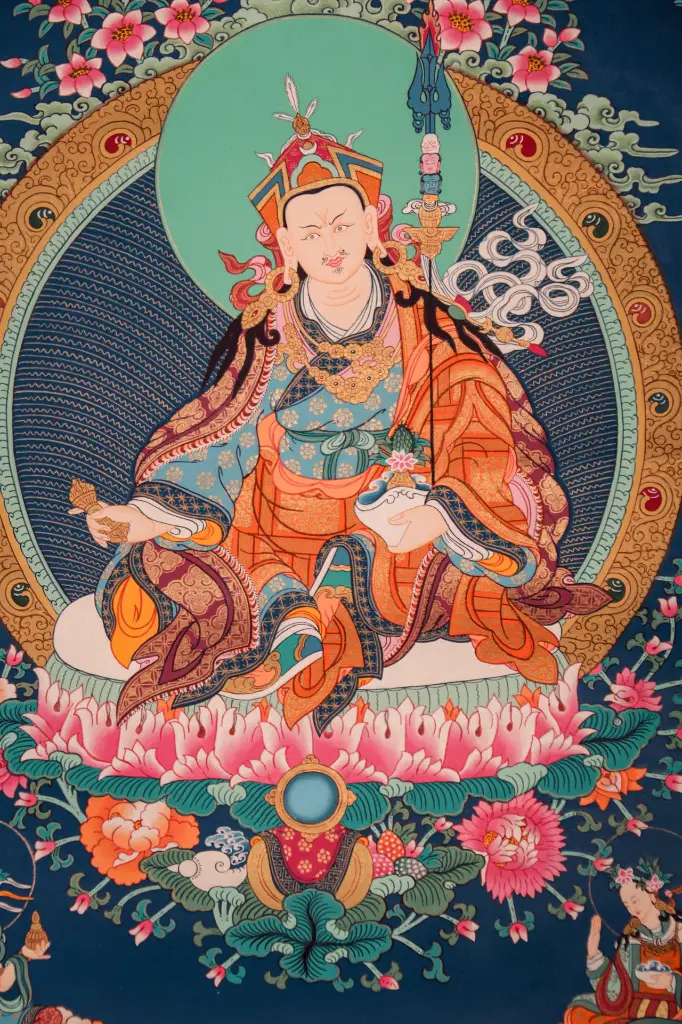
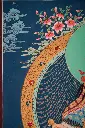
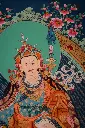
A radiant gold-patterned halo frames the master's head and upper torso. Precise pigment work highlights the delicate lotus petals and gold details.
Technical Specifications
The following details reflect the physical attributes of this hand-painted thangka painting.
Dimensions: Height 60 cm × Width 45 cm
Materials (Hypothetical): Mineral Pigments with Gold Detailing
Origin: Kathmandu, Nepal
Artistic Style: Contemporary Mixed Style
Background: Plain Mineral Color
Type: Original
Composition: Main Deity + Lower Deity
Consecration: Consecration Available Upon Request
Tags |
Historical Heritage of Padmasambhava
Padmasambhava, known as Guru Rinpoche, was instrumental in establishing Vajrayāna Buddhism in Tibet during the eighth century. Tibetan tradition venerates him as the Second Buddha who subdued indigenous forces.
Artists historically portray him alongside his spiritual consorts, Mandāravā and Yeshe Tsogyal. Their presence signifies the synthesis of wisdom and skillful means required for complete realization.
Iconographic Attributes
Central Figure: Guru Rinpoche
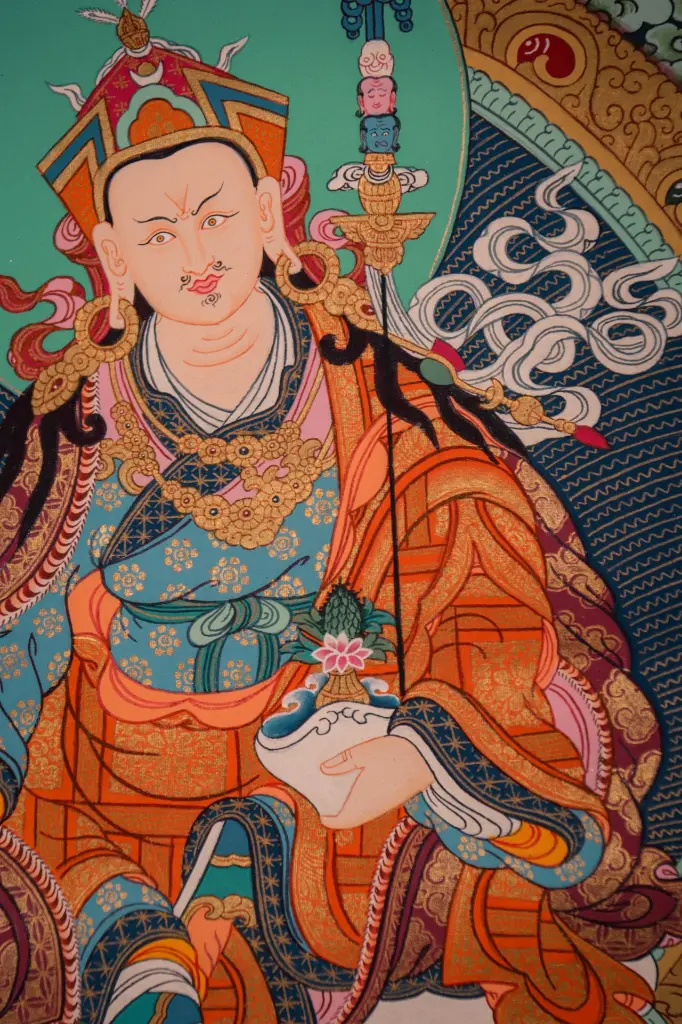
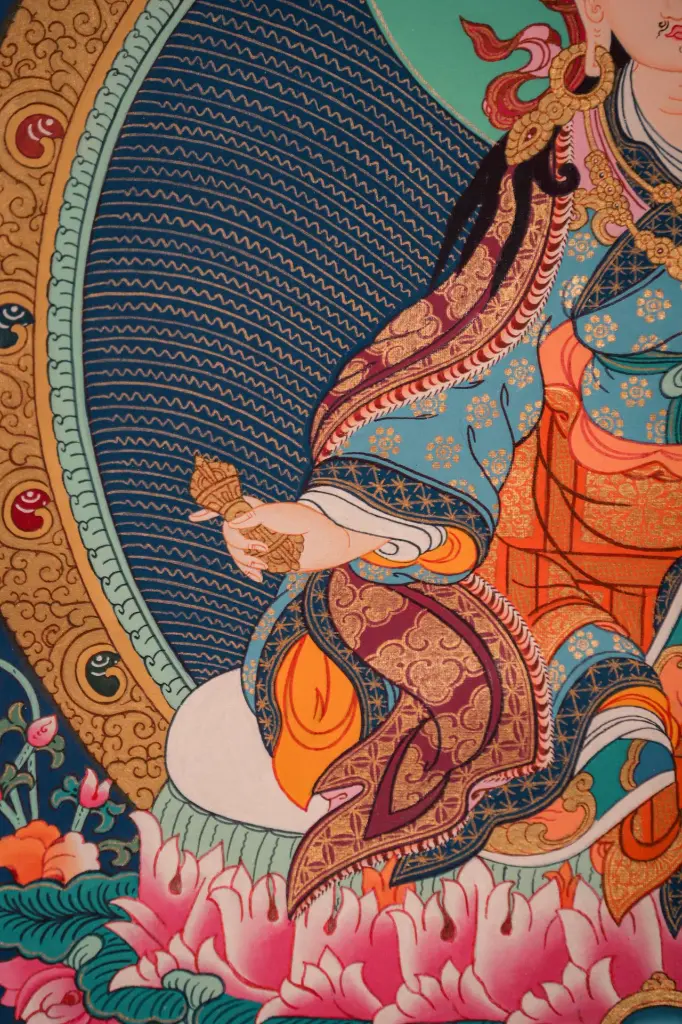
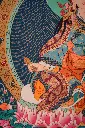
Guru Rinpoche assumes the royal posture of rājalīlāsana on a pink lotus seat. His right hand holds a golden vajra at his chest, symbolizing indestructible wisdom.
His left hand rests in his lap holding a kapāla filled with nectar, supporting a long-life vase. Cradled in his left arm is the khaṭvāṅga trident, representing mastery over dualistic forces.
He wears the lotus hat topped with a vulture feather and the tri-hued monastic robes.
Lower Figures: Consorts
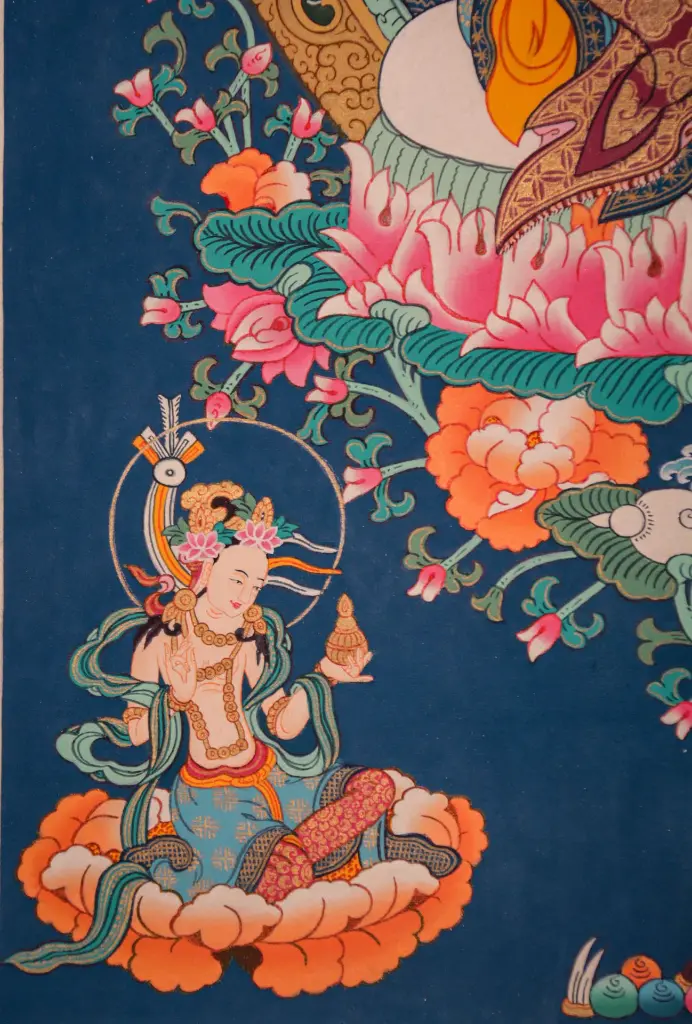
Mandarava (Lower Left): Seated on a lotus base, holding a long-life vase and da ma ru. She represents the physical manifestation of longevity practices.
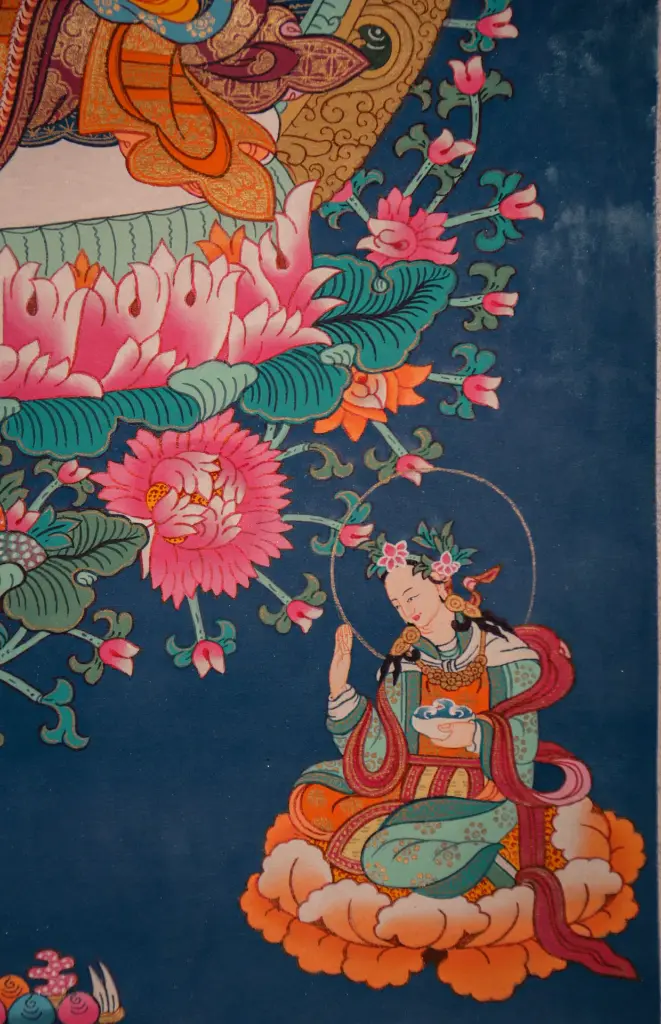
Yeshe Tsogyal (Lower Right): Positioned on the right, offering a skull cup filled with amṛta. She embodies supreme wisdom and executive means.
Sacred Environment
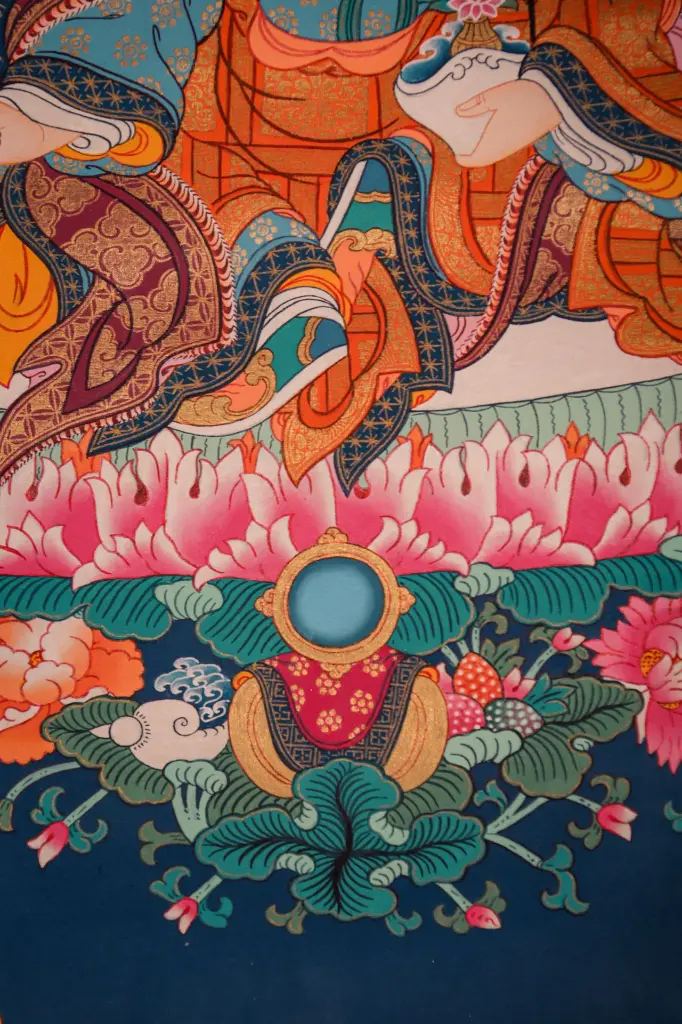
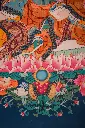
The figures rest on multi-layered pink lotus petals emerging from stylized green leaves. Offerings of jewel-like elements decorate the lower foreground below a solid blue backdrop filled with lotus flora above.
Classical Proportion and Execution
The central figure conforms to classical Tibetan tāla grid measurements for peaceful-wrathful forms. Layered mineral pigments create smooth color gradients across the deep blue field, accented by delicate fine-line gold work (ser-ri).
Sacred Mantra and Placement
Mantra: OṂ ĀḤ HŪṂ VAJRA GURU PADMA SIDDHI HŪṂ
This core invocation clears obstacles and cultivates devotion to the guru lineage.
Display this traditional Himalayan art in a clean space free from excess moisture and direct solar glare. Observe the central form attentively while maintaining steady breath. May this artwork support your study of the Vajrayāna path.